












Native American and Alaska Native Life Expectancy Declines, CDC Reports

[ad_1]

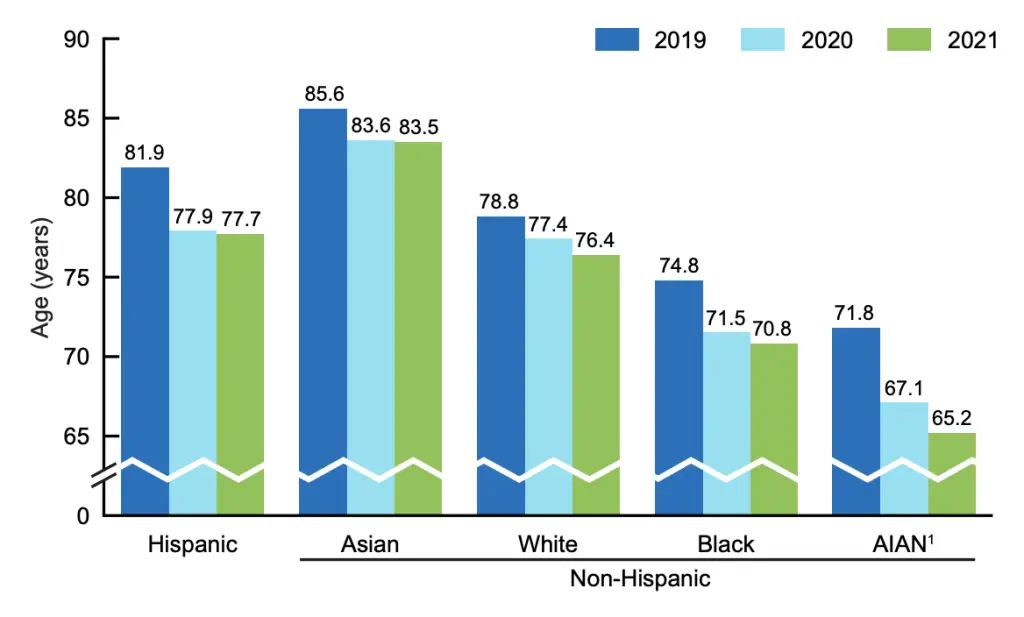
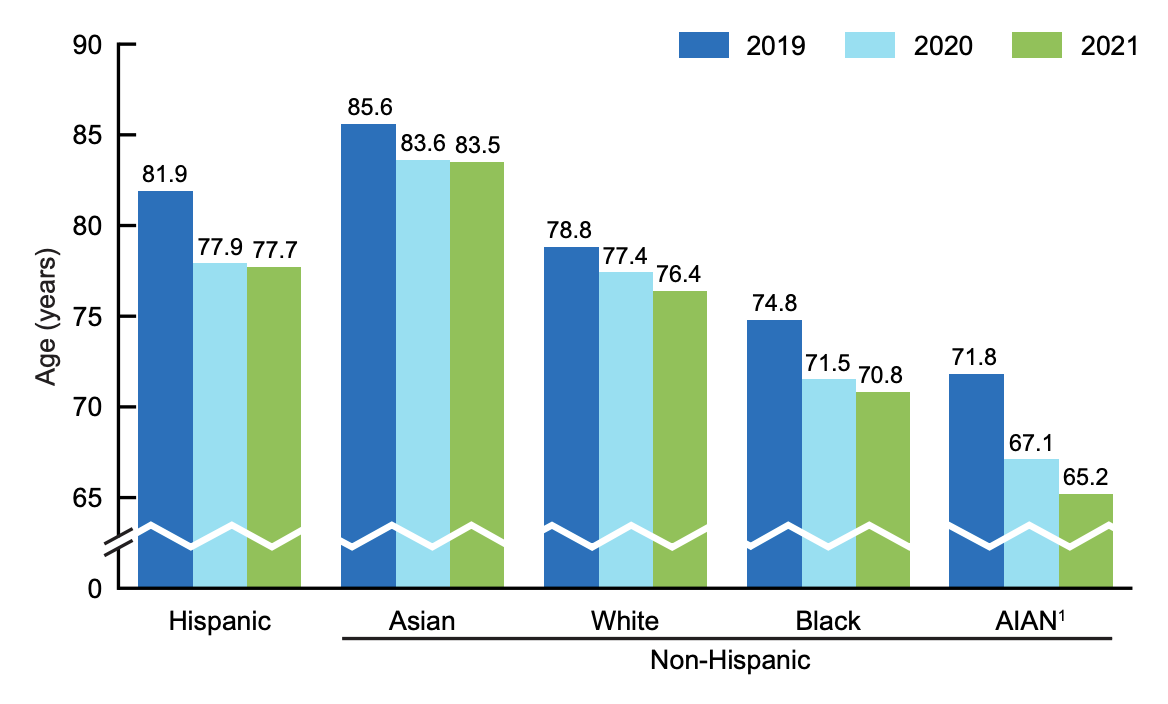
Life expectancy for Native Americans and Alaska Natives declined more than any other race between 2020 and 2021, according to new data from the Center for Disease Control and Prevention.

The decline was mirrored in the overall population: The United States’ life expectancy at birth for 2021 was about 76 years, the lowest it has been since 1996. By comparison, Native Americans and Alaska Natives’ average life expectancy fell from about 67 years old in 2020 to 65 in 2021, combined with the reported four-year drop the year prior to a cumulative six year reduction in life expectancy.

The data shows the decline in Native communities was due primarily to increases in mortality due to Covid-19 — which impacted Indigneous peoples more than any other race — as well as unintentional injuries, chronic liver disease and cirrhosis, suicide, and heart disease.

“There is no doubt Covid was a contributor to the increase in mortality during the last couple of years, but it didn’t start these problems — it made everything that much worse,” Dr. Ann Bullock (Minnesota Chippewa Tribe) told The New York Times. Bullock is the former director of diabetes treatment and prevention for the Indian Health Service.

Preexisting health disparities — including disproportionate levels of diabetes and obesity —brought on largely by colonization and ensuing cycles of poverty have resulted in more deaths among Native people who contracted Covid than their counterparts. Although more Native people were vaccinated than Black or Hispanic people, CDC data shows they died of Covid at higher rates than any other racial group.

Additionally, barriers to healthcare services due to underfunded government services and remote tribal communities put Natives at a disadvantage. The Indian Health Service provides health care to 1.6 million American Indian and Alaska Native people. 

Yet, according to an analysis done by the US Government Accountability Office, it spends less than half on a per-person basis compared to other federal health programs (Medicare, Medicaid, and the Veterans Health Administration).

“How can somebody think this is not a problem?” Loretta Christensen (Dine) IHS’ chief medical officer, told the New York Times. “Yet it’s become normal.”

More Stories Like This

Indian Health Service Expands Services in Mid-Atlantic
GUEST OPINION: Heavy Metals, Lurking in Most Baby Food – Why Isn’t the FDA Taking Radical Action?
Looking Back, Moving Forward: Alaska Native, Suicide Prevention Advocate and Ultra-Runner Carol Seppilu
Indian Health Service Announces $136 Million for Diabetes Treatment and Prevention

The Native News Health Desk is made possible by a generous grant from the National Institute for Health Care Management Foundation as well as sponsorship support from RxDestroyer, The Leukemia & Lymphoma Society and the American Dental Association. This grant funding and sponsorship support have no effect on editorial consideration in Native News Online. 

About The Author

Jenna Kunze
Author: Jenna KunzeEmail: This email address is being protected from spambots. You need JavaScript enabled to view it.

Staff Writer

Jenna Kunze is a staff reporter covering Indian health, the environment and breaking news for Native News Online. She is also the publication’s lead reporter on stories related to Indian boarding schools and repatriation. Her bylines have appeared in The Arctic Sounder, High Country News, Indian Country Today, Tribal Business News, Smithsonian Magazine, Elle and Anchorage Daily News. Kunze is based in New York.


[ad_2]

Source link

Trending Topics

Features

Download and distribute powerful vaccination QI resources for your community.

Sign up now to support health equity and sustainable health outcomes in your community.

MCED tests use a simple blood draw to screen for many kinds of cancer at once.

FYHN is a bridge connecting health information providers to BIPOC communities in a trusted environment.

Discover an honest look at our Medicare system.

ARC was launched to create a network of community clinicians to diversify and bring clinical trials to communities of color and other communities that have been underrepresented.

The single most important purpose of our healthcare system is to reduce patient risk for an acute event.

Related Posts
Why Your “Ozempic” May Not Be Ozempic: FDA Warnings Highlight Growing Risks of Unregulated GLP-1 Drugs
The Communities Most Burdened by Disease Should Be the First to Benefit from Artificial Intelligence
Black and Asian Cancer Patients Wait Longer for Pain Relief in New Study
Scroll to Top
Featured Articles
Why Your “Ozempic” May Not Be Ozempic: FDA Warnings Highlight Growing Risks of Unregulated GLP-1 Drugs
Why Your “Ozempic” May Not Be Ozempic: FDA Warnings Highlight Growing Risks o...
The Communities Most Burdened by Disease Should Be the First to Benefit from Artificial Intelligence
The Communities Most Burdened by Disease Should Be the First to Benefit from ...
Cancer Pain Care Access Gap Hits Black, Asian Patients
Black and Asian Cancer Patients Wait Longer for Pain Relief in New Study
What Is Cyclosporiasis Symptoms, Food Safety, and Reasons
What Is Cyclosporiasis? The Foodborne Illness Showing Up in the News
Why Minority Mental Health Awareness Month Matters More Than Ever
From Childhood Cancer to Alzheimer’s and ALS Celebrity Health Stories Spark National Conversation on Disease, Caregiving, and Equity
From Childhood Cancer to Alzheimer’s and ALS Celebrity Health Stories Spark N...
Categories
AI
ATTR-CM
BIPOC News
Cancer
Clinical Trials
Covid19
Diseases of the Body
Environment
Health Data
Health Equity Events
Health Policy
Health Tips
Subscribe to our newsletter to receive our latest news​
All Stories
Why Your “Ozempic” May Not Be Ozempic: FDA Warnings Highlight Growing Risks of Unregulated GLP-1 Drugs
Why Your “Ozempic” May Not Be Ozempic: FDA Warnings Highlight Growing Risks o...
The Communities Most Burdened by Disease Should Be the First to Benefit from Artificial Intelligence
The Communities Most Burdened by Disease Should Be the First to Benefit from ...
Cancer Pain Care Access Gap Hits Black, Asian Patients
Black and Asian Cancer Patients Wait Longer for Pain Relief in New Study
BIPOC News
The Communities Most Burdened by Disease Should Be the First to Benefit from Artificial Intelligence
The Communities Most Burdened by Disease Should Be the First to Benefit from ...
Why Minority Mental Health Awareness Month Matters More Than Ever
From Childhood Cancer to Alzheimer’s and ALS Celebrity Health Stories Spark National Conversation on Disease, Caregiving, and Equity
From Childhood Cancer to Alzheimer’s and ALS Celebrity Health Stories Spark N...
Environment
UV Safety Awareness Month Raises Urgency on Skin Cancer Prevention and Sun Protection Equity
UV Safety Awareness Month Raises Urgency on Skin Cancer Prevention and Sun Pr...
Extreme Heat Safety Tips 5 Ways to Protect Your Health This Summer fyh.news
5 Heat Safety Tips That Could Protect Your Health This Summer
Lupus Awareness Event in Baltimore Aims to Support Research and Shine a Light on Health Disparities
Lupus Awareness Event in Baltimore Aims to Support Research and Shine a Light...
Work Force
A multigenerational Black and Hispanic family sitting together in a park, showing how Social Security helps support older adults, people with disabilities, and families across generations.
Millions of Older Americans Could Face Smaller Social Security Checks by 2032...
dreamstime_s_243253251
The Caregiver Journey: The Hidden Backbone of American Healthcare
Families gather at a Bronx community festival with live music, kids’ activities, and health booths sharing SOMOS social care resources and free screenings.
Celebrating Hispanic heritage while learning about health care

[xyz-ips snippet=”Output-Source-Name”]

Clinical Trials
Why Your “Ozempic” May Not Be Ozempic: FDA Warnings Highlight Growing Risks of Unregulated GLP-1 Drugs
Why Your “Ozempic” May Not Be Ozempic: FDA Warnings Highlight Growing Risks o...
Clinical Trial Diversity Remains a Critical Challenge in Alzheimer’s Research
Healthcare professional collecting a blood sample from a diverse patient as part of multicancer early detection screening.
Bridging the Gap: How Multicancer Early Detection Can Advance Health Equity i...
Vaccines and Outbreaks
A parent checking a child's temperature during summer, illustrating the changing RSV patterns and year-round respiratory virus risks.
Can You Get RSV During the Summer?
Michelle Lam, MBA, of NYC Health + Hospitals/Elmhurst & Amy Harris of NYC Health + Hospitals/Elmhurst
Healthcare Leaders Spotlight Vaccine Equity and Adult Immunization Strategies...
Measles Outbreaks Surge: Essential Facts and Prevention Strategies
Other Categories
AI
Read the latest AI News stories trending around the world
ATTR-CM
Cancer
Read the latest Cancer stories trending around the world
Covid19
Diseases of the Body
Read about the latest Diseases of the Body trending around the world
Friday Webinars
Every Friday, we bring you insightful webinars covering critical topics in healthcare, data equity, and policy reform.
Health Data
Read the latest Health Data stories trending around the world
Health Equity Events
Read the best Health Equity Events around the country.
Health Policy
Read the latest Health Policy stories trending around the world
Health Tips
Heart Health
Read the latest on Heart Health News, Stories and Tips.
kidney Health
Read more trending News about Kidney Health, Stories and Tips.