







[ad_1]
Sampson County is an agricultural powerhouse for North Carolina, home to more than 400 industrial animal agriculture operations, otherwise known as factory farms. These hundreds of factory farms are responsible for spewing tons of greenhouse gasses and other toxic pollutants into the air, but until now, Sampson county residents haven’t been able to do much about it.
Ninety-five percent of North Carolina hog farms are located in the eastern part of the state, a region predominantly low-income and Black, brown and Indigenous. A 2023 analysis of air quality in Duplin county (neighbor to Sampson county) found that marginalized communities are exposed to higher pollution levels — including ammonia — than the state’s residents as a whole. Efforts to fight back against pollution have long proved challenging, but residents are turning to air quality monitors to expose factory farming and a clear pattern of environmental racism.
Even though research has shown that the pork industry’s heavy presence contributes to air pollution, until recently communities in the eastern part of North Carolina have not had access to federal air quality monitors, which would give them access to federal grants that could be used to make the air cleaner. A new program spearheaded by residents and a coalition of advocacy groups is working to address that gap in information — putting monitoring equipment in the hands of the community in order to arm them in the fight for cleaner air.
“There is a gap in air quality data,” says Daisha Wall, who manages programs for Cleanaire NC, one of the organizations working in Sampson County to install air quality monitors throughout the area in order to fill the void. The organization employs what is sometimes called “citizen science,” a strategy of scientific research that is driven by a collaboration of professional scientists and members of the public, though the group uses the term “community science” to describe its collaborative efforts. Community scientists are called Airkeepers by the Cleanaire NC, which previously spearheaded a similar effort in Charlotte.
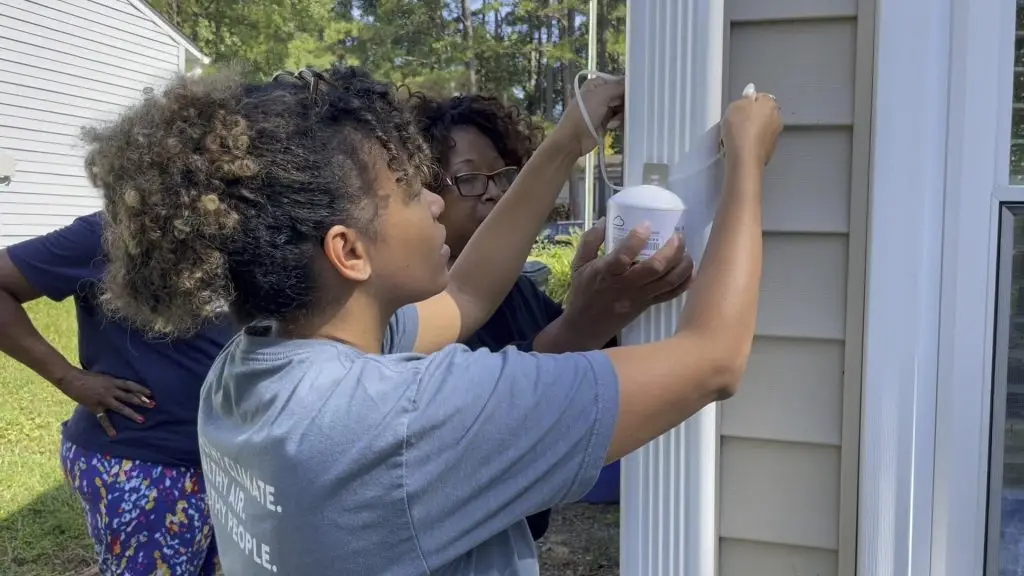
The Sampson County initiative brings together community residents and a number of environmental groups, including Cleanaire NC, the Environmental Justice Community Action Network and Eastern Research Group. The groups will be working together to deploy air sensors — some directly into backyards and one that is mounted on a car — in order to detect pollution in the air. The project is being funded by a $500,000 grant from the EPA, and depending on the data, agency regulators could take action if that pollution exceeds regulatory limits.
Hog Farm Air Pollution Linked to Higher Cancer Rates
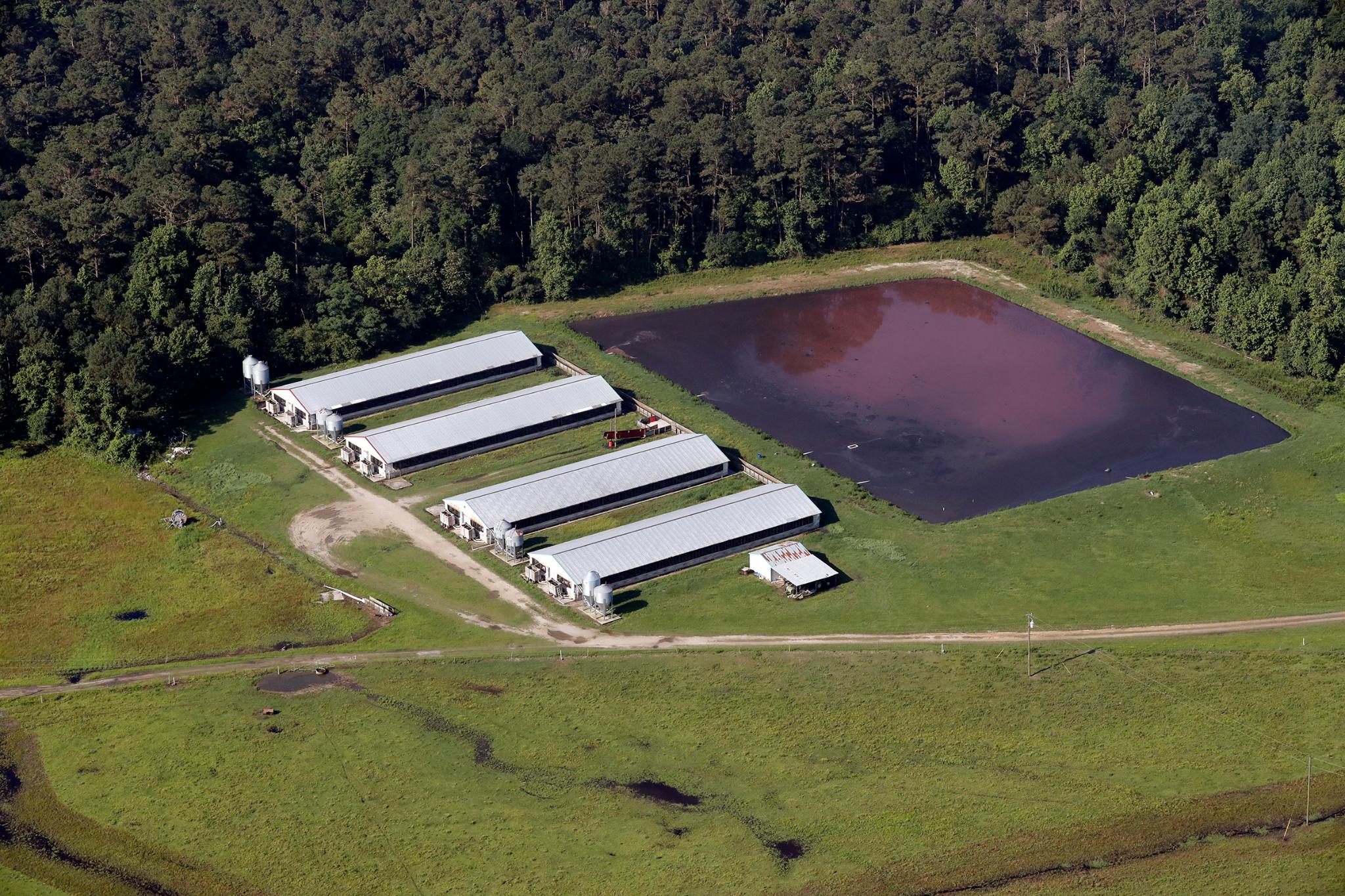
A typical North Carolina industrial hog farms hold thousands of hogs at a time, and those animals generate massive amounts of waste — upwards of millions of gallons of manure, in fact. Farms have to store the waste somewhere until it can be sprayed on crop farms, often in massive open-air cesspits. Each of the farms in Sampson County usually has at least one of these cesspits, though some of the larger farm operations need five or six to hold all of their waste, according to state data. As the waste sits, it emits noxious gasses like methane and hydrogen sulfide that spread into the air in surrounding communities. Collectively, these gasses are called volatile organic compounds or VOCs, and the science suggests these pollutants might be linked to a number of health conditions that are more common in these communities.
According to the research, factory farms in North Carolina have been linked to higher rates of anemia, kidney disease and, for some residents, early mortality. And according to the American Lung Association, exposure to these gasses can cause ear, nose and eye irritation, difficulty breathing and increase the risk of some kinds of cancer.
In Sampson County, Community Residents Take the Lead
Factory farms have a long history of operating in poorer marginalized communities where residents lack the financial resources to push back against the meat and dairy industries. Every single attendee at Cleanaire NC’s first community meeting for the project was Black or brown, says Wall, who heard residents express concern about the quality of the air they and their families breathe each day.
The concerns raised at that first meeting became some of the major driving forces behind the new initiative. Some community members recounted how their homes were sprayed with animal feces, says Wall, while others described playgrounds located right next to factory farms. “It really puts a fire under you to do the best you can,” she adds.
Data collection is set to launch July 1, but 25 out of 30 sensors have already been deployed at homes across the county. Using an app developed in partnership by Cleanaire NC and the EPA, residents report unusual odors, which triggers the system to analyze the source of the smell — ammonia smells sharp and pungent, for instance.
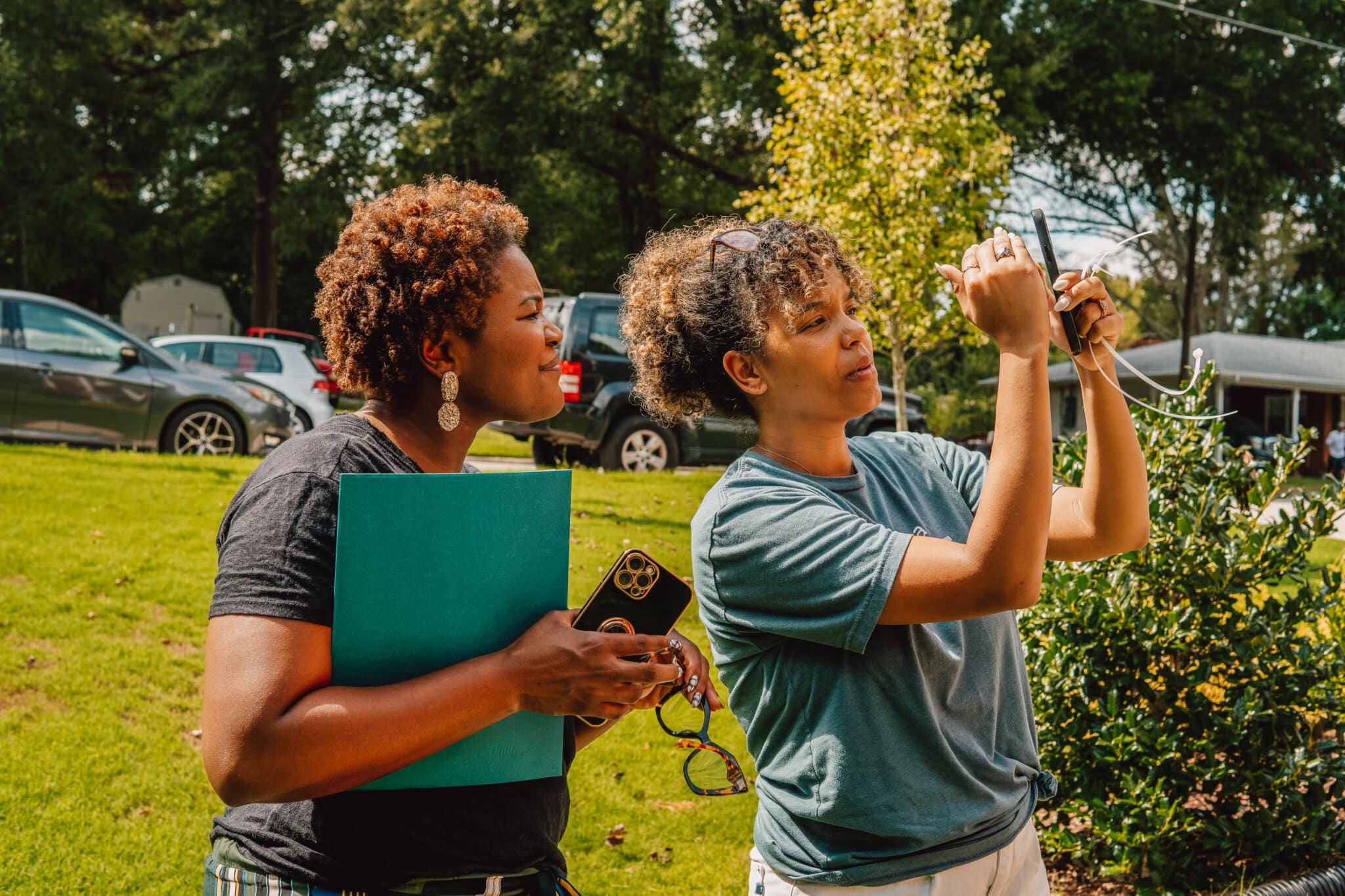
Over the next three years, the coalition will also host training and informational sessions aimed at equipping community members to effectively advocate for clean air. The end goal of all of it: a federal air monitor that can unlock stronger clean air protections for Sampson county.
Federal air quality monitors are used to flag any air contaminant that’s out of the ordinary, says Wall. And once a pollutant has been flagged, she says, “they have to implement programs to address it.” Up until now, communities didn’t have actual data about the pollution in the air. But if the federal monitor detects regulatory violations, the EPA can pursue action against the offenders — including fines and remediation.
Building On Success in Charlotte
In Sampson County, the campaign for a federal air monitor has just started. But 170 miles away in Charlotte, residents of the historic West End neighborhood have already leveraged the sensors to jumpstart federal air quality monitoring.
The community in Charlotte even went on to create a green district with the support of organizations like Cleanaire NC, which includes car charging stations, a community garden, freshly planted trees, newly established green spaces and green bus stations and infrastructure.
The new landscape is a distinct departure from the historic reality of the West End neighborhood, which was redlined by zoning maps in the 1930’s. The practice of redlining was used to delineate Black neighborhoods as “risky investments.” These neighborhoods then were excluded from the investments enjoyed by other areas in cities, and buildings, roads and other city services became neglected and rundown as a result. To make matters worse, when highways came to Charlotte, they cut through other Black neighborhoods, which caused more families to move to the West End and increased racial segregation in Charlotte. Decades later, the neighborhood is now considered highly desirable, but the district also struggles against the effects of gentrification, which increase rents and property taxes and threaten to displace longtime residents.
Back in Sampson County, Wall emphasizes that Cleanaire NC is well aware of their role as an outside organization supporting the work of the residents of the local community. “We really are led and guided by community needs and input,” she says. Wall also says she’s eager to get started, to help spur “the changes that communities want to see.”
This article has been updated to clarify Wall’s work with Cleanaire NC, and also the group’s use of the term “community science.”
[ad_2]
Source link