










[ad_1]
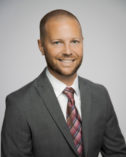
Theodore Schuck, DO, MBA, is a Philadelphia native, chief medical officer, National Health Service Scholar and Philadelphia College of Osteopathic Medicine graduate who followed I-95 south to Florida to begin a career of service to underserved patients.
Dr. Schuck interviewed at several Federally Qualified Health Centers (FQHC) and chose Brevard Health Alliance (BHA) in Brevard County, Florida. He started at BHA as a family physician and simultaneously worked on completing his MBA.
After several years at BHA, the gravitational pull of family caused him to leave the Sunshine State and return to Philadelphia. But he wasn’t back for long before the snow piling up in his driveway caused the lure of Florida to take hold.
Coincidentally, BHA gave him a call and asked him if he would return, and Dr. Schuck found himself heading south once again on I-95 to where he belonged. After thawing out in Florida from his two years in Philadelphia, he ultimately became the chief medical officer at BHA and thus the medical leader of the largest FQHC in Brevard County, Florida, which has nine clinic locations and a mobile health unit. Following is an edited interview.
How did you choose family medicine?
Growing up, I was one of eight. My dad was a police officer. My mom would stay at home. We didn’t have too much growing up and we had to work hard. Early on, my mom was involved in a pretty bad accident, where she had a car run over her back and she still went on and had five more kids.
The accident caused her to go to our family doctor routinely, who not only was a great doctor, but also was a DO. I didn’t even know the difference between DO and MD at that point, but I noticed the great care he gave her, including osteopathic manipulative medicine. Seeing somebody routinely looking out for you, especially as a family physician, that’s what really created this desire in me to go into family medicine and especially osteopathic medicine.
For people not familiar with Federally Qualified Health Centers, what is Brevard Health Alliance (BHA)?
BHA is the only FQHC in Brevard County, Florida, that is granted under the National Health Service Corp. Our mission is to provide primary care services for anyone who enters our door. That, in essence, includes any patient. We see many uninsured and underinsured patients. We are there for the community, and the goal is to provide all of our patients’ primary care needs.
Our primary care services include: family medicine, pediatrics, dental and behavioral health. We have a huge, robust behavioral health system for the patients and they don’t have to go anywhere else. The nice part about being a family physician in a FQHC is that you get to practice to your scope of care.
A lot of our patients, being uninsured/underinsured, do not have the ability to receive care elsewhere, so when it comes to procedures or certain conditions, where a lot of doctors will refer out, we do that in house.
You were a National Health Service Corps (NHSC) scholar in medical school. What are the advantages of this scholarship?
You can apply for an NHSC scholarship prior to starting medical school or after you’ve started medical school. Through the Health Resources and Services Administration (HRSA), the federal government will pay for some or all of your medical school tuition, depending on when you start the scholarship, and allot you a monthly stipend for living expenses. I applied before medical school, so I had all four years paid for.
After you finish medical school and residency, you’ll owe the government two to four years of service in a health professional shortage area (HPSA). The scholarship was very helpful in getting me through medical school and allowed me to do a family medicine residency, which is what I always wanted to do.
How did you ascend into a leadership role at BHA? What advice would you give to physicians who are interested in administrative leadership roles?
BHA really grooms their physicians to be leaders. When I came here [BHA] during my time as a health care scholar, I started with oversight from an experienced doctor and then I grew to become the lead physician at the clinic.
After being the lead physician, I moved up to what we called chief of medical home. We work a team-based approach to leadership, which I really like and thrive in. During my third and fourth years as a scholar, I went back to school and completed my MBA in healthcare administration at Florida Institute of Technology.
My MBA and my time at BHA gave me the skills to get to where I am today. You have to know the ins and outs of the operation, and that knowledge is what really helps me out.
As a physician, when you grow in your career, one of the most important things, especially if you take on a role as a physician leader/executive, is don’t lose touch to your roots. Make sure you continue to take care of patients, even if it’s a couple days a week.
What are the advantages of working at a FQHC?
In osteopathic medicine, we are taught the body is a unit and everything is interrelated. FQHCs conceptually take a very similar approach to patient care. When it comes to our patients’ overall health, there’s not just one piece to that.
I was in private practice, when I went back up to Philly for two years. In essence, when working in a private practice, your team consists of you and your two medical assistants. On the other hand, at BHA, you have a lot of people at your disposal when you’re caring for these patients, and you need them, because the patients’ cases are complicated. So that’s what I think is the best benefit for students and really for any DOs going into FQHCs.
How did COVID impact BHA?
We had to pivot pretty quick. You know in February 2020, we adopted a new medical record. Then, in March 2020, COVID hit, so it was gangbusters at first. We had a small window to figure out what the heck was going on with the pandemic, but what we did fast was adopt telemedicine, as a lot of other organizations did.
We made a concerted effort not to lay any staff off, so we utilized certain staff members in different roles; like our dentists were doing chart prepping and everything they could to help support the medical side. Ultimately, no one was laid off. Patient care went mainly non-face-to-face. Nontraditional visits are what you’re going to see in health care moving forward.
At the federal level, we had grants to help continue testing for COVID within the community and the funding helped in additional ways to care for patients. We are doing better than ever before right now.
What are you looking to achieve next at BHA?
I want to see the organization be a top-quality award winner. I want us to have happy staff. I want the physicians not to feel burned out. That’s a huge thing we are seeing around the country. Physician burnout is a serious issue and we want to reduce this.
We want to expand services for our patients into things such as chronic care. For example, we just brought on podiatry services.
I believe medicine is going to be going away from the traditional fee-for-service standard of care. Quality-based health care, within the next five years or so, especially within our organization, is the future. That’s my vision, nothing crazy, and in my opinion it’s obtainable/reachable.
Related reading:
Public health: How this DO is improving access to care for patients in the Mississippi Delta region
Funding available to improve behavioral health care in rural communities
[ad_2]
Source link