









- By Subash Kafle
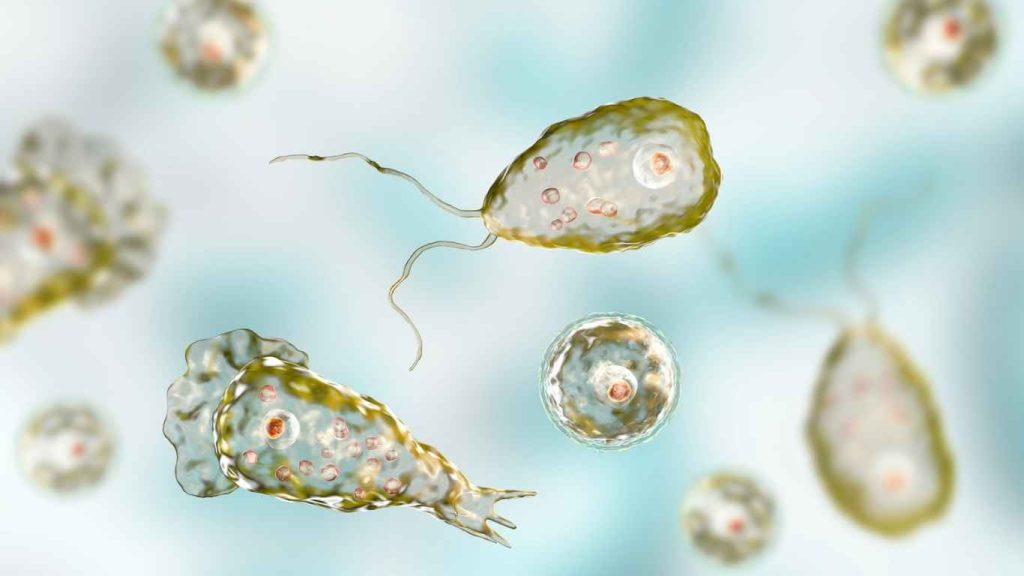
A North Carolina brain-eating amoeba case has left a teenager critically ill, prompting state health officials to remind families about the rare but potentially deadly risk associated with swimming in warm freshwater during the summer.
The North Carolina Department of Health and Human Services said Thursday that a teenager from central North Carolina is receiving medical care after becoming infected with Naegleria fowleri, a microscopic organism commonly found in warm freshwater. Officials have not identified the teenager or provided additional details about the patient’s condition in order to protect the family’s privacy. The source of the infection remains under investigation.
“Our hearts go out to this teen’s family, friends and loved ones as they navigate this difficult time,” State Epidemiologist Dr. Zack Moore said. He added that the case is an important reminder that the amoeba is present in North Carolina and elsewhere in the United States.
The infection comes only days after the death of 8-year-old Lillian Smart in Louisiana. Louisiana health officials said the girl likely contracted Naegleria fowleri while swimming in Lake Claiborne. Her case was Louisiana’s first confirmed infection since 2013, according to the Associated Press.
Despite its alarming nickname, the “brain-eating amoeba” does not infect people simply by drinking contaminated water. According to the Centers for Disease Control and Prevention, infection occurs when water containing Naegleria fowleri enters the nose. The organism can then travel to the brain and cause primary amebic meningoencephalitis, or PAM, a rapidly progressing infection that destroys brain tissue. The infection cannot spread from one person to another.
Naegleria fowleri thrives in warm freshwater, including lakes, rivers, ponds and hot springs. It may also be present in soil and lake sediment. In rare circumstances, infections have been associated with inadequately chlorinated recreational water and contaminated tap water used for nasal or sinus rinsing. Properly maintained and disinfected swimming pools are not considered a typical source of infection.
What Families Should Know About Naegleria Fowleri
PAM remains extremely rare in the United States, but the disease is particularly dangerous because symptoms can worsen rapidly. Initial symptoms can include severe headache, fever, nausea and vomiting. As the infection progresses, patients may develop a stiff neck, confusion, seizures, hallucinations or coma. Symptoms usually begin about five days after exposure but can appear anywhere from one to 12 days later.
The CDC urges people who suddenly develop symptoms such as fever, headache, vomiting or a stiff neck after recent exposure to warm freshwater to seek medical care immediately. The agency says death from PAM typically occurs within about five days after symptoms appear, although the progression can range from one to 18 days.
National surveillance underscores both the rarity and seriousness of the disease. CDC data covering exposures from 1937 through 2025 recorded 173 PAM cases in the United States, including seven exposures in North Carolina. The newly reported North Carolina case is not included in those figures because the surveillance data end in 2025. Texas and Florida have recorded the largest numbers of cases, while most illnesses historically occurred during July and August.
Reducing exposure largely means preventing warm freshwater from entering the nose. The CDC recommends holding the nose closed or wearing a nose clip when jumping or diving into freshwater, keeping the head above water in hot springs and avoiding disturbing sediment in shallow areas. People using devices such as neti pots for nasal rinsing should use distilled, sterile or appropriately boiled and cooled water rather than untreated tap water.
Health officials also caution that a lake without a warning sign should not automatically be considered free of the organism. The CDC does not recommend routine environmental testing or signage because the amount and location of Naegleria fowleri can change within a body of water and there is no standardized method to determine whether a particular area is safe at a given moment.
Changing environmental conditions are also receiving greater attention. The amoeba grows well in heat, and most U.S. infections historically have been associated with southern states. However, the CDC notes that infections have more recently been identified in states farther north and says rising air and freshwater temperatures associated with climate change may be contributing to changes in where the organism can thrive.
The North Carolina case also highlights the importance of equitable public-health communication. Because families cannot rely on visible changes in the water or warning signs to recognize the organism, prevention guidance needs to reach parents and young people through schools, recreation programs, health systems and accessible, multilingual public-health messaging. Ensuring that communities have timely information about symptoms and when to seek emergency care is particularly important for an illness that can progress within days.
At the same time, experts stress that families should understand the risk in perspective rather than panic. UNC Health infectious disease specialist Dr. David Weber told WRAL that “the risk of drowning is much, much higher than getting a Naegleria infection.” Still, the North Carolina teenager’s illness and the recent death in Louisiana show why simple precautions around warm freshwater remain important, particularly during the hottest weeks of summer. WRAL News
Also Read: Breaking the Silence and Finding Support in the Black Man’s Mind
Trending Topics
Features
- Drive Toolkit
Download and distribute powerful vaccination QI resources for your community.
- Health Champions
Sign up now to support health equity and sustainable health outcomes in your community.
- Cancer Early Detection
MCED tests use a simple blood draw to screen for many kinds of cancer at once.
- PR
FYHN is a bridge connecting health information providers to BIPOC communities in a trusted environment.
- Medicare
Discover an honest look at our Medicare system.
- Alliance for Representative Clinical Trials
ARC was launched to create a network of community clinicians to diversify and bring clinical trials to communities of color and other communities that have been underrepresented.
- Reducing Patient Risk
The single most important purpose of our healthcare system is to reduce patient risk for an acute event.
- Subash Kafle
- Jessica Wilson
- Jessica Wilson