











About 6M adults identify as Afro Latino in the US

[ad_1]

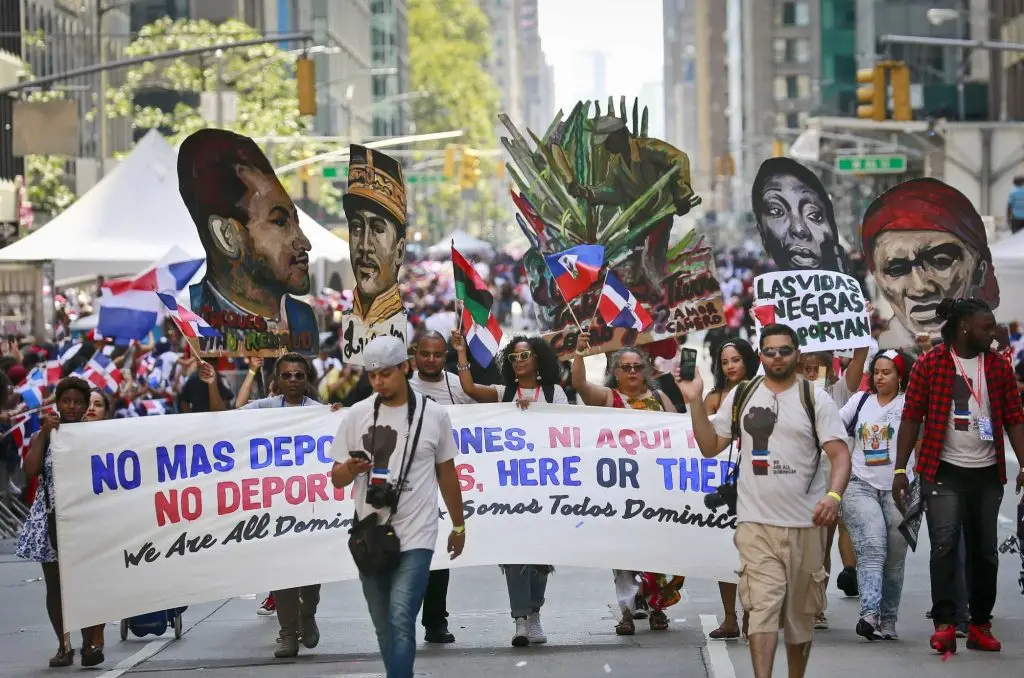
About 6 million adults in the United States identify as Afro Latino, a distinction with deep roots in colonial Latin America, according to a new report by Pew Research Center. That’s about 2% of the adult U.S. population and 12% of the country’s adult Latino population.

The center released its latest report on Afro Latino identity Monday, revealing the multiple dimensions of Latino identity.

Afro Latinos’ life experiences are shaped by factors including race and skin tone in ways that differ from other Hispanics. Most but not all identify as Hispanic or Latino, the survey found.

Being Afro Latino is “distinct and exists along a person’s racial identity, national origin and includes or is tied to culture, ancestry and maybe also physical features,” said researcher and report author Ana Gonzalez-Barrera. “But it is much more than just a label and much more than just a race.”

The report’s results reflect Latin America’s long colonial history, during which mixing occurred among Indigenous Americans, white Europeans, Asians and enslaved people from Africa.

Melissa Dunmore, 32, a writer and poet living in Phoenix, said she embraces both her father’s African and Cherokee roots and the Puerto Rican ancestry from her mother’s side.

“I identify mostly as Black, but I also feel close to the island,” said Dunmore, who was born and raised in Brooklyn, New York, but moved with her family to Arizona as a high school student after 9/11. She was excited to discover a restaurant near her Southwest home that serves mofongo, a traditional Puerto Rican dish made with fried plantains.

“Outside of class, I grew up mostly speaking Spanish after school and during the summer with my maternal grandparents,” said Dunmore. Now she speaks Spanish to her 5-month-old baby girl, Flora. “I want her to have that as well.”

A previous survey published in 2016 showed about one-quarter of all U.S. Latinos self-identify as Afro Latino, Afro Caribbean or of African descent with roots in Latin America. But Gonzalez-Barrera said the results cannot be compared to the more recent report because the previous survey was conducted over the phone, with an interviewer, and the questions were different.

Well-known Afro Latinos in the U.S. include actress Rosario Dawson, rapper Cardi B and former professional baseball player David Ortiz, a Dominican American nicknamed “Big Papi.”

Many Hispanic people identify themselves based on their ancestral countries of origin, their Indigenous roots or racial background. The survey asked adults whether they self-identify as Afro Latino separate from other questions on race or ethnicity. As a result, the number also varies from U.S. Census Bureau sources, which count Afro Latino as anyone who identifies as Hispanic and Black in a two-step race question. The 2020 census show there are 1.2 million people of all ages that identify as such, much lower than the 6 million estimated in the latest center report.

“The thing to consider here is that Afro Latino identity transcends racial identity and cannot be captured by a checkbox-type of question where you mark your ethnicity,” said Gonzalez-Barrera, who has studied Latinos for about 15 years and has worked with Pew Research Center for about 12 years. She identifies as Mexican American and Latina.

The survey asked a census-style question about race to display the complexity of identity. Twenty-eight percent of all Afro Latino people selected white as their race, 25% selected Black and 23% selected “some other race.” According to the report, 59% of Afro Latino people who did not identify as Hispanic selected Black as their race, compared to the 17% who did identify as Hispanic.

A March 2021 Pew Research Center survey of Latino adults said Afro Latino adults who identify as Hispanic were more likely to say they would be seen as multiracial, mixed race or Black when walking past them on the street, a concept known as street race. It also said Afro Latino adults who identify as Hispanic were more likely to say their skin color is darker than other Hispanic adults.

A complementary report released this week said having darker skin and being born outside the U.S. is associated with an increased chance of experiencing discrimination or unfair treatment from other Latino adults. Still, Hispanic people are just as likely to say they personally experienced discrimination or unfair treatment from someone who is not Hispanic.

___

The estimates of the Afro Latino adult population are based on a survey of 68,398 adults across the U.S. conducted from Nov. 19, 2019, to June 3, 2020. The margin of sampling error for estimates of the Afro Latino adult population is plus or minus 600,000 people.

The 2021 survey of 3,375 Hispanic adults was conducted March 15-28 using samples drawn from Pew Research Center’s American Trends Panel and Ipsos’ KnowledgePanel, which are designed to be representative of the U.S. population. The margin of sampling error for the full sample is plus or minus 2.8 percentage points.

___

Mumphrey and Snow reported from Phoenix and are members of the AP’s Race and Ethnicity team. Follow Mumphrey and Snow on Twitter.

[ad_2]

Source link

Trending Topics

Features

Download and distribute powerful vaccination QI resources for your community.

Sign up now to support health equity and sustainable health outcomes in your community.

MCED tests use a simple blood draw to screen for many kinds of cancer at once.

FYHN is a bridge connecting health information providers to BIPOC communities in a trusted environment.

Discover an honest look at our Medicare system.

ARC was launched to create a network of community clinicians to diversify and bring clinical trials to communities of color and other communities that have been underrepresented.

The single most important purpose of our healthcare system is to reduce patient risk for an acute event.

Related Posts
Early Cancer Detection Is Entering a New Era. Flint Is Helping Lead the Way.
Why Your “Ozempic” May Not Be Ozempic: FDA Warnings Highlight Growing Risks of Unregulated GLP-1 Drugs
The Communities Most Burdened by Disease Should Be the First to Benefit from Artificial Intelligence
Scroll to Top
Featured Articles
Early Cancer Detection Is Entering a New Era. Flint Is Helping Lead the Way.
Why Your “Ozempic” May Not Be Ozempic: FDA Warnings Highlight Growing Risks of Unregulated GLP-1 Drugs
Why Your “Ozempic” May Not Be Ozempic: FDA Warnings Highlight Growing Risks o...
The Communities Most Burdened by Disease Should Be the First to Benefit from Artificial Intelligence
The Communities Most Burdened by Disease Should Be the First to Benefit from ...
Cancer Pain Care Access Gap Hits Black, Asian Patients
Black and Asian Cancer Patients Wait Longer for Pain Relief in New Study
What Is Cyclosporiasis Symptoms, Food Safety, and Reasons
What Is Cyclosporiasis? The Foodborne Illness Showing Up in the News
Why Minority Mental Health Awareness Month Matters More Than Ever
Categories
AI
ATTR-CM
BIPOC News
Cancer
Clinical Trials
Covid19
Diseases of the Body
Environment
Health Data
Health Equity Events
Health Policy
Health Tips
Subscribe to our newsletter to receive our latest news​
All Stories
Early Cancer Detection Is Entering a New Era. Flint Is Helping Lead the Way.
Why Your “Ozempic” May Not Be Ozempic: FDA Warnings Highlight Growing Risks of Unregulated GLP-1 Drugs
Why Your “Ozempic” May Not Be Ozempic: FDA Warnings Highlight Growing Risks o...
The Communities Most Burdened by Disease Should Be the First to Benefit from Artificial Intelligence
The Communities Most Burdened by Disease Should Be the First to Benefit from ...
BIPOC News
Early Cancer Detection Is Entering a New Era. Flint Is Helping Lead the Way.
The Communities Most Burdened by Disease Should Be the First to Benefit from Artificial Intelligence
The Communities Most Burdened by Disease Should Be the First to Benefit from ...
Why Minority Mental Health Awareness Month Matters More Than Ever
Environment
UV Safety Awareness Month Raises Urgency on Skin Cancer Prevention and Sun Protection Equity
UV Safety Awareness Month Raises Urgency on Skin Cancer Prevention and Sun Pr...
Extreme Heat Safety Tips 5 Ways to Protect Your Health This Summer fyh.news
5 Heat Safety Tips That Could Protect Your Health This Summer
Lupus Awareness Event in Baltimore Aims to Support Research and Shine a Light on Health Disparities
Lupus Awareness Event in Baltimore Aims to Support Research and Shine a Light...
Work Force
A multigenerational Black and Hispanic family sitting together in a park, showing how Social Security helps support older adults, people with disabilities, and families across generations.
Millions of Older Americans Could Face Smaller Social Security Checks by 2032...
dreamstime_s_243253251
The Caregiver Journey: The Hidden Backbone of American Healthcare
Families gather at a Bronx community festival with live music, kids’ activities, and health booths sharing SOMOS social care resources and free screenings.
Celebrating Hispanic heritage while learning about health care

[xyz-ips snippet=”Output-Source-Name”]

Clinical Trials
Early Cancer Detection Is Entering a New Era. Flint Is Helping Lead the Way.
Why Your “Ozempic” May Not Be Ozempic: FDA Warnings Highlight Growing Risks of Unregulated GLP-1 Drugs
Why Your “Ozempic” May Not Be Ozempic: FDA Warnings Highlight Growing Risks o...
Clinical Trial Diversity Remains a Critical Challenge in Alzheimer’s Research
Vaccines and Outbreaks
A parent checking a child's temperature during summer, illustrating the changing RSV patterns and year-round respiratory virus risks.
Can You Get RSV During the Summer?
Michelle Lam, MBA, of NYC Health + Hospitals/Elmhurst & Amy Harris of NYC Health + Hospitals/Elmhurst
Healthcare Leaders Spotlight Vaccine Equity and Adult Immunization Strategies...
Measles Outbreaks Surge: Essential Facts and Prevention Strategies
Other Categories
AI
Read the latest AI News stories trending around the world
ATTR-CM
Cancer
Read the latest Cancer stories trending around the world
Covid19
Diseases of the Body
Read about the latest Diseases of the Body trending around the world
Friday Webinars
Every Friday, we bring you insightful webinars covering critical topics in healthcare, data equity, and policy reform.
Health Data
Read the latest Health Data stories trending around the world
Health Equity Events
Read the best Health Equity Events around the country.
Health Policy
Read the latest Health Policy stories trending around the world
Health Tips
Heart Health
Read the latest on Heart Health News, Stories and Tips.
kidney Health
Read more trending News about Kidney Health, Stories and Tips.