












A new exhibit takes visitors closer to the National Museum of the American Latino

[ad_1]

The long-dreamed-of National Museum of the American Latino probably will not be completed for at least another ten years, but a huge step was taken towards its realization when the future Smithsonian museum’s first exhibit opened as a pop-up on the National Mall in Washington D.C.

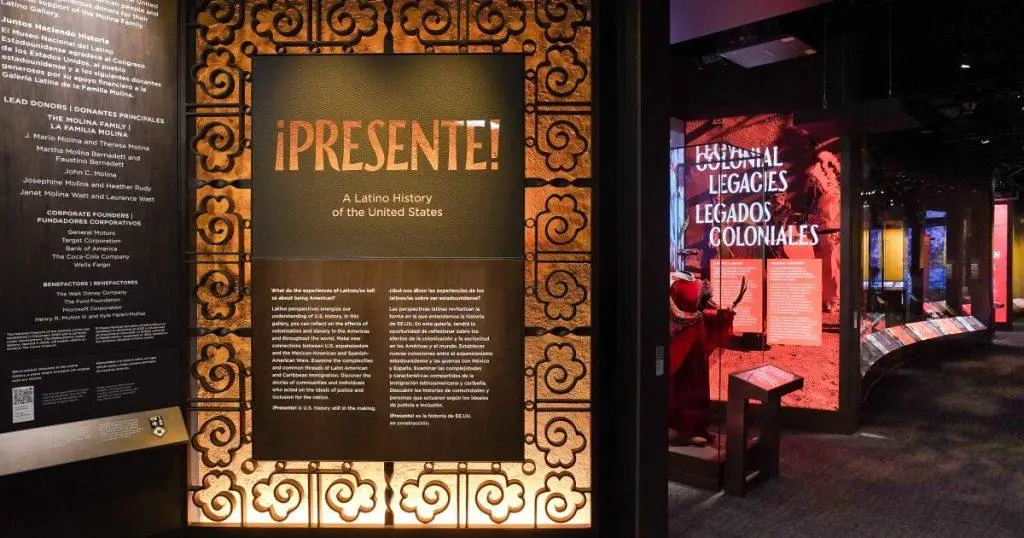
This exhibit, a preview of sorts, is called ¡Presente! A Latino History of the United States. It’s housed in the Molina Family Latino Gallery, a 4,500-square-foot space inside the National Museum of American History.

Jorge Zamanillo, director of the National Museum of the American Latino, says the placement is intentional. It’s meant to show visitors that Latino history is part of American history.

“It’s foundational. It really sets the stage. Kind of like a 101 on American Latino presence in the United States and how it fits into the larger American history narrative,” Zamanillo says.

An exhibit in the Molina Family Latino Gallery at the National Museum of American History.

Tony Powell / Molina Family Latino Gallery

/

Molina Family Latino Gallery

An exhibit in the Molina Family Latino Gallery at the National Museum of American History.

When ¡Presente! was being developed, Smithsonian curators asked visitors about their knowledge of Latino history to figure out what should be at the forefront of this exhibition. The final show speaks to what many of those visitors did not know, says Ranald Woodaman, director of exhibitions and public programs at the Smithsonian Latino Center.

“Most visitors think of Latinos as being new to the United States, they think of us all as being immigrants and as mostly being Mexicans, Puerto Ricans, and Cubans,” he says.

The small but vibrant exhibition reflects all kinds of Latino experiences and presents them in both English and Spanish. ¡Presente! covers four themes: Colonial Legacies, War and U.S. Expansion, Immigration Stories, and Shaping the Nation.

In one of the galleries, for example, visitors can see a raft: a tiny boat where Cuban refugees spent a number of days in 1992 in order to get to Florida by sea. In another, an intricate artwork titled Tree of Life, by Mexican-born Verónica Castillo, uses clay to recreate historical moments and themes present throughout the gallery.

Woodaman said he wanted the exhibition, which is set in chronological order, to end in the present — with data-driven stories that show the growing impact of Latinos in the U.S. He also wanted to end on a note of affirmation, nodding to how the community is breaking boundaries and highlighting stories from people like Supreme Court Justice Sonia Sotomayor, Cuban American singer Celia Cruz and Colombian American drag queen and activist José Sarria.

And at the very end of the gallery, there is a quiet little room with books and board games that feels like a relaxing space to wind down.

“We want people to come to this space and feel welcomed, and feel like they can come to hang out here on a Saturday or Sunday and play Domingos de Dominos or come hang out and learn the science behind the spices of our Latino foods,” says Emily Key, who runs audience engagement at the museum. “Why does chile taste the way it does? What’s the science behind that?”

Until the National Museum of the American Latino is finally constructed and opens, in 2024 or later, this gallery marks a significant step: the beginning of the end of a decades-long pursuit to highlight Latino culture in the American context.

Copyright 2022 NPR. To see more, visit https://www.npr.org.

[ad_2]

Source link

Trending Topics

Features

Download and distribute powerful vaccination QI resources for your community.

Sign up now to support health equity and sustainable health outcomes in your community.

MCED tests use a simple blood draw to screen for many kinds of cancer at once.

FYHN is a bridge connecting health information providers to BIPOC communities in a trusted environment.

Discover an honest look at our Medicare system.

ARC was launched to create a network of community clinicians to diversify and bring clinical trials to communities of color and other communities that have been underrepresented.

The single most important purpose of our healthcare system is to reduce patient risk for an acute event.

Related Posts
Early Cancer Detection Is Entering a New Era. Flint Is Helping Lead the Way.
Why Your “Ozempic” May Not Be Ozempic: FDA Warnings Highlight Growing Risks of Unregulated GLP-1 Drugs
The Communities Most Burdened by Disease Should Be the First to Benefit from Artificial Intelligence
Scroll to Top
Featured Articles
Early Cancer Detection Is Entering a New Era. Flint Is Helping Lead the Way.
Why Your “Ozempic” May Not Be Ozempic: FDA Warnings Highlight Growing Risks of Unregulated GLP-1 Drugs
Why Your “Ozempic” May Not Be Ozempic: FDA Warnings Highlight Growing Risks o...
The Communities Most Burdened by Disease Should Be the First to Benefit from Artificial Intelligence
The Communities Most Burdened by Disease Should Be the First to Benefit from ...
Cancer Pain Care Access Gap Hits Black, Asian Patients
Black and Asian Cancer Patients Wait Longer for Pain Relief in New Study
What Is Cyclosporiasis Symptoms, Food Safety, and Reasons
What Is Cyclosporiasis? The Foodborne Illness Showing Up in the News
Why Minority Mental Health Awareness Month Matters More Than Ever
Categories
AI
ATTR-CM
BIPOC News
Cancer
Clinical Trials
Covid19
Diseases of the Body
Environment
Health Data
Health Equity Events
Health Policy
Health Tips
Subscribe to our newsletter to receive our latest news​
All Stories
Early Cancer Detection Is Entering a New Era. Flint Is Helping Lead the Way.
Why Your “Ozempic” May Not Be Ozempic: FDA Warnings Highlight Growing Risks of Unregulated GLP-1 Drugs
Why Your “Ozempic” May Not Be Ozempic: FDA Warnings Highlight Growing Risks o...
The Communities Most Burdened by Disease Should Be the First to Benefit from Artificial Intelligence
The Communities Most Burdened by Disease Should Be the First to Benefit from ...
BIPOC News
Early Cancer Detection Is Entering a New Era. Flint Is Helping Lead the Way.
The Communities Most Burdened by Disease Should Be the First to Benefit from Artificial Intelligence
The Communities Most Burdened by Disease Should Be the First to Benefit from ...
Why Minority Mental Health Awareness Month Matters More Than Ever
Environment
UV Safety Awareness Month Raises Urgency on Skin Cancer Prevention and Sun Protection Equity
UV Safety Awareness Month Raises Urgency on Skin Cancer Prevention and Sun Pr...
Extreme Heat Safety Tips 5 Ways to Protect Your Health This Summer fyh.news
5 Heat Safety Tips That Could Protect Your Health This Summer
Lupus Awareness Event in Baltimore Aims to Support Research and Shine a Light on Health Disparities
Lupus Awareness Event in Baltimore Aims to Support Research and Shine a Light...
Work Force
A multigenerational Black and Hispanic family sitting together in a park, showing how Social Security helps support older adults, people with disabilities, and families across generations.
Millions of Older Americans Could Face Smaller Social Security Checks by 2032...
dreamstime_s_243253251
The Caregiver Journey: The Hidden Backbone of American Healthcare
Families gather at a Bronx community festival with live music, kids’ activities, and health booths sharing SOMOS social care resources and free screenings.
Celebrating Hispanic heritage while learning about health care

[xyz-ips snippet=”Output-Source-Name”]

Clinical Trials
Early Cancer Detection Is Entering a New Era. Flint Is Helping Lead the Way.
Why Your “Ozempic” May Not Be Ozempic: FDA Warnings Highlight Growing Risks of Unregulated GLP-1 Drugs
Why Your “Ozempic” May Not Be Ozempic: FDA Warnings Highlight Growing Risks o...
Clinical Trial Diversity Remains a Critical Challenge in Alzheimer’s Research
Vaccines and Outbreaks
A parent checking a child's temperature during summer, illustrating the changing RSV patterns and year-round respiratory virus risks.
Can You Get RSV During the Summer?
Michelle Lam, MBA, of NYC Health + Hospitals/Elmhurst & Amy Harris of NYC Health + Hospitals/Elmhurst
Healthcare Leaders Spotlight Vaccine Equity and Adult Immunization Strategies...
Measles Outbreaks Surge: Essential Facts and Prevention Strategies
Other Categories
AI
Read the latest AI News stories trending around the world
ATTR-CM
Cancer
Read the latest Cancer stories trending around the world
Covid19
Diseases of the Body
Read about the latest Diseases of the Body trending around the world
Friday Webinars
Every Friday, we bring you insightful webinars covering critical topics in healthcare, data equity, and policy reform.
Health Data
Read the latest Health Data stories trending around the world
Health Equity Events
Read the best Health Equity Events around the country.
Health Policy
Read the latest Health Policy stories trending around the world
Health Tips
Heart Health
Read the latest on Heart Health News, Stories and Tips.
kidney Health
Read more trending News about Kidney Health, Stories and Tips.


