









[ad_1]
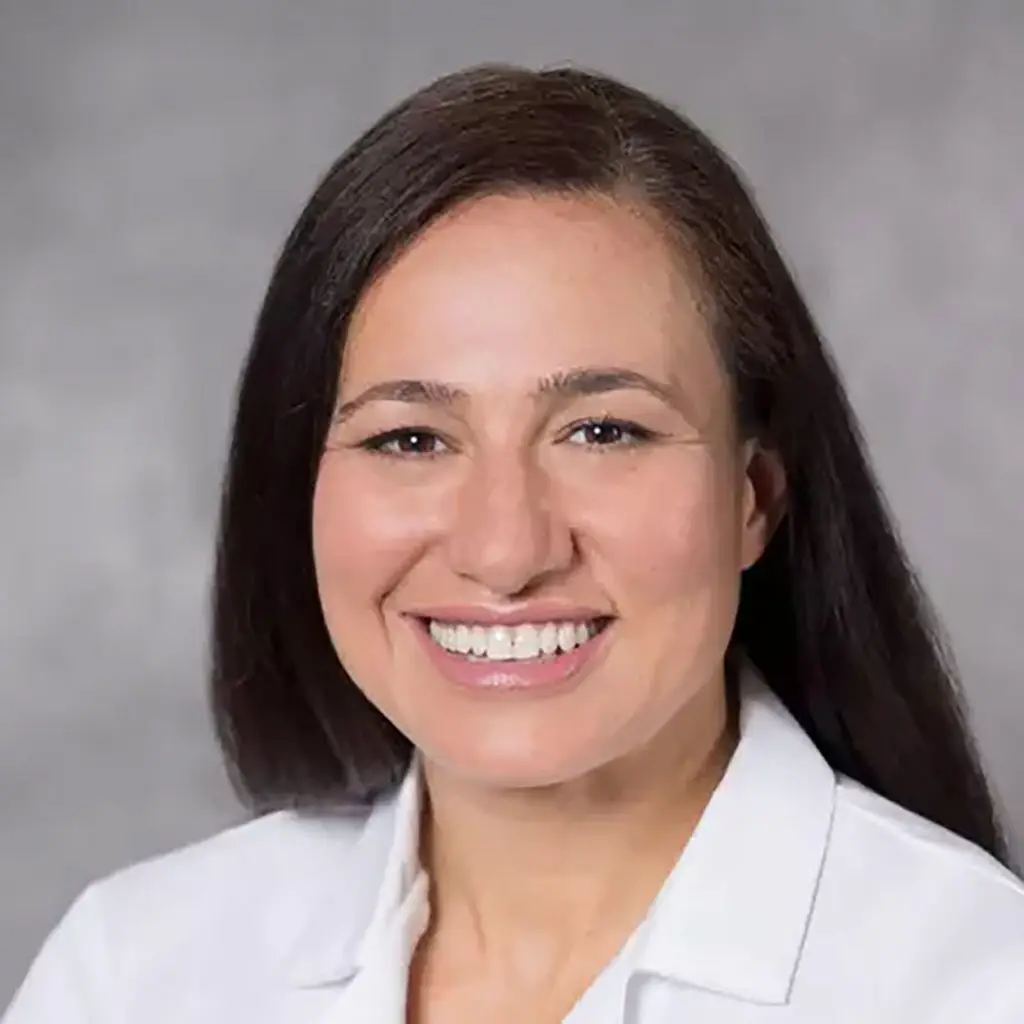
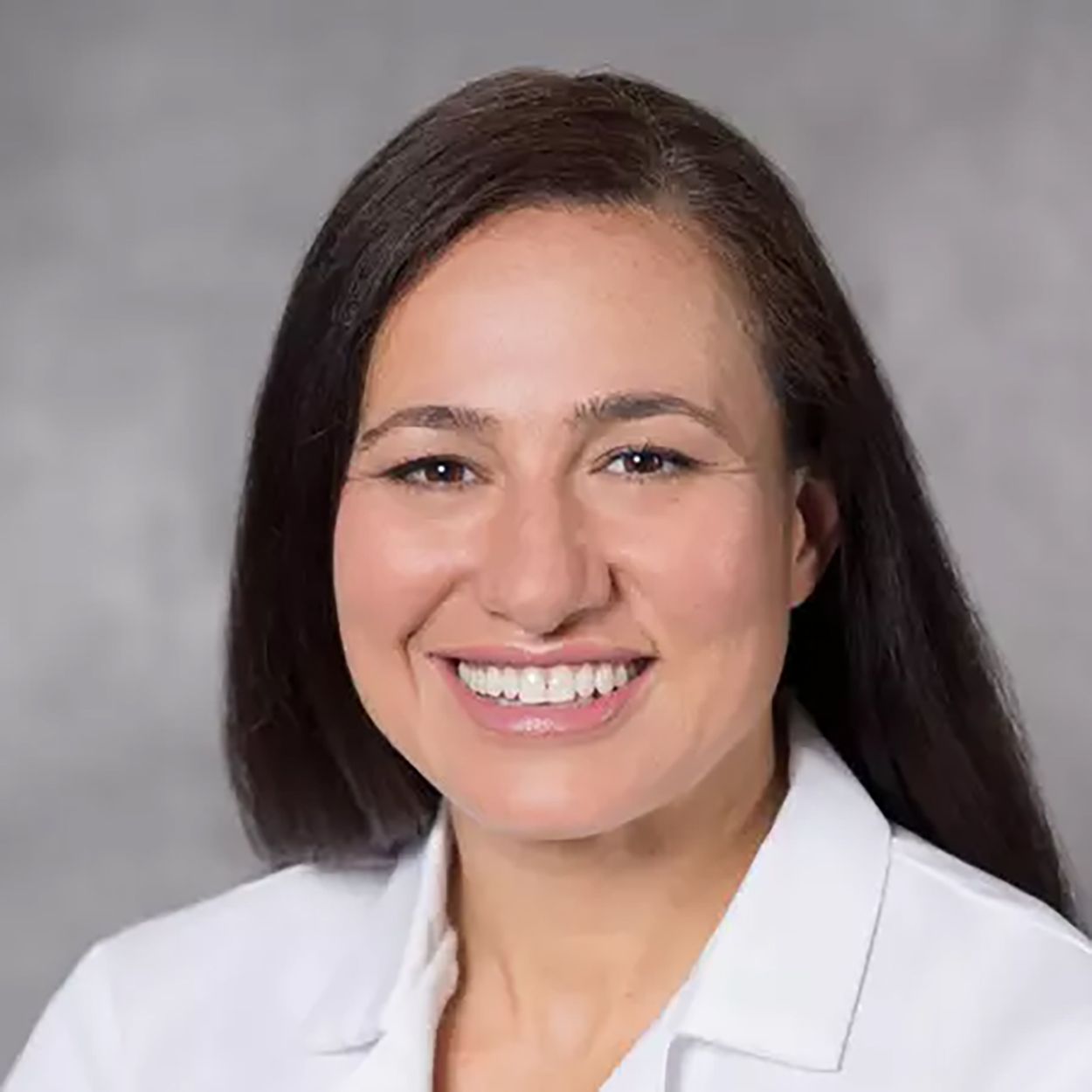
Rana McKay, MD
Medical Oncologist
Associate Professor of Medicine
University of California San Diego Health
San Diego, CA
Targeted Oncology: What disparities in care exist for African American patients with prostate cancer?
McKAY: There are a significant number of disparities [in treatment and care] for African American men with prostate cancer across the spectrum, [including] access to care, insurance, health literacy, screenings, being able to receive definitive treatment, and getting effective guidelines during treatment.1
There’s a significant amount of disparities across the entire continuum for any individual with prostate cancer. There are also institutional barriers and implicit bias, so a lot of factors come into play in the context of racial disparities for African American individuals with prostate cancer.
How can some of these obstacles to care be overcome by assessing patients’ risk for disease?
At the present time, we are mainly using clinical parameters to help us with identifying appropriate therapies for any given patient. The clinical parameters right now are largely prognostic in nature, and we use them to help identify higher-and lower-risk groups [of patients], but they’re not at the present time predictive. So developing a strategy where we can better inform risk and better predict how someone’s going to do with a therapy is ideal.
How does the ArteraAI Prostate Test look to help this strategy?
The beauty about this AI model is that it was developed and validated within a large cohort of 5 national NRG studies that included a large proportion of African American individuals.2 Up to 20% of individuals who were included in these trials were African American men, and that is why this model can be applied across [racial] groups.
This test is an incredibly simple test that doesn’t expend tissue resources. It [requires] slides of archival biopsy specimens that are adequate to perform the test. So it doesn’t waste any tissue or waste any samples. The AI model uses all the information that is gleaned from what is on the slide to identify someone’s AI score [for disease risk].2
What were some of the results from the study of this AI model?
The model is quite interesting, and the model demonstrated that the use of the prostate AI score was prognostic of outcomes beyond your standard National Comprehensive Cancer Network [NCCN] criteria.3 In addition, it was able to predict [the patient’s] likelihood of benefitting hormone therapy. That is where this could be applicable in clinical practice: by using [the AI model] to complement clinical parameters to help with risk stratification and potentially predicting benefit from androgen deprivation therapy in the localized setting.3
Was bias within the AI model addressed in the development of the model and in this study?
It was [assessed] as the model was being tested. What was so great about this study is that it included very granular clinical outcomes data and clinical parameters on all patients who were involved.3 When you take the slides and you run it through the model, an image quilt is developed, and all the different items that are seen on the slide are then attempted to be linked to the outcome.3 You can look at the slide, and every little thing that’s on the slide the model will address. Is this little thing that I see linked to the outcome?
There may be some items that have no bearing on the outcome, [such as] if there’s a smudge on the slide. That won’t be linked to somebody dying of prostate cancer, but there are some features [such as] the vascularity of the tumor or the immune infiltrate…and nuclear composition that may be linked to [disease outcomes]. The model is iterative and learns from itself, and every little detail that is on the slide is evaluated over and over again to see whether it correlates with the outcome.
How can this be applied in the community oncology setting?
This is so scalable, [because] all that is needed is a biopsy slide and a few clinical parameters. A biopsy slide is sent to ArteraAI and they give you an AI prognostic score. Because all that is needed are the images from the biopsy slide, there is no expenditure of tissue. We use all of the materials on the slide [because] a picture of the slide is taken. It’s the picture that is analyzed [by the ArteraAI Prostate Test].
What role do you see for this AI model in the continuing challenge of addressing disparities in care for these patients?
Models that are developed using datasets that include the heterogeneous population whom we care for in the United States is going to be key for application of these models to those exact groups when the tests are validated. That’s the beauty of this test: It was validated in a cohort that included a large group of African American men.
As we move forward and look at applying this model across different states of prostate cancer and potentially across different [malignant tumors such as] breast cancer, kidney cancer, or bladder cancer, those cohorts that are utilized to be the training and validation should be inclusive of a heterogeneous and diverse patient population whom we treat in the United States.
What are the next steps for putting this model to wider use?
It’s in the NCCN guidelines as a test that can be utilized to help guide patient prognosis in the localized setting.4 It is something that any clinician can use. I think that increased education about how to order the test, how to interpret the results, and how to apply the results [is important].
What is exciting for you about AI’s integration into cancer care?
What’s so exciting about AI is the ability to integrate a very large amount of data. We’re in…a data bubble, but we are constantly surrounded by large volumes of data…. The beauty about AI is that it can allow us to distill and analyze that information in an efficient manner for integrated analyses. [AI] is incredibly scalable and allows us to analyze a large amount of data.
There are a lot of exciting, translational data that have come forward, and AI may be a tool to integrate and analyze that. So I’m excited about the future of AI applications and [how they can fit into the field of treatment for patients with] prostate cancer and bridge racial disparity gaps.
What advice do you have for clinical oncologists?
The biggest advice [I have] is ensuring that the health systems we practice in do not set up barriers for individuals [from] diverse racial and ethnic [groups and] making sure there isn’t any implicit bias when [working with or treating] somebody who is [from] a minority group. There’s a lot that we can do as a community and a field to help pave the path for equitable care for underrepresented patients.
REFERENCES
1. Lillard JW Jr, Moses KA, Mahal BA, George DJ. Racial disparities in Black men with prostate cancer: a literature review. Cancer. 2022;128(21):3787- 3795. doi:10.1002/cncr.34433
2. The science behind the ArteraAI Prostate Test. ArteraAI. 2023. Accessed October 23, 2023. https://tinyurl.com/46y5wead
3. Roach M, Zhang J, Esteva A, et al. Prostate cancer risk in African American men evaluated via digital histopathology multi-modal deep learning models developed on NRG Oncology phase III clinical trials. J Clin Oncol. 2022;40(suppl 16):108. doi:10.1200/JCO.2022.40.16_suppl.108
4. NCCN. Clinical Practice Guidelines in Oncology. Prostate cancer, version 4.2023. Accessed October 22, 2023. https://tinyurl.com/bdxyvsc7
[ad_2]
Source link