











Black, Hispanic Adults Less Likely To Receive CPR, Especially In Public

[ad_1]

Black or Hispanic adults who experience a witnessed cardiac arrest outside the hospital are substantially less likely than their white peers to receive lifesaving care from a bystander, preliminary new research shows.

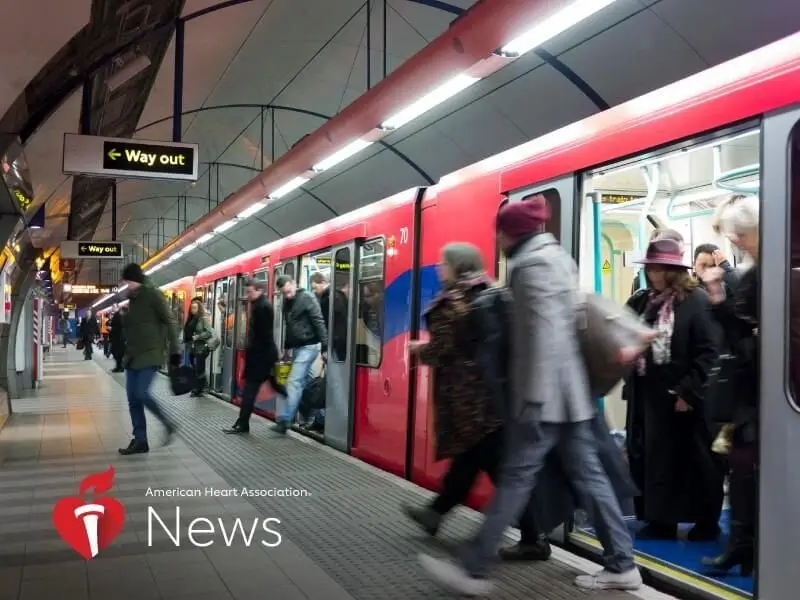
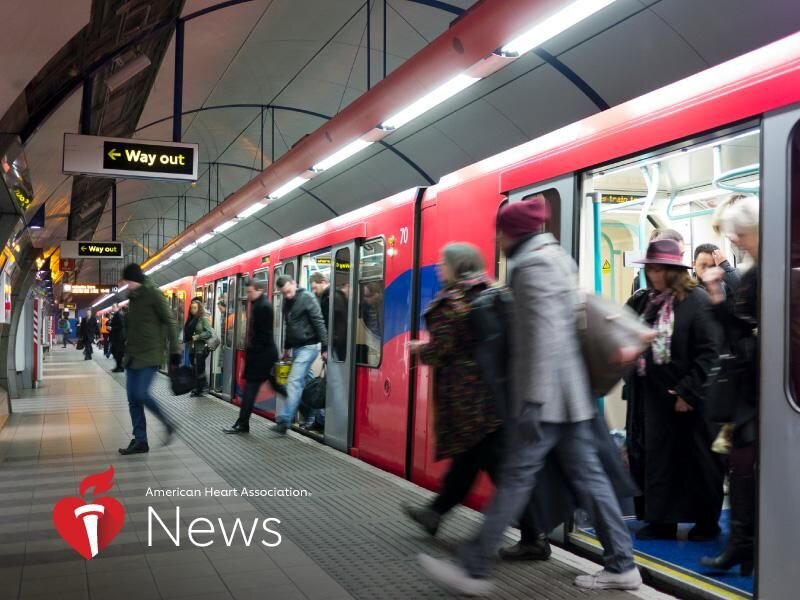
CPR was least likely for Black and Hispanic adults in a less personal setting, such as on the street or in a public transportation center, according to findings presented Friday at the American Heart Association’s Quality of Care and Outcomes Research Scientific Sessions in Reston, Virginia. Results improved at home or in public settings where people might know the person, such as the workplace, though such CPR still was more likely for white people in the study.

“We hypothesized that in a public setting, the rates of bystander CPR would increase and the treatment difference seen in the home setting would be smaller because there are more people available to provide CPR,” said lead researcher Dr. R. Angel Garcia, a cardiology fellow at St. Luke’s Mid-America Heart Institute at the University of Missouri in Kansas City. “Unfortunately, it went the opposite way. The disparity became larger.”

Cardiac arrest occurs when a person’s heart abruptly stops pumping blood, which can be fatal if not immediately treated with CPR or a defibrillator to restore normal heart rhythm. About 370,000 cardiac arrests occur outside the hospital each year, most often in a person’s home, according to AHA statistics. People who receive CPR from family, friends or strangers while waiting for emergency personnel to arrive are twice as likely to survive as those who don’t.

Researchers presented their initial findings at the American College of Cardiology’s Scientific Sessions in April. They analyzed 110,054 records of bystander-witnessed, out-of-hospital cardiac arrests from 2013 to 2019.

The initial findings showed that if their hearts stopped at home, Black and Hispanic adults were 26% less likely to receive bystander CPR than white people. If the cardiac arrest occurred in public, they were 41% less likely.

In the most recent analysis presented Friday, bystander CPR response rates were compared in different public settings—the workplace, recreational facilities, on the street or highway, in transportation centers, or other public areas.

According to the new data, when Black and Hispanic people had a cardiac arrest in the workplace, they were 27% less likely to receive CPR from a bystander than their white co-workers. If they experienced a cardiac arrest at a public transportation center, they were 57% less likely. The results are considered preliminary until the full findings are published in a peer-reviewed journal.

Along with other factors, Garcia said the authors controlled for the age and sex of the people needing aid because some people may be unnecessarily reluctant to administer CPR to older people out of concern for injuring them, or to women out of concern for inappropriately touching them.

“The only thing left to describe why a person would not respond in the public setting is the race of the person,” he said. “Maybe there is implicit bias. Or maybe they have a conscious bias against the person’s race. The reality is, we can’t account for which of those reasons would be truly present.”

Racism “is definitely one of the factors” preventing people from responding to Black and Hispanic adults in need of help, said Katie Dainty, research chair at North York General Hospital and an associate professor in the Institute of Health Policy, Management and Evaluation at the University of Toronto in Canada.

“But that’s a very hard thing to measure,” she said. “What we need to do is hit these concepts straight on—talk about them so we can address them in a proactive way. And that is not easy. Bringing it to light as we are doing with this research is a step in the right direction.”

Dainty was not involved in the new research but chaired the writing committee for a recent AHA scientific statement about people who are not in the medical field responding with CPR.

According to the statement, only 35%-45% of people globally who have a cardiac arrest outside the hospital receive CPR from bystanders. Prior research shows people living in predominantly Black and Hispanic neighborhoods and those with low income are less likely to receive bystander CPR than people living in predominantly white and higher-income neighborhoods.

“I wasn’t surprised by these findings,” said Dainty, who also noted they have always struggled with accessing populations that are lower income or racially diverse. “We really haven’t figured out how to unpack issues that are unique to them.”

The findings suggest it’s not just CPR skills that need to be taught, she said.

“It’s about preparing people psychologically—including overcoming issues like racism—to respond to a human being in distress,” she said. “For a very long time, the message has been that we just need to train more people. And that’s great, but what we really need to look at it is why even trained individuals aren’t responding.”

People don’t need training to respond, experts say. All they need to do is press hard and fast in the center of the chest for 120 compressions per minute, at least 2 inches deep, according to AHA guidelines. 911 operators also can guide rescuers through CPR.

The AHA’s vice president of emergency cardiovascular care science and innovation, Dr. Comilla Sasson, was part of the team conducting the new research.


Racial minorities are less likely to receive CPR when they need it


Copyright © 2022 HealthDay. All rights reserved.

Citation:
Black, Hispanic adults less likely to receive CPR, especially in public (2022, May 13)
retrieved 14 May 2022
from https://medicalxpress.com/news/2022-05-black-hispanic-adults-cpr.html

This document is subject to copyright. Apart from any fair dealing for the purpose of private study or research, no
part may be reproduced without the written permission. The content is provided for information purposes only.

[ad_2]

Source link

Trending Topics

Features

Download and distribute powerful vaccination QI resources for your community.

Sign up now to support health equity and sustainable health outcomes in your community.

MCED tests use a simple blood draw to screen for many kinds of cancer at once.

FYHN is a bridge connecting health information providers to BIPOC communities in a trusted environment.

Discover an honest look at our Medicare system.

ARC was launched to create a network of community clinicians to diversify and bring clinical trials to communities of color and other communities that have been underrepresented.

The single most important purpose of our healthcare system is to reduce patient risk for an acute event.

Related Posts
Florida Reports First 2026 Death Linked to Vibrio vulnificus as Cases Rise to 12
Nationwide Levothyroxine Recall: Patients Urged to Check Thyroid Medication Lots
R&B Singer Nivea Reveals Leukemia Diagnosis at 44, Says Treatment Is Going Well
Scroll to Top
Featured Articles
Vibrio vulnificus Florida First 2026 Death Reported Fyh.news
Florida Reports First 2026 Death Linked to Vibrio vulnificus as Cases Rise to 12
Levothyroxine Recall Check Affected Thyroid Medication Lots Fyh.news
Nationwide Levothyroxine Recall: Patients Urged to Check Thyroid Medication Lots
Nivea Leukemia Diagnosis Singer Shares Treatment Update
R&B Singer Nivea Reveals Leukemia Diagnosis at 44, Says Treatment Is Goin...
Sen. Alex Padilla speaks during the announcement of the Health Equity and Accountability Act of 2026, legislation aimed at reducing health disparities and expanding access to healthcare for underserved communities.
Health Equity Act Reintroduced to Expand Access
Senate HELP Committee advances bipartisan health care bills on insulin, biosimilars, rural care and price transparency.
Senate Committee Advances 11 Health Care Access Bills
Bottle and tablets representing the recall of some cetirizine 5 mg allergy medicine
Cetirizine Recall: Check Your Allergy Medicine
Categories
AI
ATTR-CM
BIPOC News
Cancer
Clinical Trials
Covid19
Diseases of the Body
Environment
Health Data
Health Equity Events
Health Policy
Health Tips
Subscribe to our newsletter to receive our latest news​
All Stories
Vibrio vulnificus Florida First 2026 Death Reported Fyh.news
Florida Reports First 2026 Death Linked to Vibrio vulnificus as Cases Rise to 12
Levothyroxine Recall Check Affected Thyroid Medication Lots Fyh.news
Nationwide Levothyroxine Recall: Patients Urged to Check Thyroid Medication Lots
Nivea Leukemia Diagnosis Singer Shares Treatment Update
R&B Singer Nivea Reveals Leukemia Diagnosis at 44, Says Treatment Is Goin...
BIPOC News
Senate HELP Committee advances bipartisan health care bills on insulin, biosimilars, rural care and price transparency.
Senate Committee Advances 11 Health Care Access Bills
Bottle and tablets representing the recall of some cetirizine 5 mg allergy medicine
Cetirizine Recall: Check Your Allergy Medicine
How NMQF Advances Minority Health Through Data, Research and Health Access
Environment
UV Safety Awareness Month Raises Urgency on Skin Cancer Prevention and Sun Protection Equity
UV Safety Awareness Month Raises Urgency on Skin Cancer Prevention and Sun Pr...
Extreme Heat Safety Tips 5 Ways to Protect Your Health This Summer fyh.news
5 Heat Safety Tips That Could Protect Your Health This Summer
Lupus Awareness Event in Baltimore Aims to Support Research and Shine a Light on Health Disparities
Lupus Awareness Event in Baltimore Aims to Support Research and Shine a Light...
Work Force
A multigenerational Black and Hispanic family sitting together in a park, showing how Social Security helps support older adults, people with disabilities, and families across generations.
Millions of Older Americans Could Face Smaller Social Security Checks by 2032...
dreamstime_s_243253251
The Caregiver Journey: The Hidden Backbone of American Healthcare
Families gather at a Bronx community festival with live music, kids’ activities, and health booths sharing SOMOS social care resources and free screenings.
Celebrating Hispanic heritage while learning about health care

[xyz-ips snippet=”Output-Source-Name”]

Clinical Trials
House Advances Bipartisan EARLY Act Reauthorization, Renewing Focus on Early Breast Cancer Detection for Young Women
House Advances Bipartisan EARLY Act Reauthorization, Renewing Focus on Early ...
Early Cancer Detection Is Entering a New Era. Flint Is Helping Lead the Way.
Why Your “Ozempic” May Not Be Ozempic: FDA Warnings Highlight Growing Risks of Unregulated GLP-1 Drugs
Why Your “Ozempic” May Not Be Ozempic: FDA Warnings Highlight Growing Risks o...
Vaccines and Outbreaks
Cyclospora Outbreak Linked to Lettuce Sickens 1,600+ fyh.news
Cyclospora Outbreak Linked to Recalled Lettuce Sickens More Than 1,600 Across...
A parent checking a child's temperature during summer, illustrating the changing RSV patterns and year-round respiratory virus risks.
Can You Get RSV During the Summer?
Michelle Lam, MBA, of NYC Health + Hospitals/Elmhurst & Amy Harris of NYC Health + Hospitals/Elmhurst
Healthcare Leaders Spotlight Vaccine Equity and Adult Immunization Strategies...
Other Categories
AI
Read the latest AI News stories trending around the world
ATTR-CM
Cancer
Read the latest Cancer stories trending around the world
Covid19
Diseases of the Body
Read about the latest Diseases of the Body trending around the world
Friday Webinars
Every Friday, we bring you insightful webinars covering critical topics in healthcare, data equity, and policy reform.
Health Data
Read the latest Health Data stories trending around the world
Health Equity Events
Read the best Health Equity Events around the country.
Health Policy
Read the latest Health Policy stories trending around the world
Health Tips
Heart Health
Read the latest on Heart Health News, Stories and Tips.
kidney Health
Read more trending News about Kidney Health, Stories and Tips.


