









[ad_1]
From Kern to San Joaquin counties, an estimated 2.4 million Latinos live in the central San Joaquin Valley, where they make up an estimated 54.8% of residents, according to July 2022 census data.
It is only expected to increase. According to the California Department of Finance, the Central Valley is expected to add nearly 5 million people by 2060.
The growing population raises questions about the future of the area’s educational and economic outcomes.
In the central San Joaquin Valley, the four-year college graduation rate for adults over age 25 has lagged behind other major metropolitan areas such as Los Angeles, Orange and San Francisco counties for years. Graduation rates for counties in the Valley range from 14% to 22%, with comparably larger areas like Los Angeles and San Francisco ranging from 34% to 60%.
Graduates enter the Save Mart Center during the Fresno State Latino/Chicano commencement ceremony on May 21, 2022.
Nationwide, a 2023 Lumina Foundation-Gallup survey shows that 50% of Latino college students are considering skipping college altogether, while other data shows that the gap between Latino and White college completion is widening. Is. This huge number can be largely attributed to the coronavirus pandemic, with the latest data showing that the CSU system has experienced an “unprecedented” enrollment decline.
This declining college enrollment could have a major impact on the Central San Joaquin Valley, where half of all graduates at the region’s four public California State University campuses are Latino.
But Benjamin Duran, executive director of the Central Valley Higher Education Consortium — a nonprofit made up of 28 Valley colleges and universities that is working to increase higher education attainment rates — is hopeful. He noted the growing collaboration between local community colleges, state and private universities that are creating educational pathways that meet the specific needs of the Central Valley’s rural, largely Latino communities.
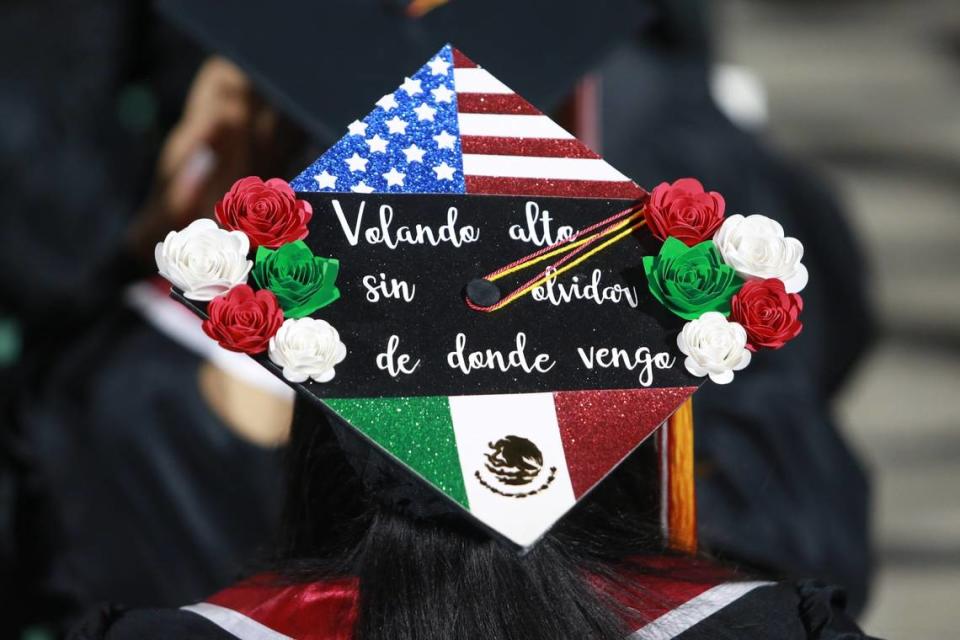
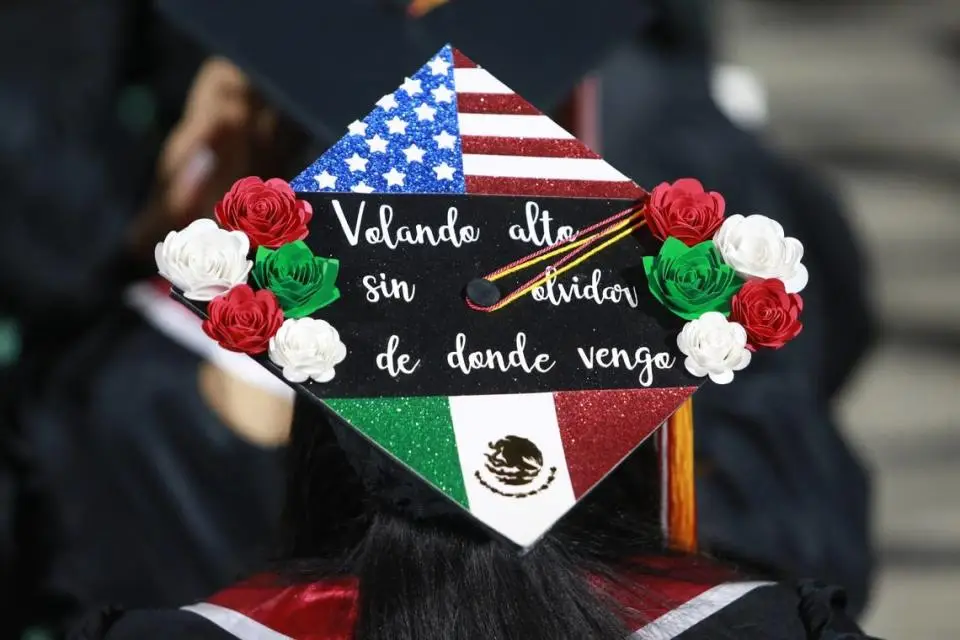
This mortar board was seen at Fresno City College’s commencement ceremony in Chukchansi Park on June 3.
Throughout the Valley, education leaders are working on solutions to boost college attainment and completion, such as: offering more dual enrollment in rural high schools, four-year degrees at community colleges, direct enrollment for qualified high school graduates Admission programs and education pathways. Formerly imprisoned.
“This didn’t happen 20 years ago,” Duran said.
Additionally, he said the Central Valley’s higher education institutions are bouncing back from the post-pandemic downturn “faster than the rest of the state, obviously.”
Join La Abeja’s reporting team — journalists from The Fresno, Sacramento, Modesto Bees and Vida en el Valle — for a virtual, hour-long panel conversation with education leaders across the state and Central Valley to understand the obstacles and opportunities Latino Student Success on Nov. 8 at 6 p.m.
RSVP and ask a question here.
A look at Central Valley institutions
According to CVHEC data, the majority of Central Valley four-year university students attend CSU campuses.
Statewide, the CSU system offers nearly half of all bachelor’s degrees in California – where nearly half of the student body is made up of Latinos. As of Fall 2022, the Hispanic student enrollment rate for the Fall 2022 semester in the CSU system was 47%.
The Central Valley is home to four California State University campuses spanning 285 miles from Kern to Sacramento counties, including Bakersfield, Fresno, Stanislaus, and Sacramento (there is also a campus of the University of California in Merced, as well as UC Davis near Sacramento. is also) .
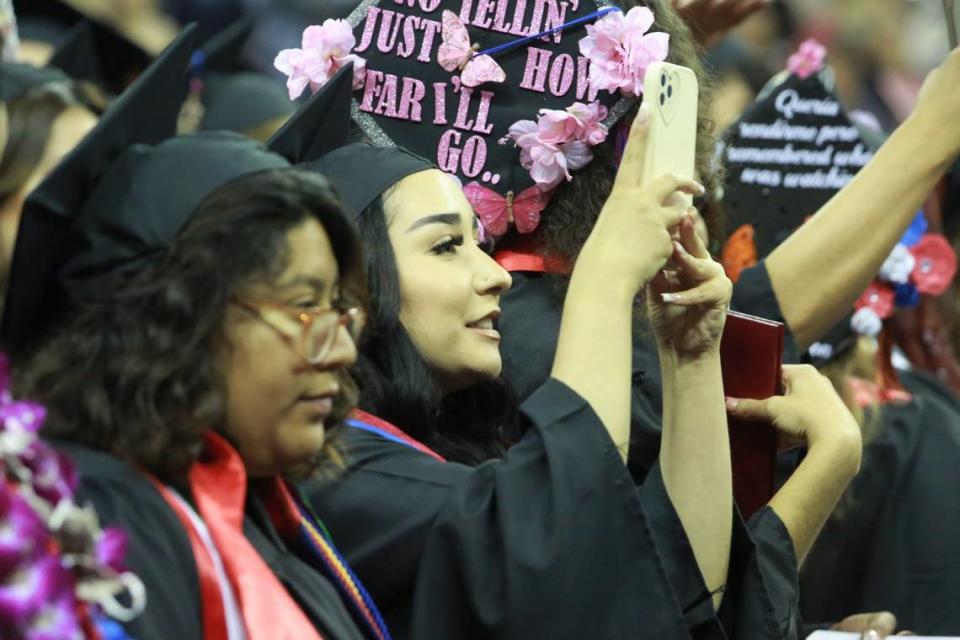
Fresno State’s College of Social Sciences celebrated its graduates during graduation ceremonies at the Save Mart Center on the morning of May 20.
According to a report by The Campaign for College Opportunity, local universities such as Fresno and Stanislaus have made “commendable progress in closing the equity gap” in graduation rates.
But the report said the gap remains “unacceptably high” for Black, Latino and American Indian students and that these challenges persist throughout the system.
bakersfield
CSU Bakersfield’s Office of Institutional Research, Planning and Assessment reports through August 2023:
fresno
Fresno State’s Office of Institutional Effectiveness reports:
Sacramento
Sacramento State’s Department of Institutional Research, Effectiveness and Planning reports:
Stanislaus
Stanislaus State’s Office of Institutional Effectiveness and Analytics reports:
-
Enrollment: A total of 10,155 students for the fall 2022 semester, according to university data. Of those, all 6,233 (or 61%) identified as Hispanic.
-
Retention: 80.7% overall and 81.1% for first-year Hispanic students, for first-year students in the fall of 2021.
-
Graduation: 46% of four-year students graduated in 2018, according to the latest dashboard data.
Source: www.bing.com
[ad_2]
Source link