









Cancer Mortality Higher Among American Indian And Alaska Native Individuals; Colorectal Cancer Before Age 50 Rising

[ad_1]

Researchers at the American Cancer Society stress improving access to high-quality cancer prevention, early detection, and treatment for this group of individuals. Credit: American Cancer Society

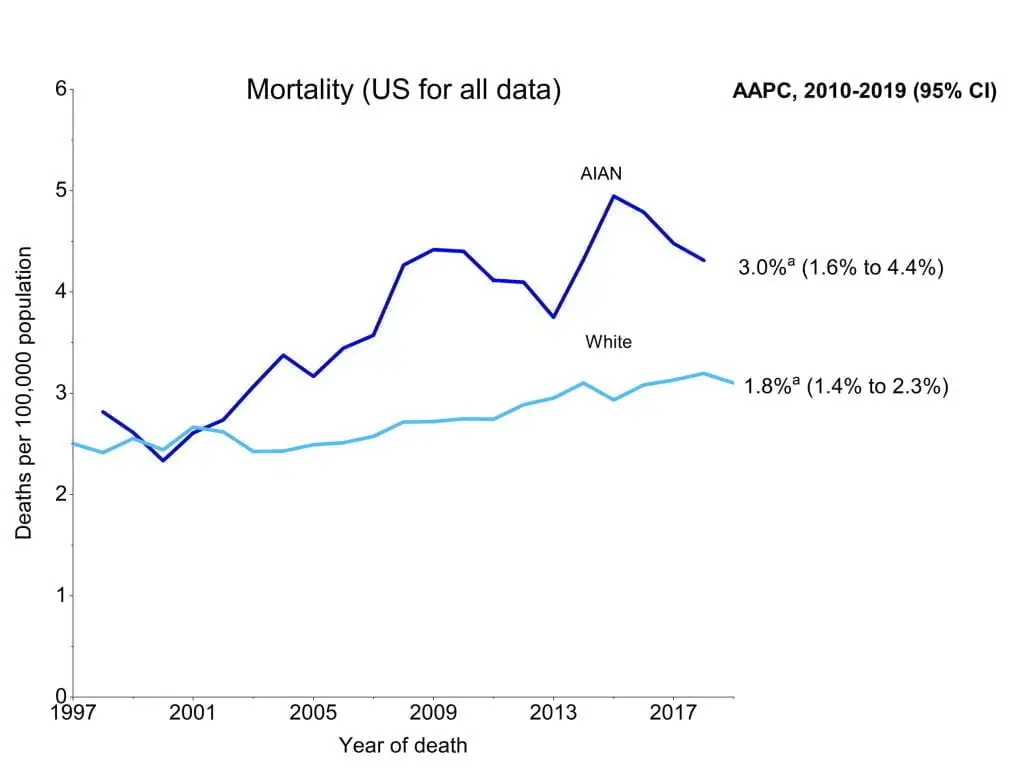
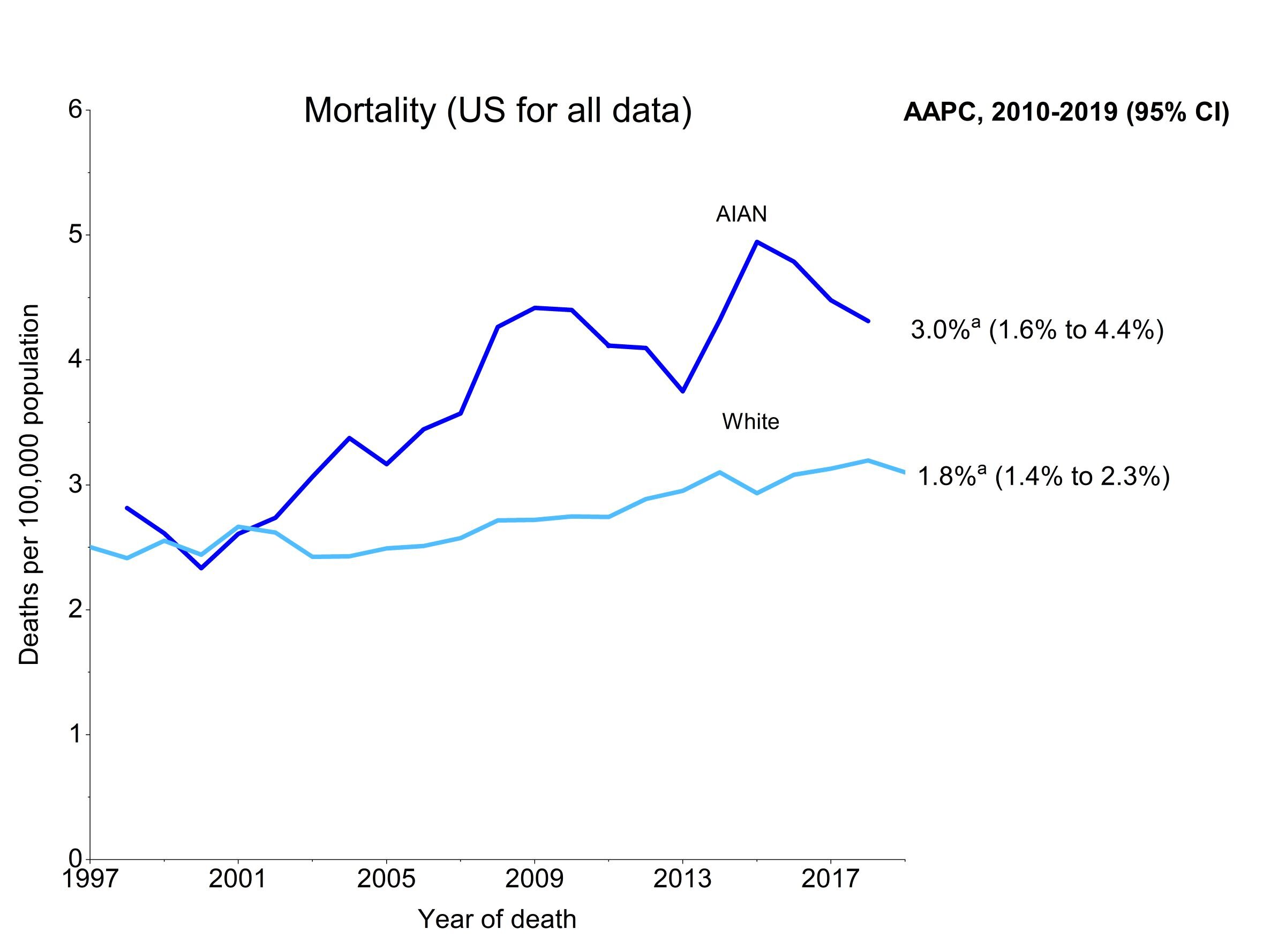
New findings by researchers at the American Cancer Society (ACS) show overall cancer mortality among American Indian and Alaska Native (AIAN) individuals is 18% higher than among white individuals despite similar cancer incidence. This disparity is driven by common cancers that are receptive to early detection. For example, breast and prostate cancer incidence rates are 15% and 12% lower, respectively, whereas mortality rates are 8% and 31% higher. The study, published today in CA: A Cancer Journal for Clinicians, includes the first nationwide mortality data published for this population.

Study authors comprehensively examined cancer incidence and mortality among non-Hispanic AIAN individuals compared with non-Hispanic white individuals for context, using population-based data from the National Cancer Institute, the Centers for Disease Control and Prevention, and the North American Association of Central Cancer Registries.

The results showed overall cancer rates among AIAN individuals were 2% higher than among white individuals for incidence (2014 through 2018, confined to Purchased/Referred Care Delivery Area counties to reduce racial misclassification) but 18% higher for mortality (2015 through 2019, nationwide). However, disparities varied widely by geographic region and cancer type.

Colorectal cancer incidence and mortality rates are both approximately 40% higher among AIAN individuals than white individuals overall, but among Alaska Native people specifically, incidence is 2.5 times higher. According to the study authors, this disparity is being exacerbated by steeper increases in early-onset colorectal cancer; rates rose by 85% from 1998-2002 to 2014-2018 among Alaska Native individuals ages 20-49 years (from 18.8 to 34.8 cases per 100,000) versus 33% among white individuals (from 9.4 to 12.5 per 100,000 cases).

Death rates for infection-related cancers (liver, stomach, and cervix), as well as kidney cancer, were approximately two-fold higher among AIAN individuals compared with white individuals.

“Our report shows that the American Indian and Alaska Native community is disproportionately impacted by cancers that are either preventable or detectable early, when treatment saves lives,” said Tyler B. Kratzer, associate scientist II, cancer surveillance research at the American Cancer Society and lead author of the study. “These findings highlight the need for more effective strategies to reduce the prevalence of chronic oncogenic infections and improve access to high-quality cancer screening and treatment for this group of individuals.”

“Mitigating the disparate burden will require expanding financial support of tribal health care as well as increased collaboration and engagement with this marginalized population,” added Kratzer.

Rebecca Siegel is senior author of the study. Other ACS authors include: Dr. Ahmedin Jemal, and Dr. Robert Smith.

More information:
Tyler B. Kratzer et al, Cancer statistics for A merican I ndian and A laska N ative individuals, 2022: Including increasing disparities in early onset colorectal cancer, CA: A Cancer Journal for Clinicians (2022). DOI: 10.3322/caac.21757

Citation:
Cancer mortality higher among American Indian and Alaska Native individuals; colorectal cancer before age 50 rising (2022, November 8)
retrieved 8 November 2022
from https://medicalxpress.com/news/2022-11-cancer-mortality-higher-american-indian.html

This document is subject to copyright. Apart from any fair dealing for the purpose of private study or research, no
part may be reproduced without the written permission. The content is provided for information purposes only.

[ad_2]

Source link

Trending Topics

Features

Download and distribute powerful vaccination QI resources for your community.

Sign up now to support health equity and sustainable health outcomes in your community.

MCED tests use a simple blood draw to screen for many kinds of cancer at once.

FYHN is a bridge connecting health information providers to BIPOC communities in a trusted environment.

Discover an honest look at our Medicare system.

ARC was launched to create a network of community clinicians to diversify and bring clinical trials to communities of color and other communities that have been underrepresented.

The single most important purpose of our healthcare system is to reduce patient risk for an acute event.

Related Posts
The Communities Most Burdened by Disease Should Be the First to Benefit from Artificial Intelligence
Black and Asian Cancer Patients Wait Longer for Pain Relief in New Study
What Is Cyclosporiasis? The Foodborne Illness Showing Up in the News
Scroll to Top
Featured Articles
The Communities Most Burdened by Disease Should Be the First to Benefit from Artificial Intelligence
The Communities Most Burdened by Disease Should Be the First to Benefit from ...
Cancer Pain Care Access Gap Hits Black, Asian Patients
Black and Asian Cancer Patients Wait Longer for Pain Relief in New Study
What Is Cyclosporiasis Symptoms, Food Safety, and Reasons
What Is Cyclosporiasis? The Foodborne Illness Showing Up in the News
Why Minority Mental Health Awareness Month Matters More Than Ever
From Childhood Cancer to Alzheimer’s and ALS Celebrity Health Stories Spark National Conversation on Disease, Caregiving, and Equity
From Childhood Cancer to Alzheimer’s and ALS Celebrity Health Stories Spark N...
Learn How NMQF Is Transforming Early Disease Detection in Flint
Categories
AI
ATTR-CM
BIPOC News
Cancer
Clinical Trials
Covid19
Diseases of the Body
Environment
Health Data
Health Equity Events
Health Policy
Health Tips
Subscribe to our newsletter to receive our latest news​
All Stories
The Communities Most Burdened by Disease Should Be the First to Benefit from Artificial Intelligence
The Communities Most Burdened by Disease Should Be the First to Benefit from ...
Cancer Pain Care Access Gap Hits Black, Asian Patients
Black and Asian Cancer Patients Wait Longer for Pain Relief in New Study
What Is Cyclosporiasis Symptoms, Food Safety, and Reasons
What Is Cyclosporiasis? The Foodborne Illness Showing Up in the News
BIPOC News
The Communities Most Burdened by Disease Should Be the First to Benefit from Artificial Intelligence
The Communities Most Burdened by Disease Should Be the First to Benefit from ...
Why Minority Mental Health Awareness Month Matters More Than Ever
From Childhood Cancer to Alzheimer’s and ALS Celebrity Health Stories Spark National Conversation on Disease, Caregiving, and Equity
From Childhood Cancer to Alzheimer’s and ALS Celebrity Health Stories Spark N...
Environment
UV Safety Awareness Month Raises Urgency on Skin Cancer Prevention and Sun Protection Equity
UV Safety Awareness Month Raises Urgency on Skin Cancer Prevention and Sun Pr...
Extreme Heat Safety Tips 5 Ways to Protect Your Health This Summer fyh.news
5 Heat Safety Tips That Could Protect Your Health This Summer
Lupus Awareness Event in Baltimore Aims to Support Research and Shine a Light on Health Disparities
Lupus Awareness Event in Baltimore Aims to Support Research and Shine a Light...
Work Force
A multigenerational Black and Hispanic family sitting together in a park, showing how Social Security helps support older adults, people with disabilities, and families across generations.
Millions of Older Americans Could Face Smaller Social Security Checks by 2032...
dreamstime_s_243253251
The Caregiver Journey: The Hidden Backbone of American Healthcare
Families gather at a Bronx community festival with live music, kids’ activities, and health booths sharing SOMOS social care resources and free screenings.
Celebrating Hispanic heritage while learning about health care

[xyz-ips snippet=”Output-Source-Name”]

Clinical Trials
Clinical Trial Diversity Remains a Critical Challenge in Alzheimer’s Research
Healthcare professional collecting a blood sample from a diverse patient as part of multicancer early detection screening.
Bridging the Gap: How Multicancer Early Detection Can Advance Health Equity i...
dreamstime_s_174488289
PCOS to PMOS: Why the 2026 Name Change Matters for Women’s Health

[xyz-ips snippet=”Output-Source-Name”]

Vaccines and Outbreaks
A parent checking a child's temperature during summer, illustrating the changing RSV patterns and year-round respiratory virus risks.
Can You Get RSV During the Summer?
Michelle Lam, MBA, of NYC Health + Hospitals/Elmhurst & Amy Harris of NYC Health + Hospitals/Elmhurst
Healthcare Leaders Spotlight Vaccine Equity and Adult Immunization Strategies...
Measles Outbreaks Surge: Essential Facts and Prevention Strategies
Other Categories
AI
Read the latest AI News stories trending around the world
ATTR-CM
Cancer
Read the latest Cancer stories trending around the world
Covid19
Diseases of the Body
Read about the latest Diseases of the Body trending around the world
Friday Webinars
Every Friday, we bring you insightful webinars covering critical topics in healthcare, data equity, and policy reform.
Health Data
Read the latest Health Data stories trending around the world
Health Equity Events
Read the best Health Equity Events around the country.
Health Policy
Read the latest Health Policy stories trending around the world
Health Tips
Heart Health
Read the latest on Heart Health News, Stories and Tips.
kidney Health
Read more trending News about Kidney Health, Stories and Tips.