














[ad_1]
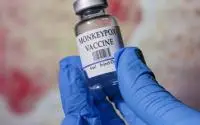
Disparities among groups receiving the Jynneos monkeypox vaccine have narrowed somewhat, with vaccine receipt proportions more than doubling in Black people and increasing almost 50% in Hispanic groups, according to data from the Centers for Disease Control and Prevention (CDC) published today in Morbidity and Mortality Weekly Report (MMWR).
Two other MMWR studies detail vaccine outreach to racial and ethnic minorities among men who have sex with men (MSM) at LGBTQIA+ events in Georgia and Louisiana in September, with a special focus on minority communities. And a study in Europe indicates high acceptance of the vaccine among users of popular MSM dating apps.
Increase in vaccine use in Black, Hispanic groups
The first MMWR report, led by the CDC Monkeypox Emergency Response Team, found that the percentage of Black people receiving Jynneos compared with all vaccine recipients climbed from 6% before Jun 26 to 13% from Jul 31 to Oct 10, while the proportion of Hispanic recipients rose from 15% to 23%.
The researchers analyzed data on monkeypox vaccine doses administered and reported to the CDC by US states, cities, and territories. A total of 931,155 Jynneos doses were administered and reported to the CDC by 55 US jurisdictions from May 22 to Oct 10.
Among those who received one or two doses, 51.4% were White, 22.5% were Hispanic/Latino, and 12.6% were Black. But the percentages of vaccine recipients who were Black increased from 5.6% from May 22 through Jun 25 to 13.3% from Jul 31 onward, and the rate in Hispanic vaccinees grew from 15.5% to 22.7%.
The authors noted that, among 496,888 people who received a first dose and were eligible for a second dose during the study period, 57.6% received their second dose. Second-dose receipt was highest among older adults, White people, and people living in the South. About 302,000 people completed the two-dose series.
“Equitable access to and acceptance of vaccine should be an essential factor in planning vaccination programs, events, and strategies,” the authors concluded. “Improving equity in vaccination for both first and second doses is important to protect persons who are most at risk and to end the current monkeypox outbreak.”
Vaccine distribution at LGBTQIA+ events
The second MMWR study details vaccine distribution at a Black gay Pride festival in Atlanta held during Labor Day weekend in early September.
From Aug 27 through Sep 5, officials administered 4,282 vaccine doses, two-thirds (2,874) before the festival and one-third (1,408) during it. Overall, 2,886 (67%) doses were administered at 22 routine vaccination events at health department clinics, 702 (16%) at 20 mobile, community pop-up events, and 694 (16%) at a mass vaccination event sponsored by the Georgia Department of Public Health.
Among vaccine recipients, 93% were men, 55% were aged 30 to 49 years, 48% were Black, and 8% were Hispanic. The proportion of Black people receiving vaccine was higher during the festival (53%) than before the event (46%), but the proportion of Hispanic recipients was similar: 7% versus 8%.
The study authors conclude, “A community-based approach by a coalition of festival organizers, government entities, and LGBTQIA+ community advocates was successful at improving equitable monkeypox vaccination.”
In Louisiana, vaccination efforts centered on Southern Decadence, an annual LGBTQIA+ festival in New Orleans that draws 150,000 to 300,000 participants. This year, the event ran from Sep 1 to Sep 5.
As part of the state’s monkeypox prevention strategy in advance of Southern Decadence, the Louisiana Department of Health hosted a series of community vaccination events, including high-volume events in central locations and smaller, more focused events. The study notes that 58.6% of Louisiana’s monkeypox cases have affected the Black community.
Community vaccination efforts were held daily in a central venue called the Health Hub three blocks from the main festival area. The Health Hub offered vaccines and testing for monkeypox and COVID-19 and other healthcare services.
From Aug 9 through Sep 5, healthcare workers admininstered 6,854 Jynneos doses in Louisiana, with 53.0%, 34.8%, and 12.2% administered at clinics, non–Health Hub community vaccination events, and the Health Hub, respectively. Among those who got vaccinated outside the Health Hub, 90.1% were Louisiana residents; 54%, 24.0%, and 6.7% were White, Black, and Hispanic, respectively. Among Health Hub vaccine recipients, 45.5% were Louisiana residents, and 52.3%, 13.9%, and 10.3% were White, Black, and Hispanic people, respectively.
“These data suggest that community engagement, targeted messaging, and selection of venues catering primarily to racial and ethnic minorities for community vaccination events can improve vaccine equity and reduce health disparities,” the authors wrote.
High vaccine acceptance in European MSM
Finally, in a survey of almost 33,000 European adults who use the popular MSM dating apps Grindr and Hornet, 62% said they would “surely accept” the monkeypox vaccine, and 20% would “probably accept” it, according to a study yesterday in Eurosurveillance.
The survey was advertised on the apps via pop-up or inbox messages and by community-based organizations across Europe. From Jul 30 to Aug 12, a total of 32,902 people answered the survey. Most of the respondents were living in the western and Mediterranean regions of Europe.
The researchers note a crude vaccination acceptance of 82% (26,980) among the survey respondents: 62% (20,266) would “surely accept” and 20% (6,714) would “probably accept” it, according to the findings.
Respondents from northern and western Europe indicated a higher acceptance (credible intervals of 85% to 90% and 83% to 88%, respectively) compared with app users in the southeast (61% to 70%) and east (60% to 71%).
[ad_2]
Source link
Trending Topics
Features
- Drive Toolkit
Download and distribute powerful vaccination QI resources for your community.
- Health Champions
Sign up now to support health equity and sustainable health outcomes in your community.
- Cancer Early Detection
MCED tests use a simple blood draw to screen for many kinds of cancer at once.
- PR
FYHN is a bridge connecting health information providers to BIPOC communities in a trusted environment.
- Medicare
Discover an honest look at our Medicare system.
- Alliance for Representative Clinical Trials
ARC was launched to create a network of community clinicians to diversify and bring clinical trials to communities of color and other communities that have been underrepresented.
- Reducing Patient Risk
The single most important purpose of our healthcare system is to reduce patient risk for an acute event.
- Jessica Wilson
- Subash Kafle


