











[ad_1]
The U.S. Environmental Protection Agency (EPA) last week announced its latest round of funding to advance environmental justice in vulnerable communities, allocating $3 million to three Montana-based projects. In the Flathead Valley, $904,300 will enable the Confederated Salish and Kootenai Tribes (CSKT) — a group the federal government concedes it has historically under-invested in — to ramp up initiatives that prevent water-borne illnesses in Flathead Valley recreational lakes.
The two other funding recipients are the Montana Department of Environmental Quality (DEQ) and Missoula County, whose projects are designed to ensure environmental safety in new housing development and support low-income communities vulnerable to climate change. A portion of this money will benefit the Flathead.
The initiatives are three-year projects funded under the EPA’s annual appropriations and the Biden administration’s Inflation Reduction Act, providing the largest amounts of money in history for environmental justice grant programs.
“EPA is focused on addressing longstanding needs across the diverse range of communities in Montana and our western states, including underserved communities home to people of color, low-income, rural, tribal, indigenous or homeless populations,” EPA media officer Richard Mylott said. “We know that many in the state’s urban areas, rural communities and Native-American Reservations face disproportionate and significant environmental and health challenges.”
The CSKT funding will address ongoing water-quality issues and support health projects on the Flathead Indian Reservation, the towns of Elmo and Polson, as well as nearby rural areas.
“Working for a tribal government, we are not funded to the needs that we actually have,” CSKT Water Quality Administrator Chauncy Means said. “So, this pool of money for environmental justice really gives the communities that need help the funding to do really good work and get noticed, not only on the local level, maybe even at the state and federal level. These types of projects are unique, and they don’t happen very often, so we are extremely fortunate and excited.”
Flathead Lake and surrounding waterbodies are some of the most prime locations in the country to catch cercarial dermatitis, also known as swimmer’s itch, as well as other water-borne illnesses, according to Means. The new funding will educate the public about swimmer’s itch and implement initiatives to prevent humans from being affected by such parasites. Means said that the organization will construct five rise stations, create billboards at public beaches, and display community artwork to encourage people to engage with the messaging.
“The public doesn’t have a lot of opportunities to recreate in the lake, so in the public beaches that we do have, we try to ensure good quality water, so people aren’t getting sick or contracting swimmer’s itch,” Means said. “We want education and outreach to be a part of this project, so we’re installing some message boards, so that if a beach is having problems, we can put it on our message boards.”
The CSKT applied for the funding in April and are working closely with the EPA as well as other community organizations, like Salish Kootenai College, Flathead Lakers, and Flathead Lake Biological Station to develop an implementation strategy.

The second $1-million chunk of funding was given to the Montana Department of Environmental Quality (DEQ) to identify and clean up properties that can be redeveloped into safe, affordable housing. The funding will be distributed to economic development organizations across the state, a portion of which will be allocated for the Flathead Valley and northwest Montana.
“Rural areas still deal with environmental contamination that can stand in the way of redeveloping under-used properties for beneficial purposes like housing or new businesses,” DEQ Public Policy Director Rebecca Harbage said. “DEQ saw an opportunity to help build capacity at community-based organizations so they can better assist rural communities.”
The project will train local partner organizations on environmental justice, brownfields assessments (a process to determine the environmental condition of an abandoned site), energy efficiency, and drinking water infrastructure.
“The intent is to build the capacity of economic development organizations, through staffing coupled with training and resources from DEQ, so they can in turn educate the communities they work with,” Harbage said. “The long-term desired outcome is that following this project, communities will be better able to identify cleanup projects and can then receive future funding to help redevelop contaminated sites.”
Harbage said that older homes are often energy-inefficient, not resilient in the face of natural disasters, and can be environmentally contaminated to an unsafe level. Harbage anticipates that the DEQ’s support with cleanup and safety will be especially impactful in rural communities.
“Rural areas in particular may not have the capacity to manage the administrative burdens that come with federal grants,” Harbage added. “Often, it is the same staff person wearing multiple hats and trying to juggle many diverse assignments, all of them important to the town.”
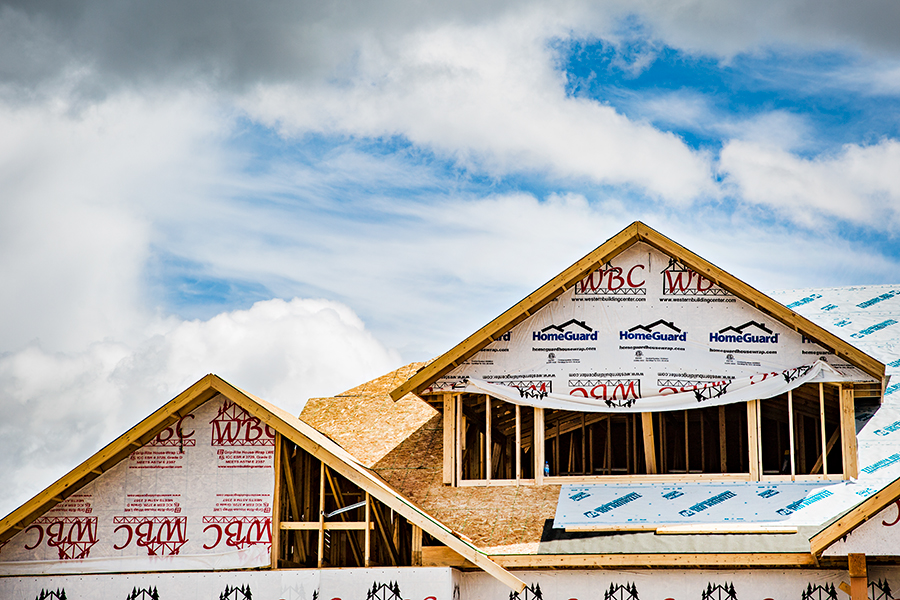
The third environmental justice project, located in Missoula County, will retrofit low-income housing, and assist rural, low-income and Indigenous communities disproportionately impacted by climate change.
All three projects will be implemented as cooperative efforts between the EPA and the funding recipients. Mylott said that the EPA looks forward to delivering positive results in underserved communities and will work with locals to identify possibilities for future funding opportunities.
“EPA’s environmental justice efforts focus on providing people the same degree of protection from environmental and health hazards as well as ensuring equal access to the decision-making process related to those protections,” Mylott said.
Means said that the new money will allow his department to think bigger than ever before and the Flathead community may start seeing positive impacts as early as next year.
“We did a lot of education outreach, even before putting in the grant,” Means said. “So, we’re really excited to get this grant funding, hit the ground running and have a really successful project.”
Harbage added while the DEQ frequently works with the EPA and economic development organizations, this level of funding is game-changing in terms of the impact that can be delivered to vulnerable communities.
“Historic levels of federal funding are available right now,” Harbage said. “DEQ saw an opportunity to bring some of those dollars into Montana to directly support communities across the state that are working on big issues.”
EPA is hosting a webinar on Nov. 6 at 9:30 a.m. to discuss how the agency is addressing climate issues and allocating funding through the Inflation Reduction Act. Those interested can sign up at: https://www.epa.gov/community-equity-resiliency/virtual-open-house
[ad_2]
Source link