










[ad_1]
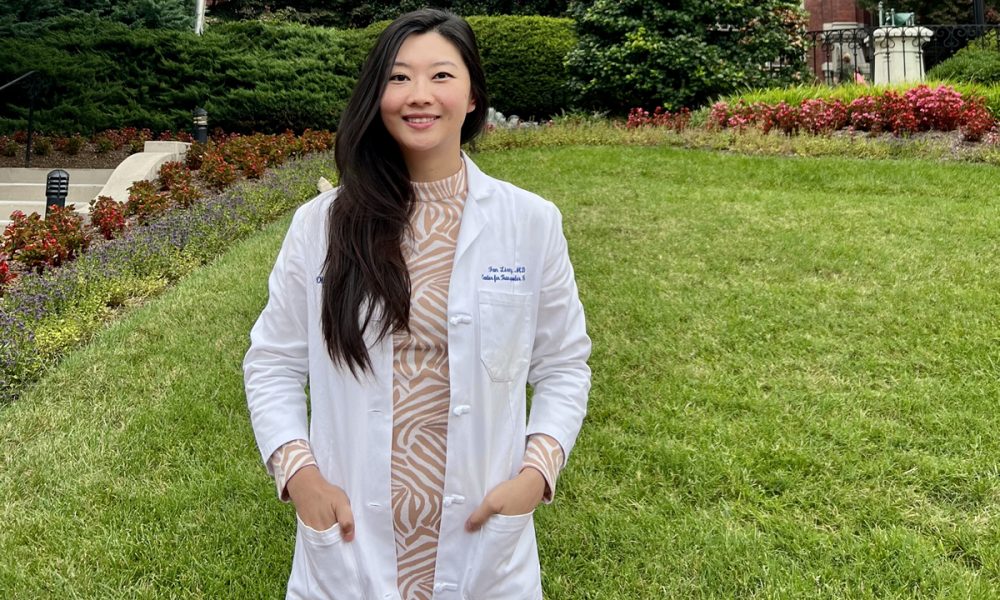
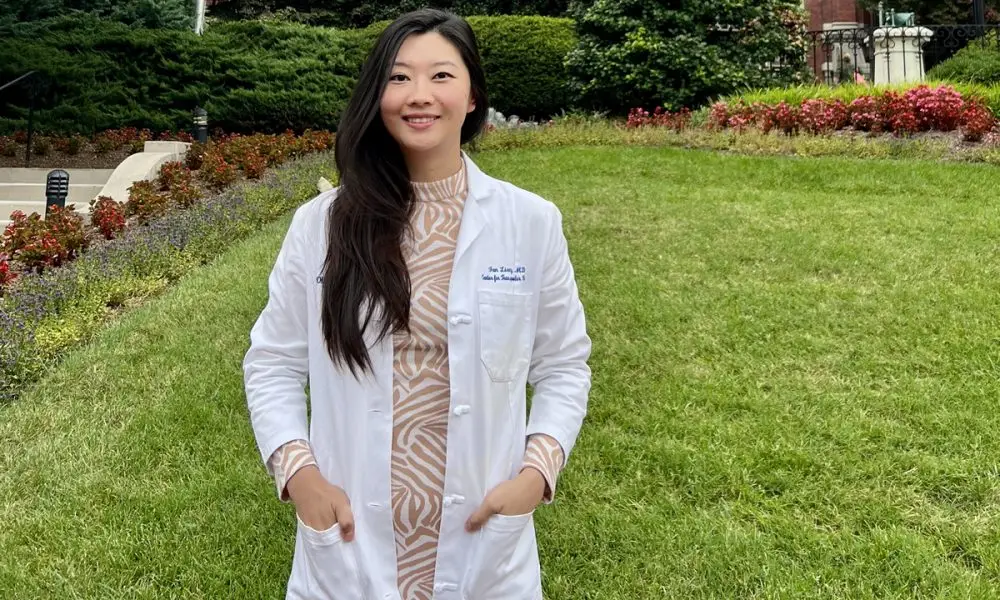
The topic of gender affirming healthcare has never attracted more attention or scrutiny, presenting challenges for both patients and providers, including Dr. Fan Liang, medical director of the Johns Hopkins Center for Transgender and Gender Expansive Health and assistant professor of plastic and reconstructive surgery.
Speaking with the Washington Blade by phone last week, Liang shared her perspective on a variety of topics, including her concerns about the ways in which media organizations and others have shaped the discourse about gender affirming care.
Too often, she said, the public is provided incomplete or inaccurate information, framed with politically charged and polarizing language rather than balanced and nuanced reporting for the benefit of audiences who might have little to no familiarity with the topics at hand.
“This is an evolving field that requires input from many different types of specialists,” Liang noted, so one issue comes when providers “start to comment outside of their scope of practice, or extrapolate into everybody’s experience.”
A more intractable and difficult problem, Liang said, is presented by the fact that, “issues with transgender health have really taken center stage with regard to national politics, and as a result of that, the narrative has really been reduced to an unsophisticated representation of what’s going on.”
“I think that is dangerous for patients and for the community that these patients live in and have to work in and survive in because it paints a picture that is really inaccurate,” she said.
Conservative state legislatures across the country have introduced a record number of anti-LGBTQ bills this year, passing dozens, including a slew of anti-trans healthcare restrictions. The Human Rights Campaign reports 35.1 percent of transgender youth now live in states that have passed bans on gender affirming care, many of which carry criminal penalties for providers.
A big part of the Center’s work, Liang told the Blade, involves working closely with trans patients and organizations like Trans Maryland and the Trans Rights Advocacy Coalition “to make sure that the community’s voices are being heard, so that we’re able to represent those interests here.”
She described “a generalized sense of anxiety and fear,” concerns that she said are “pervasive throughout the community,” over “access to surgery and to overall gender healthcare.”
“I get a lot of questions about that,” she said.
While Liang has not yet worked with any patients who traveled to the Center because gender affirming care was banned in the states where they reside, she said, “I do anticipate that will happen in the relatively near future.”
Challenges for clinicians
The political climate “really interferes in physician autonomy and basically using our training and discretion to provide the best therapies that we can,” based on research and evidence-based guidelines from medical organizations on best practices standards of care, Liang said.
“I earnestly believe that people who go into medicine try to do right by their patients and try to provide exceptional care whenever they can,” she said. “When I speak to other providers who are engaged in trans care, the reason they entered the field was because they saw patients that were suffering and had no other providers to go to and they were filling a need that desperately needed to be filled.”
“It is unfortunate that their motives are being misinterpreted, because it is causing significant emotional harm to these providers who are being targeted,” Liang said, noting “there is so much vitriol from the anti-trans side of things,” including “this narrative out there that physicians are providing trans care because of financial reasons or because of some sort of politically motivated, I don’t know, conspiracy.”
The political climate, along with the realities of practicing in this speciality, may threaten to stem the pipeline of new providers whose practice would otherwise include gender affirming care, said Liang, who serves on the interview board for incoming residents who are looking to specialize in plastic surgery.
Many, perhaps even most, she said, are eager to explore transgender care, often because, particularly among young trainees, they are friends with trans and non-binary people. “I don’t know how much of that interest persists as they move through the training pipeline, because — especially if they are at an institution that does provide trans care — they do see a lot of the struggles that physicians encounter in being able to offer these services.”
Liang noted the “significant hurdles from an insurance standpoint” and the “significant prerequisites in order to access surgery,” which require “a tremendous amount of back-end coordination and optimization of the logistics for surgical readiness.”
“And then,” she said, “they see a lot of the backlash in the media against trans providers, and I think that that does discourage residents who otherwise would be interested in the field because physicians, by and large, are a pretty conservative bunch. And having them start their practice where they’re sort of stepping into a political minefield is not ideal.”
Speaking up can be beneficial but risky
“Some physicians feel like they can make the most amount of impact by being advocates for the patient population on a national stage or being more vocal about how anti-trans legislation has been impacting their patients,” Liang said.
“My goal, as the director for the Center for Transgender Health here at Hopkins is really to normalize this care to allow for the open conversation and discussion amongst providers to create a safe space for people to feel comfortable providing this care,” she said.
Destigmatizing gender affirming care and connecting clinicians who practice in this space will help these providers understand they are not “functioning in isolation” and instead are part of “a national effort and a nationally concerted effort toward delivering state-of-the-art health care,” Liang said.
“It’s important,” she said, to “bring the generalized healthcare community to the table in offering these services and have a frank discussion when it comes to education, research and teaching.”
Other providers, however, “do not feel comfortable putting themselves into that place of vulnerability,” Liang said, “and I don’t fault them for it because I personally know people who’ve received death threats and who have been targeted because of what they say to the media,” in many cases because their comments were reported incorrectly or out of context.
In July, Liang participated in an emergency trans rights roundtable on Capitol Hill with representatives from advocacy groups like the Southern Poverty Law Center and the Transgender Law Center, as well as members of Congress including U.S. Reps. Mark Takano (D-Calif.), Barbara Lee (D-Calif.), and Sara Jacobs (D-Calif.).
She told the Blade it was “a really wonderful experience” to “hear the heartfelt stories” of the panelists advocating on behalf of themselves, their friends, and their families, earning the attention of members of Congress.
“I do think advocacy is important,” Liang told the Blade. “I try to make time for it when I can,” she said, “but I have to balance that with all of my other clinical obligations.”
Finding compassion and lowering the temperature
On Aug. 1, The Baltimore Banner reported that the director of the Mayor’s Office of LGBTQ Affairs in Baltimore filed a discrimination complaint with the city’s Office of Equity and Civil Rights against the Hopkins Center for Transgender and Gender Expansive Health. (The story was also published by the Washington Blade, which has a media partnership with the Banner.)
Asked for comment, Liang said “it was an upsetting article to read,” adding, “I was upset that there wasn’t more due diligence done to investigate a little bit further” because instead the article presents “just this one person’s account of things.”
She noted there is “not much I can say from a physician standpoint because everything is contained within HIPAA,” the federal Health Insurance Portability and Accountability Act, which prohibits providers from even acknowledging which patients they may or may not have worked with.
The Banner article underscores the importance of journalists’ obligations to “make sure there is due diligence to confirm sources and make sure things are accurate,” Liang said, including, of course, when covering complicated and politically fraught subjects like gender affirming care.
“On the one hand, it’s really wonderful that there’s a fair amount of press being dedicated to trans issues around the country,” Liang said, but what is “frustrating for me is these conversations always seem to be so loaded and politically charged, and there doesn’t seem to be much space for people to ask earnest and honest questions” without taking heat from either side.
There is “compassion to be offered for patients who are struggling to receive basic health care” as well as for “people who are struggling to understand how this issue is evolving,” those for whom the matter is “uncharted territory” and therefore likely to “cause consternation and fear,” she said.
“Most of the time, the way to overcome” this is to cultivate “relationships with people who do identify as transgender or non-binary” on the grassroots level, she said, while leaving room “for people to ask earnest and honest questions.”
Removing the artificial “us-versus-them” paradigm provides “opportunity for more compassionate interactions,” Liang said.
At the same time, she conceded, amid the heightened polarization and escalation of an anti-trans backlash over the last few years, efforts to fight sensationalization with compassion and understanding have often fallen short, presenting hurdles that have long plagued other areas of science and medicine like abortions and vaccines.
[ad_2]
Source link