












- By FYH News Team
[ad_1]
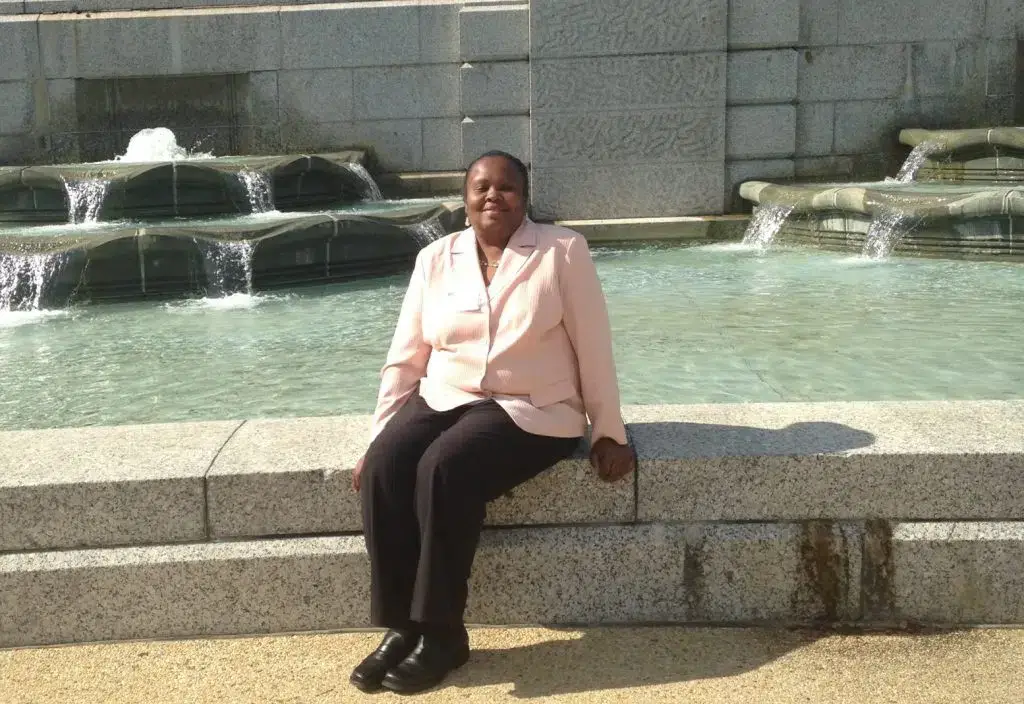
by Felicia Johnson
People of color are often at a disadvantage in the realms of education, diagnosis and treatment regarding cancer. I hope my story of BRCA1 metastatic breast cancer will help create more dialogue and more awareness so that we can close this gap.
Generations Attacked by Cancer
I was an onlooker as cancer crept into my maternal family. Breast cancer penetrated my family’s biological machinery, affecting eleven women beginning in 1975. We have lived in the cancer zip code diagnosed with breast cancer starting at early-stage diagnoses, followed by treatment with chemotherapy, radiation, surgery, then remission, reoccurrence and finally death from metastatic disease. It attacked my grandmother, mother, aunts, cousins and sisters as if it was as natural as breathing and eating. Then it crept in a back door, adding ovarian cancer and a diagnosis of acute leukemia as companions. And finally, it happened. What I feared most arrived in October 2003.
My Breast Cancer Diagnosis
I was 42, having a routine check-up when my gynecologist found the first telltale sign of breast cancer. I heard him say, “You have a lump in your breast.” My reaction was simple. I said, “I see you once a year; you have ruined our visit.” He told me to get dressed and come into his office. Once there, he explained I would need a mammogram, and it was urgent.
I closed my eyes and battled through the diagnostics with some emotionally self-controlled suppressants. Finally, the test results were ready. Next, I heard, “You have de novo metastatic (stage IV) breast cancer” (newly diagnosed breast cancer that has already spread to distant parts). I became the first woman in my family to hear these words.
The inexplicable happened to me. I do not believe that my cancer was caused by anything I did. I monitored my health and started mammograms in my early twenties. I have humbly maneuvered and managed the metastatic terrain with my faith and science. Faith gave me the desire to live and fight. The emotional pain of watching generational cancer suffering produced unexpected positive actions, including reviewing genetic science.
Genetic Counseling Suggested
My gynecologist suggested ovary removal, and my oncologist instructed me to seek genetic counseling. I was strictly against both suggestions. It took years to open my mind and heart to their advice. The cancer had robbed me of too many things. My mother died when she was 40. But when I started my investigation, the scientific information was transformative.
After careful thought, I made several decisions: genetic counseling, testing, prophylactic surgery and telling my family. I also read, learned and studied how preventative breast and ovarian surgeries decreased cancer in women who carried the BRCA1 gene. These decisions are individual, private and personal. Not one size fits all.
Sharing Important Health Information With Family
Knowing the type of mutation I carried was difficult. I shared the information I learned from my genetic counselor and the results with my family. It helped other members make the best decisions for their lives and health. Now, the burden of cancer has diminished. No wand can wave cancer into nonexistence, but the science community equipped me with the ability to create a strategic battle plan.
FORCE Gave Me a Community
Having a gene mutation is almost like carrying a biological ticking time bomb. But attending a FORCE conference before the pandemic with a financial scholarship empowered me. The conference gave me the opportunity to meet others with cancer driven by gene mutations, vet scientific materials and inspired me to share what I have learned with others. I am a FORCE Research Advocate through the Volunteer FORCE Academy. My boxing gloves are on, and I stand in the genetic ring with confidence and empowerment.
As People of Color, We Need to be More Proactive
I am an African American woman with an understanding of high-risk breast cancer, health disparities, aggressive cancer, people of color’s cancer death rate and late-stage diagnoses. We need to use every available tool in our cancer kits. Get genetic counseling and testing if it is warranted, and then make the decisions that are best for you regarding heredity cancers. FORCE provides resources that help people make informed medical decisions through education, support, advocacy and research efforts. If fear has been your power, strip it with FORCE.
Felicia shares more about her family’s story in this video.
[ad_2]
Source link
Trending Topics

Features
- Drive Toolkit
Download and distribute powerful vaccination QI resources for your community.
- Health Champions
Sign up now to support health equity and sustainable health outcomes in your community.
- Cancer Early Detection
MCED tests use a simple blood draw to screen for many kinds of cancer at once.
- PR
FYHN is a bridge connecting health information providers to BIPOC communities in a trusted environment.
- Medicare
Discover an honest look at our Medicare system.
- Alliance for Representative Clinical Trials
ARC was launched to create a network of community clinicians to diversify and bring clinical trials to communities of color and other communities that have been underrepresented.
- Reducing Patient Risk
The single most important purpose of our healthcare system is to reduce patient risk for an acute event.
- Jessica Wilson
- Subash Kafle