







[ad_1]
From COVID to Alzheimer’s to cancer, clinical trials have proven crucial in determining treatment for a variety of ailments.
But most clinical trials see a pattern in its participants: they skew white. Diversity in research is crucial in treating illnesses that disproportionately impact people of color, like diabetes and certain types of cancer.
Latinos are particularly underrepresented in clinical trials. Only 3% to 6% of Latinos make up cancer clinic trials — the lowest rate among any other ethnic group.
Dr. Amelie Ramirez, director and leader of the Salud America! Program at UT Health San Antonio’s Institute for Health Promotion Research, and Dr. Patricia Chalela, associate professor at the Institute, discussed the reasons behind the lack of representation.
Dr. Chalela said there are several obstacles Latinos face in clinical trials.
“(They) not only include study design, system barriers, healthcare-patient related factors, and of course the medical team factor,” she said. “Financial toxicity is one of the factors that impacts (Latinos) the most.”
Despite the barriers, Latinos who participate in the trials can see results.
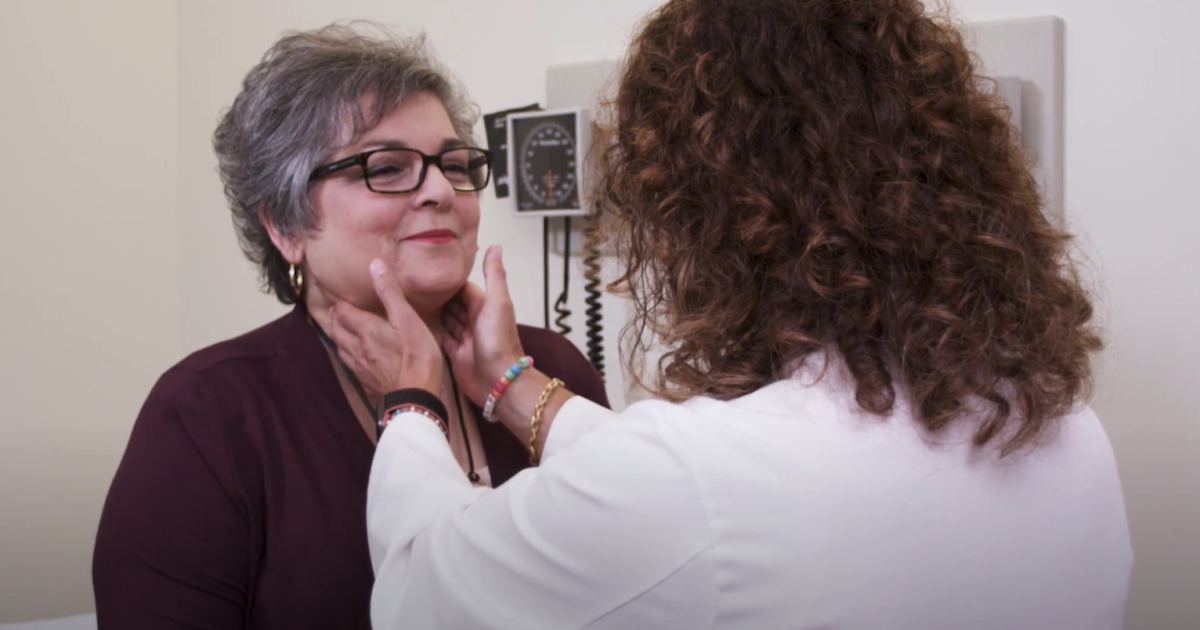
Jeraldine “Dina” Ortiz is a breast cancer survivor of 15 years. She volunteered for clinical trials at the Cancer Treatment and Research Center after she was first diagnosed in 2006.
She said participating in the trials gave her an opportunity to see her 17 grandkids grow up.
“I was a little scared in the beginning when I started it,” she said. “But it wound up being good for me, curing me. Took me a while, but I got cured.”
Click here for a list of clinic trials at UT Health San Antonio. Read more clinical trial testimonials here.
[ad_2]
Source link