







[ad_1]
A new study has found that gas leaks in American cities are more common in neighbourhoods with more low-income residents and people of colour.
Gas leaks are a potent climate hazard. Methane is a main component of so-called “natural” gas, and has 27-30 times the warming capabilites of carbon dioxide over 100 years, according to the US Environmental Protection Agency.
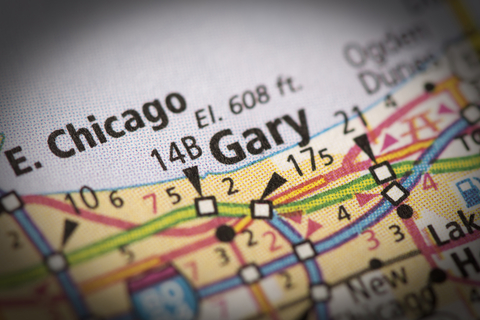
The researchers analyzed nine metro areas including Boston, Chicago and Los Angeles, and found that gas leaks increased on average in areas with lower incomes and more people of colour.
Joseph von Fischer, biologist at Colorado State University and a study author, told The Independent that he hopes that studies like these can lead to a more equitable utility grid.
“The way that we maintain our shared infrastructure — that is, the roads, the bridges, and the hidden infrastructure, like the natural gas pipes — should be equal for everybody,” he said.
“And we don’t know if it’s going to be equal for everybody if we don’t measure it.”
For the study, published last week in Environmental Science and Technology, researchers drove around nine metro areas in cars equipped with methane-detecting lasers — a technology developed about 15 years ago, Dr von Fischer says.
The sensors tested the air for methane, looking for any spikes of potential gas leaks. The leaks could come from anywhere along the gas distribution system, Dr von Fischer says, from the main line up into the house.
The team then mapped out locations of probable gas leaks and overlaid census data on income and the percentage of people of colour in a specific area to look for trends.
For example, a neighbourhood with 69 per cent of people of colour had around 37 per cent more gas leaks per square mile than an area with just 5 per cent people of colour.
Areas with a median income of $42,000 had about 26 per cent more gas leaks per square mile than areas with a median income of $92,000.
On a city-by-city level, the study found fewer significant trends. Only Long Island, New York had a significant relationship between gas leaks and income. In Boston, Massachusetts; Dallas, Texas and Long Island, there was a significant relationship between gas leaks and the percentage of people of colour.
Most of the gas leaks detected for the study likely won’t cause explosions, Virginia Palacios from Commission Shift, a Texas non-profit, and a study author, told The Independent.
“But sometimes leaks do cause explosions, right? And sometimes they’re in just the right place where they affect communities,” she added.
In 2018, an explosion killed a 12-year-old girl in a predominantly Hispanic neighbourhood of Dallas, Ms Palacios noted.
Much of the gas leaking in this study was attributed to outside sources. However more acute gas leaks in unventilated areas can lead to serious health issues like asphyxiation, the study notes. In addition, a massive leak in southern California in 2015 displaced thousands of families with “nauseating” smells, the paper adds. There is now an ongoing study to determine the long-term health impacts of that leak.
The study didn’t explore what may be driving the trends it found. However a press release on the study from Commission Shift notes possibilities in Texas, such as unequal investment between neighbourhoods or insufficient state inspection.
Dr von Fischer said that he thinks utilities work hard to keep the system safe — but also hopes that more people use this kind of technology and analysis to improve leak detections.
A lot of people rely on a working gas system, Zeyneb Magavi from the non-profit Home Energy Efficiency Team (HEET), who was not involved directly with this study but has worked with its co-authors, told The Independent.
But that gas system can also be dangerous, she adds. “And we need to think seriously about whether it’s being maintained in a way that is fair between different groups of people.”
[ad_2]
Source link
Trending Topics
Features
- Drive Toolkit
Download and distribute powerful vaccination QI resources for your community.
- Health Champions
Sign up now to support health equity and sustainable health outcomes in your community.
- Cancer Early Detection
MCED tests use a simple blood draw to screen for many kinds of cancer at once.
- PR
FYHN is a bridge connecting health information providers to BIPOC communities in a trusted environment.
- Medicare
Discover an honest look at our Medicare system.
- Alliance for Representative Clinical Trials
ARC was launched to create a network of community clinicians to diversify and bring clinical trials to communities of color and other communities that have been underrepresented.
- Reducing Patient Risk
The single most important purpose of our healthcare system is to reduce patient risk for an acute event.
- Jessica Wilson