










[ad_1]
61
LA’s Heat Divide: how inequality Creates a City of Two Climates
This past summer marked the hottest 15 months on record, with scorching heat waves gripping the Southwest. But the intensity of the heat isn’t experienced equally across Los Angeles. Urban design, dominated by heat-absorbing concrete and asphalt, creates urban “ovens” – but the temperatures within these ovens vary drastically depending on your zip code.
Imagine two families living less than a mile apart.One family awakens to leafy surroundings and the refreshing hum of air conditioning. The other faces a sun-drenched landscape devoid of shade, with no relief in sight. This stark contrast reflects the phenomenon known as “thermal inequity”— the difference in temperatures between neighborhoods based on factors like income and race.
Scientists are mapping these urban heat islands, identifying the hottest neighborhoods worldwide characterized by limited green space and an abundance of heat-absorbing structures. In the arid Southwest, the distribution of green spaces reveals a striking disparity between wealthy and low-income communities.A study published in the PMC database highlights this inequity, noting that “water conservation measures ofen restrict water use for landscaping in lower-income areas, leading to noticeably cooler temperatures in affluent neighborhoods.”
Areas with predominantly Black, Asian, and Latino populations, such as South Los Angeles and the San Fernando Valley, are severely lacking in green spaces and burdened by aging infrastructure.
The past decade has witnessed the hottest years on record in Los Angeles, with more lives lost each year due to heat-related illnesses. Black, Native American, Hispanic, and Asian communities bear the brunt of this burden, accounting for over 50% of hospitalizations and nearly two-thirds of emergency room visits during heat waves.
“We’ve analyzed state records and found that hospital visits surged by around 1,500 city-wide on extreme heat days,” said UCLA’s David Eisenman, professor at the David Geffen School of Medicine. “The demographic groups in Los Angeles most impacted are Black, Hispanic, and
Elderly Black residents.”
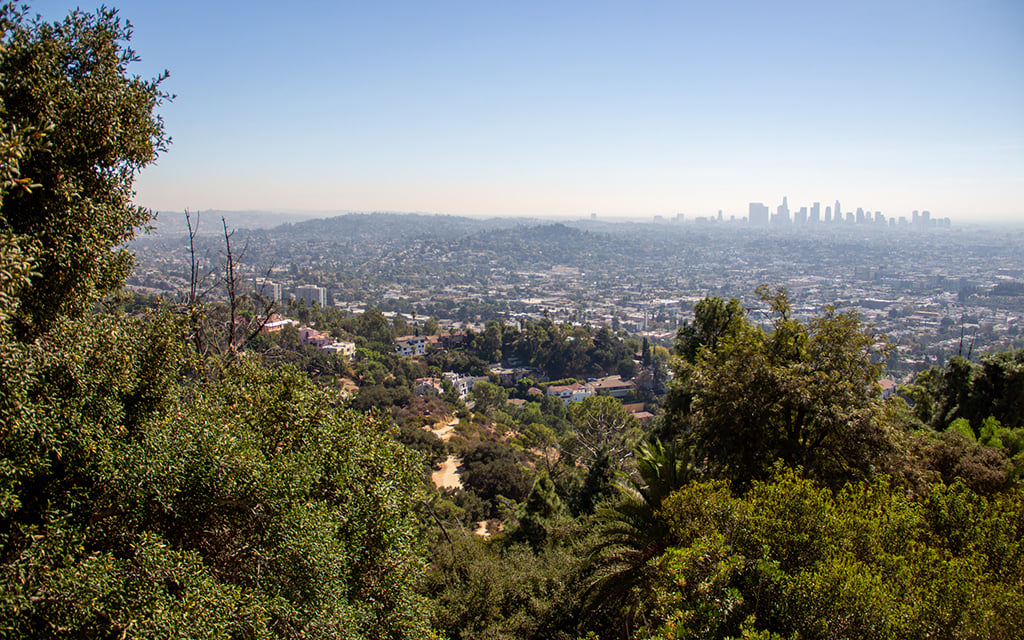
The difference is stark. While affluent neighborhoods like Los Feliz boast abundant tree canopies, areas like South Los Angeles and East Los Angeles are starkly devoid of greenery. This lack of shade leads to significantly higher temperatures for residents.
Heat is a indiscriminate killer, surpassing any other natural disaster in its deadliness. However, its impact is not equal.Studies have found that on extreme heat days, death rates increase by 8% for white Angelenos, but jump by 18% for other racial and ethnic groups.
A study examining thermal inequities in 20 Southwestern cities found that the poorest neighborhoods averaged a staggering 4 degrees hotter than the wealthiest. In California, this temperature gap nearly doubles, reaching a chasm of 7 degrees.
Andrea Diaz, a resident of the San Fernando Valley, tries to avoid the relentless sun by staying indoors, particularly during the summer months. However, even within her own home, escaping the heat proves arduous.
“My bedroom has air conditioning,but the rest of the house doesn’t,” Diaz explained. “My roommates manage, but I can’t, so I rely on a fan instantly.”
Diaz’s experience highlights how temperatures can vary dramatically within a single city. “If you drive downtown or through South Central, the weather is completely different,” she noted.
These disparities are a direct consequence of historical redlining practices. In 1935,the government-backed Home Owners Loan Corporation implemented a rating system for private investments in Los Angeles. neighborhoods were categorized from A to D, with A being the most desirable for investment and color-coded green, while D represented “hazardous” areas, marked in red— the origin of the term “redlining.”
Though ostensibly based on objective criteria, these ratings disproportionately targeted minority communities— african Americans, Mexican Americans, Asian Americans, and sometimes Jewish and Italian immigrants. This discriminatory practice diverted private investments away from these communities,leading to their decline. These areas were subsequently labeled as “blighted,” paving the way for the construction of freeways, industrial sites, and other heat-trapping infrastructure. Redlining also prevented people of color from purchasing homes in certain neighborhoods.
South Central Los Angeles, a predominantly Black community with a rich cultural tapestry, remains bearing the scars of historical redlining. During the Great Migration of the 1950s, Black residents sought new opportunities in industrial fields, settling in this area which also includes Watts, Crenshaw, Inglewood, and Compton.
“South Central is densely built up with concrete, asphalt, and surrounded by industrial zones,” said Kevin patel, founder of the youth climate action group OneUpAction. “This lack of green spaces burdens our community with numerous injustices, and BIPOC (Black, Indigenous, People of Color) are those who bear the brunt of the consequences.”
the Los Angeles County chief Sustainability Office acknowledges the urgency of cooling these disadvantaged neighborhoods, vowing to improve urban planning and increase access to heat mitigating resources.
“We need to invest in strategically acquiring land for new parks,not only funding tree plantings but ensuring ongoing maintenance,” highlighted Ali Frazzini,policy director at the LA County Chief Sustainability Office.
Monica Rodriguez,representing District 7 on the LA city council,which covers a large part of the San Fernando Valley,stands on the frontlines of this battle.Her district, overwhelmingly Hispanic, is among the hottest in LA County.
“Decisions made in the past have led us to where we are today: lack of sidewalk construction, minimal tree canopy, and few parks. Public transit infrastructure investments have bypassed us as well,” Rodriguez shared, emphasizing the uphill task of rectifying decades of neglect.
Rodriguez has spearheaded the installation of cool pavement in Pacoima and Sylmar,two of the oldest and hottest neighborhoods in the San Fernando Valley,home to a predominantly working-class Hispanic population,many residing in public housing.
This month, California voters approved a $10 billion bond to bolster the state’s response to climate change. Over $1 billion will be allocated towards creating infectious green spaces, planting trees, and funding other projects aimed at cooling neighborhoods and improving air quality. Importantly, at least 40% of these funds are designated for disadvantaged communities.
Forecasting the intensity and timing of heat waves is crucial to mitigating their impact, and researchers are making strides in this area. Kristen Guirguis, a project scientist at UC san Diego, Develops models to predict heat waves weeks in advance. She examines climate change projections to understand how future heat waves will affect different communities, emphasizing the need for effective adaptation strategies.
UCLA’s Center for Healthy Climate Solutions provides Heat maps that identify communities most vulnerable to heat-related dangers during extreme temperature events. This details guides government agencies in California’s heat planning efforts and resource allocation.
Patel, a resident of South LA, has witnessed the slow but tangible benefits of increased green spaces in his neighborhood. “My block never had any trees, and just recently, I saw people installing them,” he shared. “Outside our family business, a tree was just planted for the first time.
These small changes have, for Patel, fueled a sense of hope for a more equitable future. “My community has shown remarkable resilience despite facing so many injustices. We’ve come together to demand better,” Patel concluded.
How can communities work together to address thermal inequity and its impacts?
Interview: Unpacking LA’s Heat Divide
Interviewer (Time.news Editor): Thank you for joining us today. Teh recent article on thermal inequity in Los Angeles presents a troubling picture: while the city basks in the sun, some neighborhoods face extreme heat disparities. Can you explain what you mean by “thermal inequity”?
Expert: Absolutely, and thank you for having me. Thermal inequity refers to the significant differences in temperature that various neighborhoods experience due to factors like urban design, availability of green spaces, and historical injustices such as redlining.It shows how some communities, often low-income and predominantly populated by people of color, are subjected to much higher temperatures than their more affluent counterparts living just miles away.
Interviewer: That stark contrast you mentioned is compelling. There are families living less than a mile apart wiht drastically different climates in their neighborhoods. What are the main contributors to this phenomenon?
Expert: The primary contributors are urban heat islands—areas with a high concentration of heat-absorbing materials, such as concrete and asphalt, coupled with a lack of greenery. In wealthier neighborhoods, we see more trees and landscaped gardens that provide shade and cooling effects. In lower-income areas, investment in green spaces has frequently enough been scarce, leaving residents exposed to the heat, which can reach nearly 7 degrees hotter than wealthier neighborhoods in California.
Interviewer: it’s alarming to hear that the effects directly impact health outcomes, especially among marginalized groups. Could you share some statistics highlighting this issue?
Expert: Certainly. Studies show that Black, Native American, Hispanic, and Asian communities account for more than 50% of heat-related hospitalizations in Los Angeles. On extreme heat days, emergency room visits can surge by around 1,500 city-wide, with significantly higher risks for these racial and ethnic groups—notably for elderly Black residents. The data illustrates a nearly double increase in mortality rates compared to their white counterparts during heat waves.
Interviewer: And this isn’t just a recent growth, correct? It’s deeply rooted in historical practices?
Expert: Exactly. Decades of discriminatory practices, such as redlining instituted in the 1930s, have had lasting impacts.These practices segregated communities and restricted access to resources,including investment in infrastructure like parks and cooling systems. Areas marked as “hazardous” were essentially denied growth and development opportunities, leading to environments that exacerbate heat exposure today.
Interviewer: That gives us a clearer context. Given this pattern of inequity,what are some potential actions or solutions we might consider to address these glaring disparities?
Expert: There are several approaches we can take. Increasing investment in green infrastructure is critical—this includes planting trees, creating parks, and improving landscaping in underserved areas. Policy changes can help as well,such as adjusting water conservation measures to allow for more landscape irrigation in low-income neighborhoods. Community engagement is vital; residents should be part of the conversation to ensure solutions are tailored to their specific needs. It’s also essential to raise awareness and mobilize advocacy for climate justice.
Interviewer: It sounds like a multi-faceted issue that requires cooperation on many levels—government, community leaders, and residents alike. As an expert in this area, what message do you hope to convey to our audience regarding climate change and thermal inequity?
Expert: I want people to understand that climate change doesn’t affect everyone equally. The disparities in how heat is experienced in Los Angeles are not just an environmental issue; they are also a matter of social justice.It’s imperative for us all to advocate for equitable climate solutions that consider the historical context of these neighborhoods. Everyone deserves a safe and livable surroundings, nonetheless of their zip code.
Interviewer: Thank you so much for shedding light on this critical issue. It’s imperative that we recognise and address these inequities as part of our broader fight against climate change. We appreciate your insights.
Expert: Thank you for having me and for bringing this essential topic to your audience.It’s thru conversations like these that awareness and action can blossom.
Related
[ad_2]
Source link