











How Medicine's Fixation on the Sex Binary Harms Intersex People

[ad_1]

In the summer of 1996 a small group of people met in northern California to share their experiences with intersex variations. One participant, Heidi Walcutt, said that doctors surgically reduced her clitoris as a young child “to more closely approximate a normal female appearance.” 

This resulted in nerve damage that would blunt sexual sensation later in life, as well as stigma that made Walcutt feel at times like hiding in the closet and at other times intensely angry. Others in the group similarly reported shame, confusion and anger resulting from their medical treatment.

The encounter was archived in a documentary created by the Intersex Society of North America, which was founded just three years earlier by an activist using the name Cheryl Chase, whose experience paralleled that of Walcutt. (Chase’s name is now Bo Laurent.)

Intersex is an umbrella term for variations in reproductive or sexual anatomy that may appear in a person’s chromosomes, genitals or internal organs, and it has been estimated to include about 1.7 percent of the population. There are more than 30 medical terms for different combinations of sex traits that fall outside of the typical “male” and “female” paths of development. 

In the second episode of Scientific American’s documentary series A Question of Sex, we look at how people with sex variations are challenging longstanding notions of the sex binary in medicine.

In a survey conducted in 2020 by the Center for American Progress, nine in 10 LGBTQ+ intersex individuals reported some level of poor physical health. Of the majority who reported experiencing discrimination in the year prior, more than four in five said it had affected their financial well-being.

While international human rights groups widely condemn medically unnecessary intersex surgeries on minors, science has been slow to follow.

Genital surgeries on intersex youth first became commonplace in the 1950s, when a psychologist at Johns Hopkins University argued that a baby with genitals that looked neither clearly male nor female should be assigned a sex in early age and that their body should be altered to match. If a penis or a clitoris was deemed too small or large, respectively, it was shaved down.

There are life-threatening conditions in which genital surgery is required for infants and children. But “normalizing” their genital appearance to match a sex assigned in early age isn’t medically necessary and is still largely up to doctors and parents. Advocates have long argued that the decision should instead be delayed until individuals are old enough to give informed consent.

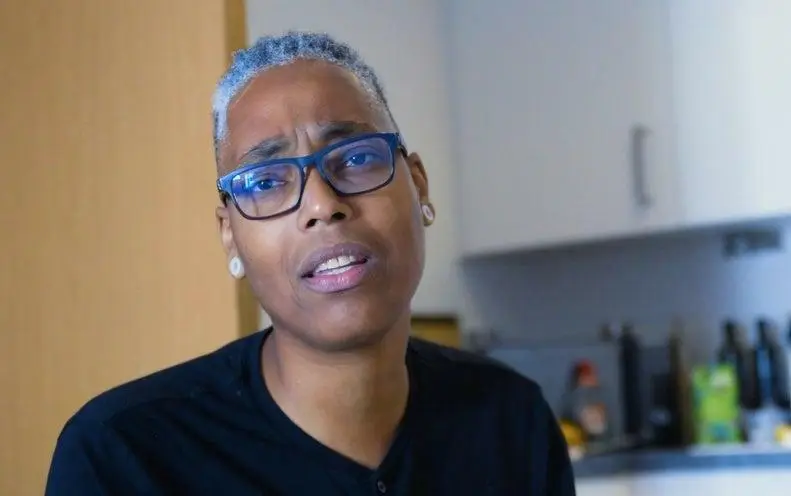
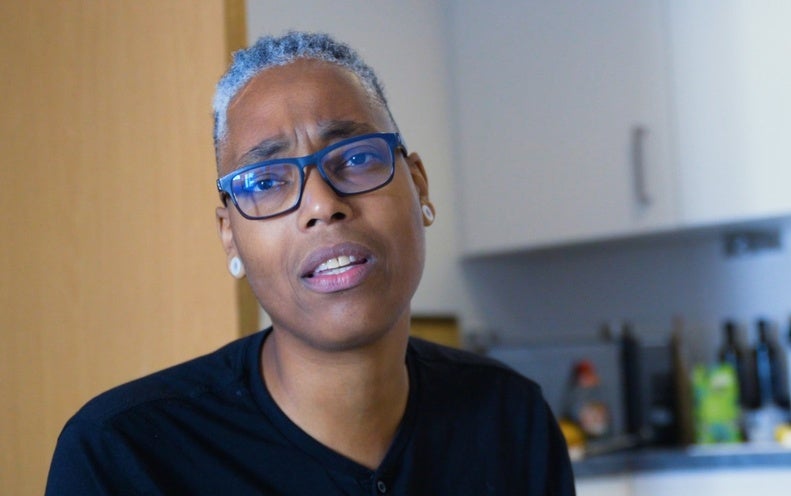
Sean Saifa Wall is an intersex activist and researcher who was born with an intersex variation called androgen insensitivity syndrome, which occurs when a person who has XY chromosomes is resistant to hormones called androgens.

At age 13, Wall underwent a surgery to remove his internal testes, which at the time were thought to carry a risk of cancer. He told Scientific American that, not long after, he and his mom attended a consultation with the same doctor for another cosmetic procedure that involved shaving down his clitoris and creating a cavity inside of him.

“There are so many assumptions made: that I would want a vagina, that I would want to be in a heterosexual relationship, that I would even identify as a woman.”

Arlene Baratz is a physician who had to rethink what she was taught in medical school when she learned that her two daughters were born with intersex variations. She notes that the stigmatizing push to “treat” genital differences doesn’t square with how science thinks about other traits that naturally vary in the population.

“I think we know through science that there is a spectrum of variation for just about everything, including sex traits,” Baratz says. “And people with intersex bodies show us that because their bodies exist on a spectrum of difference. I think the issue is that people want to think about gender as a binary.”

As a result, she explains, most research on surgery focuses on cosmetic outcomes. “They’ll report that they’re able to put something in the vagina that they create,” Baratz says. “And being able to put something in there of a certain size, they say the surgery was a success but then no information about, when that person goes on to want to be a sexual person, how that’s working out for them.”

One of Baratz’s daughters is now a psychiatrist who focuses on the mental health of LGBTQI people. In 2020 the two co-authored a study reflecting the need for more community-based research on the mental health of intersex people.

In July 2020, after years of activism by Wall, Baratz and others, Ann & Robert H. Lurie Children’s Hospital of Chicago became the first in the country to say it would stop performing medically unnecessary surgeries on intersex infants and children.

Hospitals in other cities have since followed suit. And in 2021 New York City passed a bill to educate doctors, parents and guardians of intersex children on the potential harms of genital surgery.

After all, the fixation on a sex binary in science, Wall points out, doesn’t occur in a vacuum.

“I think for people asking the question ‘Is your child a boy or a girl?’ I would really challenge them to just take a moment and ask, ‘Why? Why is it so important?’ Are you just happy to have a baby? Are you just happy to start a family? I think those are quality-of-life questions that often get overlooked or missed in this conversation.”

This article was supported by the Economic Hardship Reporting Project.

Scientific American documentaries are shot on Blackmagic Design cameras.

[ad_2]

Source link

Trending Topics

Features

Download and distribute powerful vaccination QI resources for your community.

Sign up now to support health equity and sustainable health outcomes in your community.

MCED tests use a simple blood draw to screen for many kinds of cancer at once.

FYHN is a bridge connecting health information providers to BIPOC communities in a trusted environment.

Discover an honest look at our Medicare system.

ARC was launched to create a network of community clinicians to diversify and bring clinical trials to communities of color and other communities that have been underrepresented.

The single most important purpose of our healthcare system is to reduce patient risk for an acute event.

Related Posts
Early Cancer Detection Is Entering a New Era. Flint Is Helping Lead the Way.
Why Your “Ozempic” May Not Be Ozempic: FDA Warnings Highlight Growing Risks of Unregulated GLP-1 Drugs
The Communities Most Burdened by Disease Should Be the First to Benefit from Artificial Intelligence
Scroll to Top
Featured Articles
Early Cancer Detection Is Entering a New Era. Flint Is Helping Lead the Way.
Why Your “Ozempic” May Not Be Ozempic: FDA Warnings Highlight Growing Risks of Unregulated GLP-1 Drugs
Why Your “Ozempic” May Not Be Ozempic: FDA Warnings Highlight Growing Risks o...
The Communities Most Burdened by Disease Should Be the First to Benefit from Artificial Intelligence
The Communities Most Burdened by Disease Should Be the First to Benefit from ...
Cancer Pain Care Access Gap Hits Black, Asian Patients
Black and Asian Cancer Patients Wait Longer for Pain Relief in New Study
What Is Cyclosporiasis Symptoms, Food Safety, and Reasons
What Is Cyclosporiasis? The Foodborne Illness Showing Up in the News
Why Minority Mental Health Awareness Month Matters More Than Ever
Categories
AI
ATTR-CM
BIPOC News
Cancer
Clinical Trials
Covid19
Diseases of the Body
Environment
Health Data
Health Equity Events
Health Policy
Health Tips
Subscribe to our newsletter to receive our latest news​
All Stories
Early Cancer Detection Is Entering a New Era. Flint Is Helping Lead the Way.
Why Your “Ozempic” May Not Be Ozempic: FDA Warnings Highlight Growing Risks of Unregulated GLP-1 Drugs
Why Your “Ozempic” May Not Be Ozempic: FDA Warnings Highlight Growing Risks o...
The Communities Most Burdened by Disease Should Be the First to Benefit from Artificial Intelligence
The Communities Most Burdened by Disease Should Be the First to Benefit from ...
BIPOC News
Early Cancer Detection Is Entering a New Era. Flint Is Helping Lead the Way.
The Communities Most Burdened by Disease Should Be the First to Benefit from Artificial Intelligence
The Communities Most Burdened by Disease Should Be the First to Benefit from ...
Why Minority Mental Health Awareness Month Matters More Than Ever
Environment
UV Safety Awareness Month Raises Urgency on Skin Cancer Prevention and Sun Protection Equity
UV Safety Awareness Month Raises Urgency on Skin Cancer Prevention and Sun Pr...
Extreme Heat Safety Tips 5 Ways to Protect Your Health This Summer fyh.news
5 Heat Safety Tips That Could Protect Your Health This Summer
Lupus Awareness Event in Baltimore Aims to Support Research and Shine a Light on Health Disparities
Lupus Awareness Event in Baltimore Aims to Support Research and Shine a Light...
Work Force
A multigenerational Black and Hispanic family sitting together in a park, showing how Social Security helps support older adults, people with disabilities, and families across generations.
Millions of Older Americans Could Face Smaller Social Security Checks by 2032...
dreamstime_s_243253251
The Caregiver Journey: The Hidden Backbone of American Healthcare
Families gather at a Bronx community festival with live music, kids’ activities, and health booths sharing SOMOS social care resources and free screenings.
Celebrating Hispanic heritage while learning about health care

[xyz-ips snippet=”Output-Source-Name”]

Clinical Trials
Early Cancer Detection Is Entering a New Era. Flint Is Helping Lead the Way.
Why Your “Ozempic” May Not Be Ozempic: FDA Warnings Highlight Growing Risks of Unregulated GLP-1 Drugs
Why Your “Ozempic” May Not Be Ozempic: FDA Warnings Highlight Growing Risks o...
Clinical Trial Diversity Remains a Critical Challenge in Alzheimer’s Research
Vaccines and Outbreaks
A parent checking a child's temperature during summer, illustrating the changing RSV patterns and year-round respiratory virus risks.
Can You Get RSV During the Summer?
Michelle Lam, MBA, of NYC Health + Hospitals/Elmhurst & Amy Harris of NYC Health + Hospitals/Elmhurst
Healthcare Leaders Spotlight Vaccine Equity and Adult Immunization Strategies...
Measles Outbreaks Surge: Essential Facts and Prevention Strategies
Other Categories
AI
Read the latest AI News stories trending around the world
ATTR-CM
Cancer
Read the latest Cancer stories trending around the world
Covid19
Diseases of the Body
Read about the latest Diseases of the Body trending around the world
Friday Webinars
Every Friday, we bring you insightful webinars covering critical topics in healthcare, data equity, and policy reform.
Health Data
Read the latest Health Data stories trending around the world
Health Equity Events
Read the best Health Equity Events around the country.
Health Policy
Read the latest Health Policy stories trending around the world
Health Tips
Heart Health
Read the latest on Heart Health News, Stories and Tips.
kidney Health
Read more trending News about Kidney Health, Stories and Tips.