[ad_1]
In recent years, some states have invested in air quality monitoring, applied extra scrutiny to permitting decisions and steered cleanup funding to minority communities that have borne the brunt of pollution for decades.
Now, in the wake of the U.S. Supreme Court’s recent decision striking down race-conscious college admissions policies, state lawmakers are facing a new conundrum: Can they remedy environmental racism without mentioning race?
“The [Supreme Court] majority really reinforced the idea that a generalized government policy of rectifying past discrimination would not pass constitutional muster,” said Emily Hammond, an environmental law expert and professor at the George Washington University Law School.
Lawmakers are scrambling to figure out what the ruling will mean for their environmental justice efforts. In some states, legislators expect lawsuits to threaten their policies. The question is whether they can defend those measures in court, or if they need to revise the laws in a race-neutral way to ensure they’re not struck down.
Studies have shown that communities of color face disproportionate levels of air and water pollution, less access to green space and significant health disparities as a result of those factors. Such communities often have been carved up with highways, refineries, fossil fuel plants and waste dumps.
“We want to acknowledge the harms we have done as a state with our environmental laws, with permitting, with waste and pollution, and reduce the harms to communities that have been impacted more, which are historically communities of color,” said Minnesota state Rep. Fue Lee.
The Democrat helped champion a law passed this year that forces regulators to consider cumulative pollution effects before issuing air quality permits in certain areas, including tracts with 40% or more nonwhite residents. But he acknowledged that lawmakers should prepare to revise those criteria if legal challenges upend the law.
“If we don’t want to use race, there’s proxies like health conditions we can use,” he said. “My district has one of the highest hospitalization rates for asthma and heart conditions. Those are some next steps we can take — we just have to be creative.”

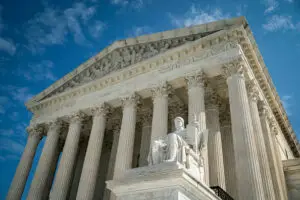
In June, the Supreme Court ruled that colleges could no longer use race as a factor in admissions. In a 6-3 decision, the majority found that policies that give favor to minority applicants violate the Constitution’s equal protection clause.
Legal experts fear that could open the door to lawsuits challenging other race-conscious policies, including many state-level efforts to address environmental justice. Those legal battles could stall investments to help polluted communities.
“It is not that defending race-conscious measures is impossible; it is that doing so is expensive and time-consuming, as well as unlikely to persuade judges convinced that use of race is always pernicious,” wrote Toni Massaro, a constitutional law scholar with the University of Arizona, in an email to Stateline.
In many states, lawmakers said they’re still evaluating how to proceed.
“I share deep concerns of how this ruling will impact our environmental justice laws,” said Washington state Rep. Debra Lekanoff, a Democrat who was a key backer of the state’s cap-and-trade package, which auctions pollution allowances for carbon emissions and puts the revenue into clean energy and climate adaptation projects.
The package also increases air quality monitoring and directs revenue to “overburdened” communities. The state lists racial or ethnic minority populations among its criteria to identify those areas.
But even if the program faces a legal threat, Lekanoff said, other factors included in the analysis, such as pollution exposure and health impacts, may still serve to direct resources to communities affected by environmental racism.
“The science is going to tell us that the people who are losing their lives from environmental degradation are in communities of color,” she said. “Whether or not [race] is in the law, if you just look with wide eyes at who has faced the most detrimental impacts, the truth will come to the surface.”
Lekanoff said she and other legislators will consult with Attorney General Bob Ferguson, a Democrat, to determine whether they should revise the law or prepare for a lawsuit.
The Biden administration established a “race-neutral” screening methodology known as the Climate and Economic Justice Screening Tool to guide its efforts to direct 40% of federal spending across many agencies to disadvantaged communities. The tool uses nearly two dozen environmental and economic factors, but omits race. Environmental justice advocates say the White House did so to insulate the program from legal challenges.
A Grist analysis found that the categories used by the Biden administration — including income, climate vulnerability, health, housing and legacy pollution — largely directed funding to communities of color.
“A breakdown of all U.S. census tracts shows that, as the number of non-white residents in a tract increases, a tract becomes more likely to be considered disadvantaged by the White House tool,” the analysis said.
Despite the legal uncertainty, some environmental justice advocates urged lawmakers not to turn a blind eye to race. Robert Bullard, a civil rights leader and professor at Texas Southern University, has been dubbed the father of the environmental justice movement. He pointed to federal statutes such as the Fair Housing Act and the Voting Rights Act that do account for race.
“If we were so timid, shy and somehow threatened by the Supreme Court coming in and throwing out everything, we would still be picking cotton in 2023,” he said. “We have to push back against those policies that are destroying our communities. If there are lawsuits that will come to our efforts to destroy racism, let it be, they should not cower us into fighting for our basic rights.”
Bullard said states that are concerned about legal challenges could draft provisions that mimic the White House tool, but he urged them to cross-reference other screening methods to determine if communities of color are being left out. Other tools, such as the program developed by California regulators, account for the cumulative impacts of the health and environmental factors facing each community.
Some lawmakers echoed Bullard’s call for boldness.
“The important thing is to not concede that our policymaking should obviously change,” said Michigan state Rep. Laurie Pohutsky, a Democrat and House speaker pro tempore. “If there is a challenge, we will deal with that as it arises. We are in the business of making good policy, not preemptively capitulating to an extremist unelected body.”
Pohutsky has drafted a bill that would direct utility regulators to minimize harm and prioritize benefits to minority and low-income areas. The measure is part of a larger package focused on renewable energy. Lawmakers also will consider a Senate bill that would invest a portion of the fines paid by polluters into “environmental protection communities,” as identified by a federal screening tool that does include race.
Pohutsky expressed confidence that those efforts, by accounting for many factors beyond race, could withstand legal challenges.
Hammond, the legal scholar, said race-based policies that govern regulatory actions, such as permitting decisions, may be on firmer legal ground than those that administer funding. The distribution of benefits based on race, Hammond said, would likely face closer scrutiny. Meanwhile, the court’s decision earlier this year to uphold the Indian Child Welfare Act may protect policies aimed at tribal communities — securing their status as sovereign political entities, not racial groups.
One option for lawmakers, Hammond said, is to draft so-called severability clauses. Such measures could enable them to continue using race in their analysis, but allow the laws to revert to something like the federal tool — rather than being struck down entirely — if race-based metrics are deemed invalid by a court.
“There’s a lot in [state environmental justice laws] that should be just fine, and there are perhaps pieces that present heightened risk,” Hammond said.
This story was published earlier by Stateline, a partner of the nonprofit States Newsroom network, which includes the Florida Phoenix.
[ad_2]
Source link