[ad_1]
Shannon Finney/Getty Images
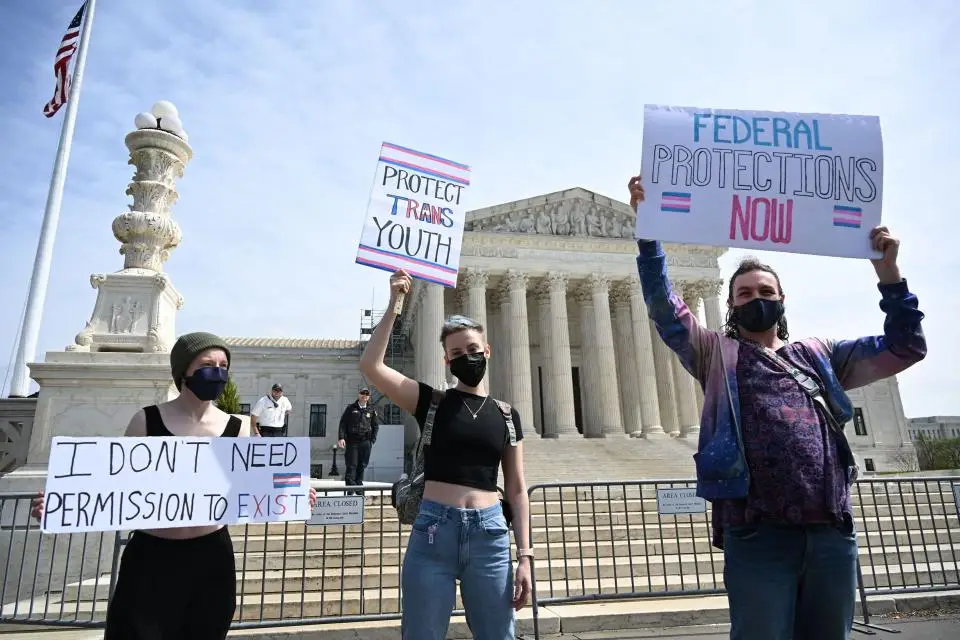
A new report estimates that over 105,000 trans youth in the U.S. live in states that have banned access to gender-affirming care, meaning that about one-third of the country’s trans youth don’t have access to those crucial medical interventions.
The report, which was released last week by UCLA’s Williams Institute, estimates the number of trans people aged 13 to 17 who have been affected by anti-trans legislation. The laws are sorted into categories: bans on gender-affirming care, bans on sports participation, and bathroom bans. The report also looks at the impacts of two types of pro-trans laws: “shield” laws that protect people seeking gender-affirming care and bans on conversion therapy.
The report outlines just how much anti-trans legislation has advanced in 2023: Of the trans youth who live in states that ban gender-affirming care, the vast majority of them (92,700) live in states that passed those bans this year. Twenty-two states total have passed laws that ban gender-affirming care, and 19 of those states passed those bans in 2023.
The report also notes that in five states with gender-affirming care bans, laws are currently unenforceable due to court orders. Most of those rulings have stated that these restrictions are likely unconstitutional. The report also finds that about half of trans youth in the U.S. (146,700) live in one of the 14 states that have passed “shield” laws, which ensure that people who seek gender-affirming can’t be prosecuted for doing so. Twelve of those states enacted their shield laws in 2023.
The report found that a third of trans youth (101,500) are affected by laws prohibiting trans kids from playing on teams consistent with their gender identity. That said, court orders are at least temporarily preserving access for a number of those students (11,100) in Arizona, Idaho, Utah, and West Virginia.
As far as anti-trans legislative trends go, bathroom bans are once again on the rise. In 2016, North Carolina sparked national outrage and widespread corporate backlash when legislators introduced the first bathroom bill, HB 2; nine states now restrict access to bathrooms consistent with one’s gender identity in K-12 schools. Six of those states passed those laws this year. In total, 32,700 trans youth are affected by these bans, and none have yet been blocked by court orders, per the report.

Most Americans Want Politicians to Stop Attacking Trans People
In a new survey, only 17% said that politicians should focus on restricting gender-affirming care.
Right-wing lawmakers might be trying to restrict gender-nonconformity and queerness of all kinds in young people. But at the very least, the report found that a majority of trans youth live in states that ban or limit so-called conversion therapy. Two-thirds of trans youth (198,000) live in the 27 states (plus D.C.) that have banned the dangerous, discredited practice.
The study’s lead author, Christy Mallory, said in a statement that “a record number of laws impacting transgender youth were introduced in state legislatures in 2023.” The report notes that over 500 anti-LGBTQ+ bills were introduced across the country this year, with over half impacting trans youth.
“While most of them did not pass, the ones that did significantly shifted the legal landscape for transgender youth,” Mallory added.
Get the best of what’s queer. Sign up for Them’s weekly newsletter here.
Originally Appeared on them.
[ad_2]
Source link