













[ad_1]
Representative Kim Moser’s proposal to increase access to care and address Kentucky’s health care worker shortage passed the House floor 94-4 this week and has been sent to the Senate.
The measure, HB 525, streamlines the certification process for community health workers, who are frontline health professionals helping medically underserved communities overcome barriers to care.
Community health workers have a uniquely close relationship to and understanding of the area they serve and typically provide services through local clinics of all types. These health workers are trained to help meet people where they are and focus on connecting communities with health and social services available—whether it be through education, support, or simply navigation of the health care system. HB 525 would make these services would be a reimbursable Medicaid service.
“Despite advances in modern medicine and Medicaid providing health care coverage to over a third of the state’s population, Kentucky has seen no significant improvement in health outcomes,” says Moser, chair of the House Health and Family Services Committee. “The state continues to rank among the worst in the nation in the majority of health indicators, including chronic diseases and comorbidities. We must focus our Medicaid dollars and target programs that work. By expanding Certified CHW’s, we will improve health outcomes in Kentucky and realize long-term savings in Medicaid spending.

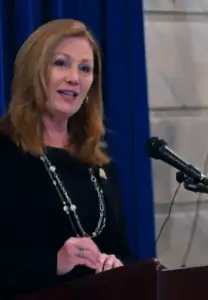
Kim Moser
“Most people know just how difficult navigating health services and the medical system can be, and it shouldn’t be this way. Our goal is to close the health disparities gap, which starts with meeting people where they are with someone they know and trust. Because of their familiarity and the nature of their region and resources, they often create a more comfortable environment for those otherwise hesitant to seek medical care.”
Moser and community leaders representing the underserved, point to how having health insurance doesn’t always equate to accessing preventative care and ongoing services. These barriers, along with finding the right outlet for engagement, underscore what many see as the Commonwealth’s most pressing health issue.
“Our state currently ranks near the bottom nationally in many health metrics, including diabetes, cancer, and heart disease,” said Moser, a long-time advocate for improving population health. “That’s why this program is critical to our public health system. Small steps like getting your yearly checkups or screenings can identify illnesses earlier when treatment is significantly more effective and less expensive. Community health workers are extremely successful in helping folks see the importance in maintaining their health.”
The proposed measure would directly impact approximately 70% of the state’s population. Community health workers have long been recognized for their effectiveness in improving health outcomes and reducing medical costs. According to the state Rural Health Information Hub, every $1 invested, the Medicaid program saved $11 in provided medication and services in Eastern Kentucky between 2001 and 2019.
HB 525 will also create a classification system for community health workers as well as a certification process with college credit through the Kentucky Community and Technical College System. This continues the House’s commitment to strengthening the health care talent pipeline.
[ad_2]
Source link


