














The Agriculture Department has proposed changes in its nutritional programs that could have a huge positive effect on the health of Black and Hispanic children from low-income households. For starters, the nation’s food stamp program would allow for more fruits, vegetables and whole grains.
[ad_1]
Comment
The USDA’s proposals follow a letter sent in October to Agriculture Secretary Tom Vilsack from 31 members of Congress — mostly members of the Black, Hispanic and Asian Pacific American caucuses.
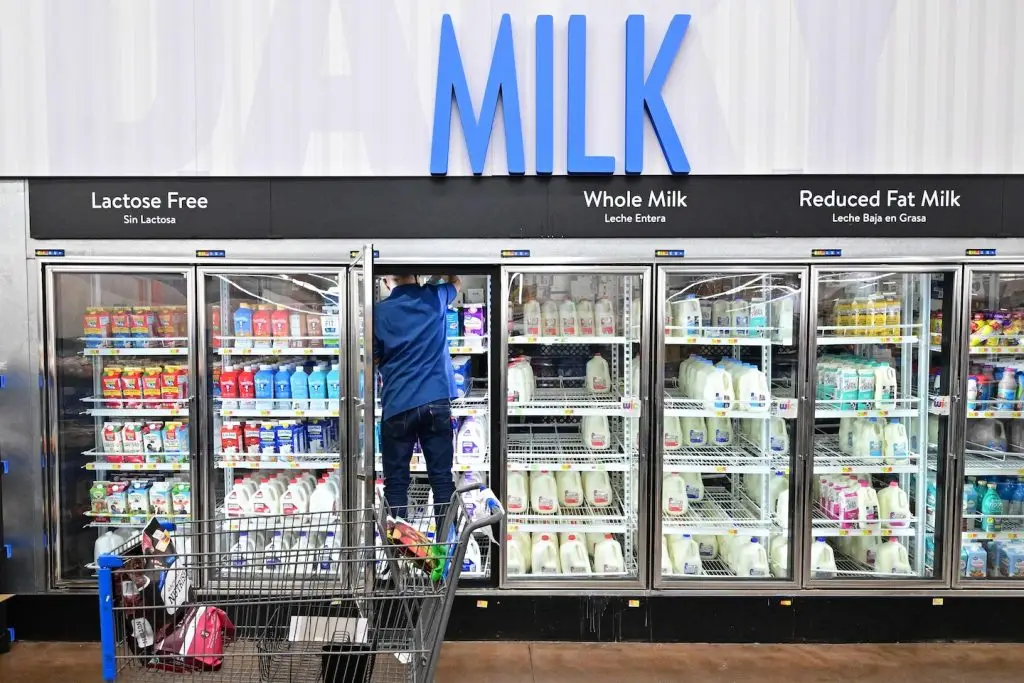
Their concern was the adverse impact that consuming cow’s milk has on schoolchildren, especially children of color.
“The rates of lactose intolerance in (people of color) are startlingly high, with 65 percent of Latino students, 75 percent of Black students, and 90 percent of Asian students unable to digest dairy milk without detrimental effects,” said the letter, whose signatories included Reps. Troy A. Carter (D-La.), who is leading the effort, and Hakeem Jefferies (D-N.Y.), who was recently elected leader of the House Democratic Caucus.
Boston Children’s Hospital notes that in young children, lactose intolerance is usually caused by digestive diseases or injuries to the small intestine. But most cases of lactose intolerance develop over many years in adolescents and adults. Each individual may experience symptoms differently, the hospital’s website says, but common symptoms — which typically begin about 30 minutes to two hours after consuming food or beverages containing lactose — include nausea, cramps, bloating, gas and diarrhea.
“This issue hit me hard both as a parent of two Black boys, and as a congressman of a majority-minority district in the south,” Carter said. “We know our nation’s public schools and health-care systems have deeply flawed histories — and, in some cases, current realities — of inequitable resource distribution and treatment of students and people of color. While this push to offer nondairy, nutritionally equivalent alternatives to our kids there at lunch counters may seem like a small fight, this is another one of those inequities facing communities of color that we can and therefore must take action to fix.”
The nation’s dairy industry, however, still pushes milk as a nutritious builder of strong bones and an important source of vitamin D. Last year, the American Dairy Association relaunched its “Got Milk?” campaign. This time, the campaign is relying more on social media influencers than celebrities and sports stars to market the product.
Moreover, despite its new proposals, the USDA continues to encourage consumption of fluid cow’s milk in its Supplemental Nutrition Program for Women, Infants and Children, known as WIC, as well as the Supplemental Nutrition Assistance Program (SNAP) and the National School Lunch and School Breakfast programs. Schools participating in the National School Lunch Program, for example, must offer students a cup of milk with each lunch.
USDA research analyzing dietary records of teenagers and children between 2003 and 2018 found that children aged 6 through 12 years old obtained 35 percent of their fluid milk at schools, while teenagers aged 13 through 18 years obtained 25 percent of their fluid milk at schools. Consumption of fluid milk was also higher for both groups on weekdays, when schools are generally in session, than on weekends.
“Free and reduced school lunch is supposed to be a safety net for our nation’s most vulnerable children, and is disproportionately utilized by students of color,” Carter said. “For many of these kids, school meals may be the only food available to them that day. Children cannot learn if they feel sick or hungry, and yet we know that millions of children, especially children of color, experience negative symptoms after ingesting the dairy that our current school lunch program requires be placed on every student’s lunch tray.”
Currently, children who suffer adverse reactions from cow’s milk must produce a doctor’s note if they choose not to accept traditional milk with their lunch. Carter says this puts an undue burden on minority students, some of whom may not yet know adverse health effects — such as exacerbated asthma — are caused by lactose intolerance.
The USDA’s Food and Nutrition Service boasts that it is working to “end hunger and improve food and nutrition security” through a suite of more than 15 nutrition assistance programs. Together, these programs serve 1 in 4 Americans over the course of a year, “promoting consistent and equitable access to healthy, safe, and affordable food essential to optimal health and well-being,” according to the USDA website.
But that is obviously aspirational. There is still a lot of work to do. The USDA is encouraging anyone interested in the proposed nutritional changes to provide feedback at www.regulations.gov. The comment period will be open until Feb. 21. Parents of children of color should let their voices be heard.
“The sad reality is that by refusing to offer nondairy alternatives in our school lunch program, we not only waste millions of dollars through discarded, unopened milk, but this federal program is likely causing countless schoolchildren to feel sick and less able to learn,” Carter said. “After all, how can children be expected to successfully learn when they are experiencing preventable pain and discomfort? With a nutritionally equivalent solution available to us in soy milk, there is no reason that we should further delay bringing equity into our school lunchrooms.”
[ad_2]
Source link
Trending Topics
Features
- Drive Toolkit
Download and distribute powerful vaccination QI resources for your community.
- Health Champions
Sign up now to support health equity and sustainable health outcomes in your community.
- Cancer Early Detection
MCED tests use a simple blood draw to screen for many kinds of cancer at once.
- PR
FYHN is a bridge connecting health information providers to BIPOC communities in a trusted environment.
- Medicare
Discover an honest look at our Medicare system.
- Alliance for Representative Clinical Trials
ARC was launched to create a network of community clinicians to diversify and bring clinical trials to communities of color and other communities that have been underrepresented.
- Reducing Patient Risk
The single most important purpose of our healthcare system is to reduce patient risk for an acute event.
Related Posts
National Disability Employment Awareness Month and Health Access
- Jessica Wilson
RSV Season Is Starting. Here’s What Families Should Know
Victor Mejia Lacayo
World Dense Breast Day 2026 Raises Awareness of Breast Density and Cancer Risk
- Subash Kafle


