










Promote climate justice and end environmental racism

[ad_1]

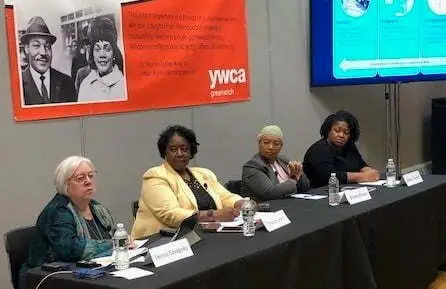
In honor of Coretta Scott King and Dr. Martin Luther King, Jr. and at the start of Black History Month, YWCA Greenwich and 47 community partners sponsored a powerful panel discussion titled “Climate Justice In Connecticut.” Four outstanding female leaders and experts in their fields educated us about the disproportionate impacts of climate change on communities of color and how Connecticut can take steps to not only promote climate justice, but also achieve climate justice through a more inclusive and equitable process.

Our guest moderator Denise Savageau, environmental consultant and longtime director of conservation for the Town of Greenwich, began with a variety of data demonstrating the impacts of climate change and where these impacts are felt the most. For example, the data predict an increase in extreme heat days from four to 48 by the year 2050, and those impacted the most will be communities of color in cities such as Bridgeport and Hartford. Similarly, communities of color and other vulnerable communities in the state will be more vulnerable to flood events going forward. Nationally we know that 70 percent of Black Americans live within 30 miles of a coal fired power plant, while three out of every five Black Americans live in areas with uncontrolled waste sites.

Sharon Lewis, the executive director of the Connecticut Coalition for Environmental and Economic Justice clarified the meaning of climate and environmental justice: when all share equally in the benefits and the burdens of climate change and environmental impacts, and when those most impacted lead the efforts to develop solutions. For example, climate shifts and underinvestment in infrastructure have caused chronic sewage backups and home displacement for Sharon and her neighbors in Hartford, and there is “no urgency” in finding solutions or including those affected in developing solutions. “Race, not income, remains the primary indicator” for the siting of landfills, industrial facilities, and mass transportation, putting families of color in close proximity to burning facilities, waste disposal plants and highways. This correlation has been well documented by data and research, including two landmark studies published by the United Church of Christ that coined the term “environmental racism.”

Brenda Watson, the executive director of Operation Fuel, explained that 30 percent of all carbon emissions come from our homes, and 30 percent of our housing stock is old and needs to be weatherized properly. As part of the Governor’s Council on Climate Change, she is working toward solutions that will remediate mold and other issues that need to be addressed in connection with weatherization. For example, we should mobilize for these purposes in the same way that the state mobilized for residents in Eastern Connecticut with crumbling foundations. Brenda also explained that rising energy bills are even harder to pay when people, especially renters, are living in substandard housing where the heat escapes easily. State residents pay between 30 percent and 50 percent of household income on energy, when spending 6 percent or less on energy is considered “affordable.” Energy justice needs to be addressed holistically, with an understanding of the reliance on energy for medical devices, the vulnerability to heat-related death and the impact of energy loss on food insecurity. Policy and regulatory work should acknowledge access to electricity as a basic right.

Ashley Stewart, the manager of community engagement for the Connecticut Green Bank stressed the importance of listening to the most vulnerable, who are experiencing climate impacts first and before most. She highlighted that these impacts are first experienced before they become “a metric to be measured.” Our environmental justice communities “are our canaries in a coal mine, letting us know there are more impacts of climate change coming.” The Connecticut Green Bank is the first green bank in the country and is leading the state’s private investment in clean energy, and has recently expanded their scope to include environmental infrastructure. The Connecticut Green Bank is also integrating the voices and experiences of those most impacted by climate change through thoughtfully designing solutions and creating pathways for those most impacted to participate in the new green economy. The Green Bank has led the nation in clean energy investment and is aiming to continue that investment in areas of land conservation, parks, waste, agriculture and water. Much is needed in our most marginalized and disadvantaged communities, as Ashley explained, including remediation of existing brownfields, urban stormwater infrastructure in surrounding neighborhoods, and more equitable ways for citizens to provide public comment to policymakers and regulators that help to shape their communities.

Together the undersigned urge the state to promote climate justice and end environmental racism with updated public policy, regulatory reform for private and public utilities, and inclusive infrastructure siting and planning going forward. Thanks to Sharon Lewis, we ended this critically important conversation with a powerful quote from Benjamin Franklin: “Justice will not be served until those who are unaffected are as outraged as those who are.”

Sharon Lewis, executive director, Connecticut Coalition for Economic and Environmental Justice

Ashley Stewart, manager of community relations, Connecticut Green Bank

Denise Savageau, Environmental consultant and former Town of Greenwich conservation director

Brenda Watson, executive director, Operation Fuel

Mary Lee Kiernan, president & CEO, YWCA Greenwich


[ad_2]

Source link

Trending Topics

Features

Download and distribute powerful vaccination QI resources for your community.

Sign up now to support health equity and sustainable health outcomes in your community.

MCED tests use a simple blood draw to screen for many kinds of cancer at once.

FYHN is a bridge connecting health information providers to BIPOC communities in a trusted environment.

Discover an honest look at our Medicare system.

ARC was launched to create a network of community clinicians to diversify and bring clinical trials to communities of color and other communities that have been underrepresented.

The single most important purpose of our healthcare system is to reduce patient risk for an acute event.

Related Posts
R&B Singer Nivea Reveals Leukemia Diagnosis at 44, Says Treatment Is Going Well
Health Equity Act Reintroduced to Expand Access
Senate Committee Advances 11 Health Care Access Bills
Scroll to Top
Featured Articles
Nivea Leukemia Diagnosis Singer Shares Treatment Update
R&B Singer Nivea Reveals Leukemia Diagnosis at 44, Says Treatment Is Goin...
Sen. Alex Padilla speaks during the announcement of the Health Equity and Accountability Act of 2026, legislation aimed at reducing health disparities and expanding access to healthcare for underserved communities.
Health Equity Act Reintroduced to Expand Access
Senate HELP Committee advances bipartisan health care bills on insulin, biosimilars, rural care and price transparency.
Senate Committee Advances 11 Health Care Access Bills
Bottle and tablets representing the recall of some cetirizine 5 mg allergy medicine
Cetirizine Recall: Check Your Allergy Medicine
House Advances Bipartisan EARLY Act Reauthorization, Renewing Focus on Early Breast Cancer Detection for Young Women
House Advances Bipartisan EARLY Act Reauthorization, Renewing Focus on Early ...
Cyclospora Outbreak Linked to Lettuce Sickens 1,600+ fyh.news
Cyclospora Outbreak Linked to Recalled Lettuce Sickens More Than 1,600 Across...
Categories
AI
ATTR-CM
BIPOC News
Cancer
Clinical Trials
Covid19
Diseases of the Body
Environment
Health Data
Health Equity Events
Health Policy
Health Tips
Subscribe to our newsletter to receive our latest news​
All Stories
Nivea Leukemia Diagnosis Singer Shares Treatment Update
R&B Singer Nivea Reveals Leukemia Diagnosis at 44, Says Treatment Is Goin...
Sen. Alex Padilla speaks during the announcement of the Health Equity and Accountability Act of 2026, legislation aimed at reducing health disparities and expanding access to healthcare for underserved communities.
Health Equity Act Reintroduced to Expand Access
Senate HELP Committee advances bipartisan health care bills on insulin, biosimilars, rural care and price transparency.
Senate Committee Advances 11 Health Care Access Bills
BIPOC News
Senate HELP Committee advances bipartisan health care bills on insulin, biosimilars, rural care and price transparency.
Senate Committee Advances 11 Health Care Access Bills
Bottle and tablets representing the recall of some cetirizine 5 mg allergy medicine
Cetirizine Recall: Check Your Allergy Medicine
How NMQF Advances Minority Health Through Data, Research and Health Access
Environment
UV Safety Awareness Month Raises Urgency on Skin Cancer Prevention and Sun Protection Equity
UV Safety Awareness Month Raises Urgency on Skin Cancer Prevention and Sun Pr...
Extreme Heat Safety Tips 5 Ways to Protect Your Health This Summer fyh.news
5 Heat Safety Tips That Could Protect Your Health This Summer
Lupus Awareness Event in Baltimore Aims to Support Research and Shine a Light on Health Disparities
Lupus Awareness Event in Baltimore Aims to Support Research and Shine a Light...
Work Force
A multigenerational Black and Hispanic family sitting together in a park, showing how Social Security helps support older adults, people with disabilities, and families across generations.
Millions of Older Americans Could Face Smaller Social Security Checks by 2032...
dreamstime_s_243253251
The Caregiver Journey: The Hidden Backbone of American Healthcare
Families gather at a Bronx community festival with live music, kids’ activities, and health booths sharing SOMOS social care resources and free screenings.
Celebrating Hispanic heritage while learning about health care

[xyz-ips snippet=”Output-Source-Name”]

Clinical Trials
House Advances Bipartisan EARLY Act Reauthorization, Renewing Focus on Early Breast Cancer Detection for Young Women
House Advances Bipartisan EARLY Act Reauthorization, Renewing Focus on Early ...
Early Cancer Detection Is Entering a New Era. Flint Is Helping Lead the Way.
Why Your “Ozempic” May Not Be Ozempic: FDA Warnings Highlight Growing Risks of Unregulated GLP-1 Drugs
Why Your “Ozempic” May Not Be Ozempic: FDA Warnings Highlight Growing Risks o...
Vaccines and Outbreaks
Cyclospora Outbreak Linked to Lettuce Sickens 1,600+ fyh.news
Cyclospora Outbreak Linked to Recalled Lettuce Sickens More Than 1,600 Across...
A parent checking a child's temperature during summer, illustrating the changing RSV patterns and year-round respiratory virus risks.
Can You Get RSV During the Summer?
Michelle Lam, MBA, of NYC Health + Hospitals/Elmhurst & Amy Harris of NYC Health + Hospitals/Elmhurst
Healthcare Leaders Spotlight Vaccine Equity and Adult Immunization Strategies...
Other Categories
AI
Read the latest AI News stories trending around the world
ATTR-CM
Cancer
Read the latest Cancer stories trending around the world
Covid19
Diseases of the Body
Read about the latest Diseases of the Body trending around the world
Friday Webinars
Every Friday, we bring you insightful webinars covering critical topics in healthcare, data equity, and policy reform.
Health Data
Read the latest Health Data stories trending around the world
Health Equity Events
Read the best Health Equity Events around the country.
Health Policy
Read the latest Health Policy stories trending around the world
Health Tips
Heart Health
Read the latest on Heart Health News, Stories and Tips.
kidney Health
Read more trending News about Kidney Health, Stories and Tips.