









[ad_1]
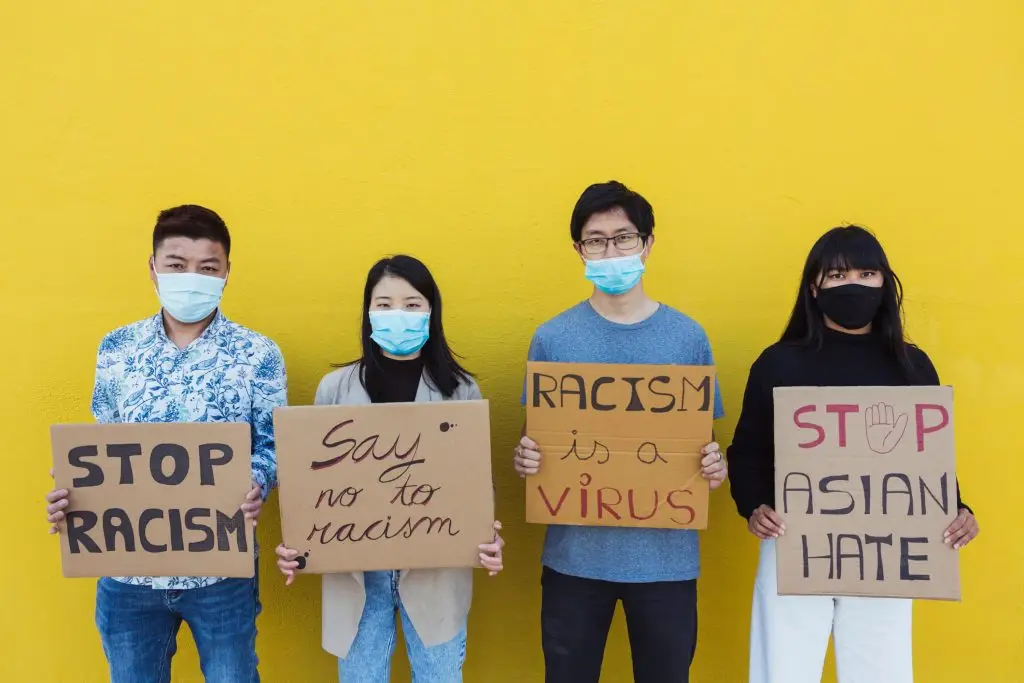
The incidence of hostile acts and discrimination against people of color have increased during the COVID-19 pandemic. A new study found that minority people in the United States report experiencing higher levels of COVID-19-related discrimination than White Americans.
“We chose to pursue this research question because while reports of COVID-related discrimination and violence were common in the media, particularly against Asian and Asian American adults, there had been relatively little done to systematically measure how often it was occurring, and who was most at risk,” said lead author Paula Strassle, PhD, MSPH, staff scientist at the National Institute on Minority Health and Health Disparities.
The researchers used data from the COVID-19’s Unequal Racial Burden (CURB) survey to measure the prevalence of COVID-19-related discrimination across major racial and ethnic groups in the US. Data from 5500 American Indian/Alaska Natives, Asian, Black/African Americans, Hawaiian and Pacific Islanders, Latinos, White Americans, and multiracial adults was collected.
Continue Reading
Participants were questioned on whether they experienced “discriminatory behavior” such as name-calling, being insulted, and/or being threatened or harassed because they were thought to have COVID-19. The survey also asked “People acted afraid of you.”
A total of 22.1% of the participants reported experiencing discriminatory behaviors, and 42.7% reported that people acted afraid of them. All racial/ethnic minorities were more likely than White adults to experience COVID-19-related discrimination, with Asian and American Indian/Alaska Native adults being most likely to experience such discrimination (discriminatory behaviors: adjusted odds ratio [AOR], 2.59; 95% CI, 1.73, 3.89; and AOR, 2.67; 95% CI, 1.76, 4.04, respectively)”, researchers reported. “Limited English proficiency, lower education, lower income, and residing in a big city or the East South Central census division also increased the prevalence of discrimination,” the authors said.
When asked do people acted afraid of you? The authors noted that Asian adults appeared to be more likely to report incidents of people acting afraid of them but confidence intervals were wide (rarely: adjusted odds ratio [AOR], 1.22; 95% CI, 0.92, 1.62; sometimes/always: OR, 1.54; 95% CI, 1.15, 2.07). Latino participants were more likely to report frequent (sometimes/always) incidents of people acting afraid of them (OR, 1.45; 95% CI, 1.08, 1.96), and multiracial participants were more likely to report rare incidents of people acting afraid of them (AOR, 1.44; 95% CI, 1.07, 1.95).”

“Besides the fact that no one should experience discriminatory or hostile behavior due to their race, ethnicity, or any other socio-demographics, there is the possibility that COVID-related discrimination will widen existing health disparities among racial/ethnic minorities. We are currently looking into how experiencing COVID-related discrimination affects mental health and healthcare utilization during the pandemic,” Dr Strassle said.
“Public health and media messaging must aim to reduce racism and xenophobia during COVID-19 and future pandemics,” said study authors. “In a recent analysis of Twitter data, half of the tweets that referred to COVID-19 as the ‘Chinese virus’ had anti-Asian sentiments; moreover, anti-Asian sentiments associated with COVID-19 on Twitter increased by more than 700% after the first ‘Chinese virus’ reference by former president Donald J. Trump in March 2020.”
The study authors concluded by stating that better efforts are needed from public officials to “minimize racially driven language” pertaining to COVID-19 in order to combat discrimination and xenophobia.
Source
Strassle P, Stewart A, Quintero S, et al. COVID-19–related discrimination among racial/ethnic minorities and other marginalized communities in the United States. Am J Public Health. doi:10.2105/AJPH.2021.306594
This article originally appeared on Clinical Advisor
[ad_2]
Source link