











[ad_1]

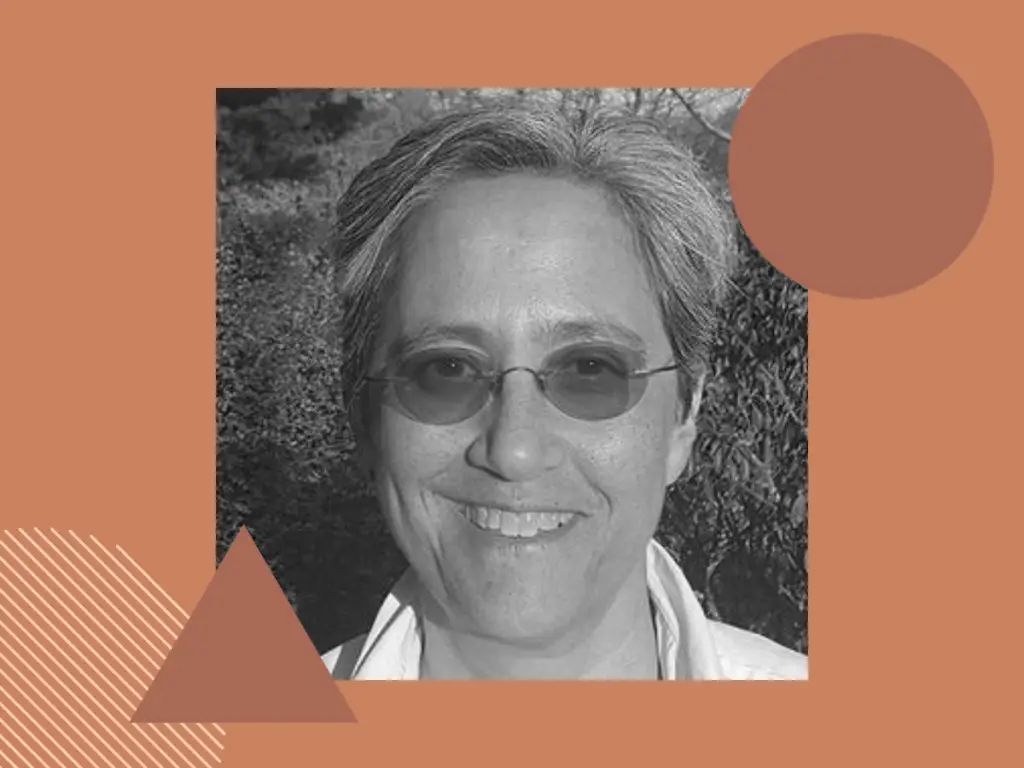
May 20, 2022 – Nancy Krieger, professor of social epidemiology, reflects on the still-relevant themes of a paper for which she was first author three decades ago for the American Journal of Preventive Medicine. The journal reprinted the paper on May 18, 2022, along with a new commentary by Krieger and another commentary by epidemiologist Ana Diez Roux of Drexel University.
Q: How did the paper come to be, and what is its significance?
A: The paper focused on the implications of racism, sexism, and social class for studies of health, disease, and well-being. It was developed for a CDC conference focused on poor birth outcomes among U.S. Black women. A key group of Black women researchers led by Dr. Diane Rowley at the CDC was saying that the data did not support a widespread view that it was only because of poverty—or “race” wrongly treated as an innate biological characteristic—that there were worse birth outcomes among Black women. That’s because there were racialized differences in health status, comparing birth outcomes among U.S Black versus white women, that differed by and within various income categories and educational levels.
Diane Rowley and others wanted to get on the agenda, for the first time ever at the CDC, a conference that began to address openly and publicly racism as a determinant of health inequities, and that wasn’t aimed at looking at racism as something by itself but as interrelated to class inequities and gender.
The organizers of the conference solicited a wide range of papers. Prompting my invitation to be the lead author of the recently reprinted paper was my 1989 dissertation research on how race, class, and health impact breast cancer and hypertension.
In our 1993 paper, we reviewed what evidence existed in the literature, looked at what all the gaps were, and helped lay out a research agenda that some of us have been busy with—not just for intellectual curiosity, but to actually inform action and advocacy for health equity—ever since. That’s why our newly reprinted paper continues to be a touchstone and continues to be cited to this day.
I do think the paper is as timely now as it was then. In my new commentary, I write about ways that the science and the world has changed, but there’s a distinction between having scientific advances and understanding and actually having that translate in real life, politically and socially, to real advances for health equity.
Q: What are some examples of how research 30 years ago was limited in how it examined health inequities?
A: Thirty years ago there was still hardly any research that was even asking questions about people’s self-reported experiences of racial discrimination. We also said in our paper that it was important to look not just at what people self-reported about their interactions with other people, but also to look at the ways that racism, in conjunction with class and gender relations and inequities, shapes the context in which people live and work.
For example, in literature about racialized residential segregation, it’s important to look not only at the composition of neighborhoods, but to also look at the policies that have made it so, particularly historical redlining—U.S. federal policies in the 1930s that worsened and spread racialized segregation nationwide. That’s work that has taken off in the past five years or so.
We were similarly saying back then that there was incredibly little work on issues around sexism and health, and that still continues to be the case. A lot of research on “women’s health” is done in relation to sex-linked biology and problems with assuming a “male” biological reference point for research. But that doesn’t get at the gendered experiences across diverse gender identities. For example, there are still remarkably few studies that have looked at how explicit exposures of sexual harassment impact cardiometabolic diseases, or how gender-based violence impacts cardiometabolic diseases or the onset of dementia.
There was also a real lack of attention 30 years ago to how issues of social class relationships shape population health. There’s still a reluctance to talk about that and the power issues involved. The dominant tendency is to focus on individual characteristics. For instance, a question about why you have a particular health problem might focus on what your educational level is, as opposed to focusing on the forces that shape who gets a particular level of education in this country, and the quality of that education.
Q: What encourages you, and what’s your hope for the research going forward?
A: There have definitely been advances. The CDC now has a website on racism as a key social determinant of health. Many people were pushing for this for years, and the effort got further galvanized by the brutal police murder of George Floyd in 2020. There is now more understanding that scientific rigor demands paying attention to issues of structural racism. The NIH also now has an initiative to eliminate structural racism in biomedical research. And the WHO had a huge global commission on the social determinants of health in 2008, followed a decade later by the 2018 PAHO Equity Commission report, which underscored the continued impacts of systems of enslavement and colonial-settlerism on contemporary health inequities.
Going forward, researchers need to think—and it’s really possible to do this—simultaneously about issues of racism, social class, and gender. It’s important to use a multi-level approach not only in conceptualizing studies, but in the data themselves. The point is to get at not only what people self-report in terms of factors such as their education, income, gender identity, but also the context in which they live. What are the policies of the city, the state, the country that they live in, past and present, that affect their wellbeing?
One very sobering point to note, which is what I conclude my new commentary with, is that at the time we wrote our paper 30 years ago, the Black to white ratio for U.S. infant mortality was 2 to 1. We wrote that if things don’t change, it’s going to stay that way. And guess what? It stayed that way, if not gotten slightly worse.
So we still have work to do. To understand the problem scientifically is not the same as knowing how to fix things. Even if we do know how to fix things, in terms of proposed social priorities, policies, and resource allocation, there are serious political and societal obstacles. We need to understand what the power relationships are that are preventing us—those of us in public health and in society more generally who value and fight for health equity—from achieving these aims.
[ad_2]
Source link