










[ad_1]

Leaders of the organizations serving San Francisco’s Latino community during the pandemic on Monday urged city officials to halt plans to cut funding for COVID aid from the budget, saying the “divestment” will only take place. lead to further health inequalities.
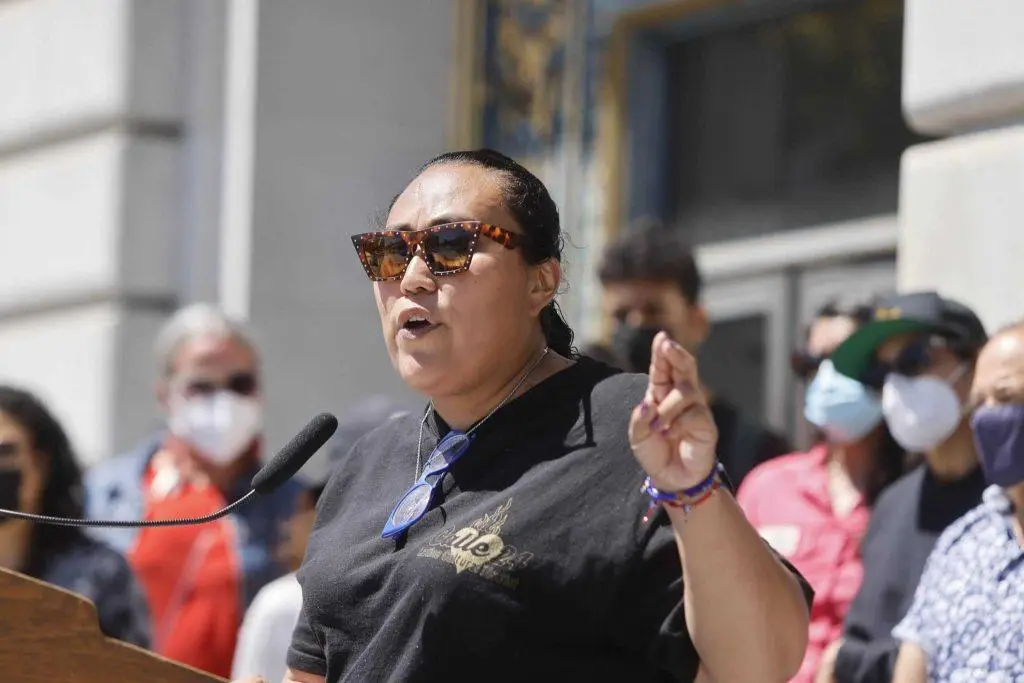
Several dozen members of the Latino Task Force and the San Francisco Latino Parity and Equity Coalition, which consists of more than 20 nonprofits, said at a city hall news conference that nonprofits were critical to the COVID response and economic recovery plan. of the city, and that their work is critical in helping Latino and black residents who have been disproportionately affected by the coronavirus.
Mayor London Breed recently announced its budget of nearly $14 billion for fiscal year 2022-23, which begins July 1. The budget eliminates $9.5 million in COVID aid funding given to at least 25 nonprofit organizations in an effort to equitably provide testing, vaccination, and COVID care and other services to city residents with a disability. low income, many of whom are people of color.
Such “divestment” will force nonprofits to eliminate programs, services and jobs, said Ivan Corado-Vega, manager of the Latino Task Force.
“We have been partners in good faith during the pandemic,” Corado-Vega said. “We were the first to respond and now we are the first to be cut. So if there’s any fairness and justice in that, I don’t see it.”
Breed’s press secretary Parisa Safarzadeh said in a statement Monday that approximately $6 million in funding from the previous fiscal year will be allocated to community-based services to continue their COVID response “in the coming months into the new fiscal year.” ”.
She said the public health department was “working on a process to allocate funds.” A representative of the public health department did not immediately respond to a request for comment.
Safarzadeh said a majority of the city’s COVID services were funded by temporary, one-time payments from the state and federal government, which “no longer exist.”
As the city shifts a COVID response to recovery, she said the city is prioritizing funds for “critical citywide recovery needs that benefit all communities.”
But proponents argue that people, especially Latinos, continue to test positive for the virus and continue to feel the economic fallout.
Corado-Vega said the Latino Task Force expects the Mission Food Hub to close on December 31 if the $9.5 million in COVID aid funding is eliminated. Volunteers operate the food hub and deliver fresh groceries to thousands of residents every week.
Gloria Romero, executive director of Instituto Familiar de la Raza, said many volunteers and community workers were serving as first responders and “putting their lives at risk” as the pandemic began in 2020.
“We’re asking city leaders to show the value they place on our work,” Romero told a cheering crowd.
She said the two groups showed solidarity with other communities of color and nonprofits also facing austerity measures.
“Financing various community health and economic services is critical to rebuilding the city and increasing equity in the Latinx community,” she said.
“This is more than just recovery, it’s about health equity,” she said.
Jessica Flores (she/her) is a writer of the San Francisco Chronicle. Email: jessica.flores@sfchronicle.com Twitter: @jesssmflores
[ad_2]
Source link