













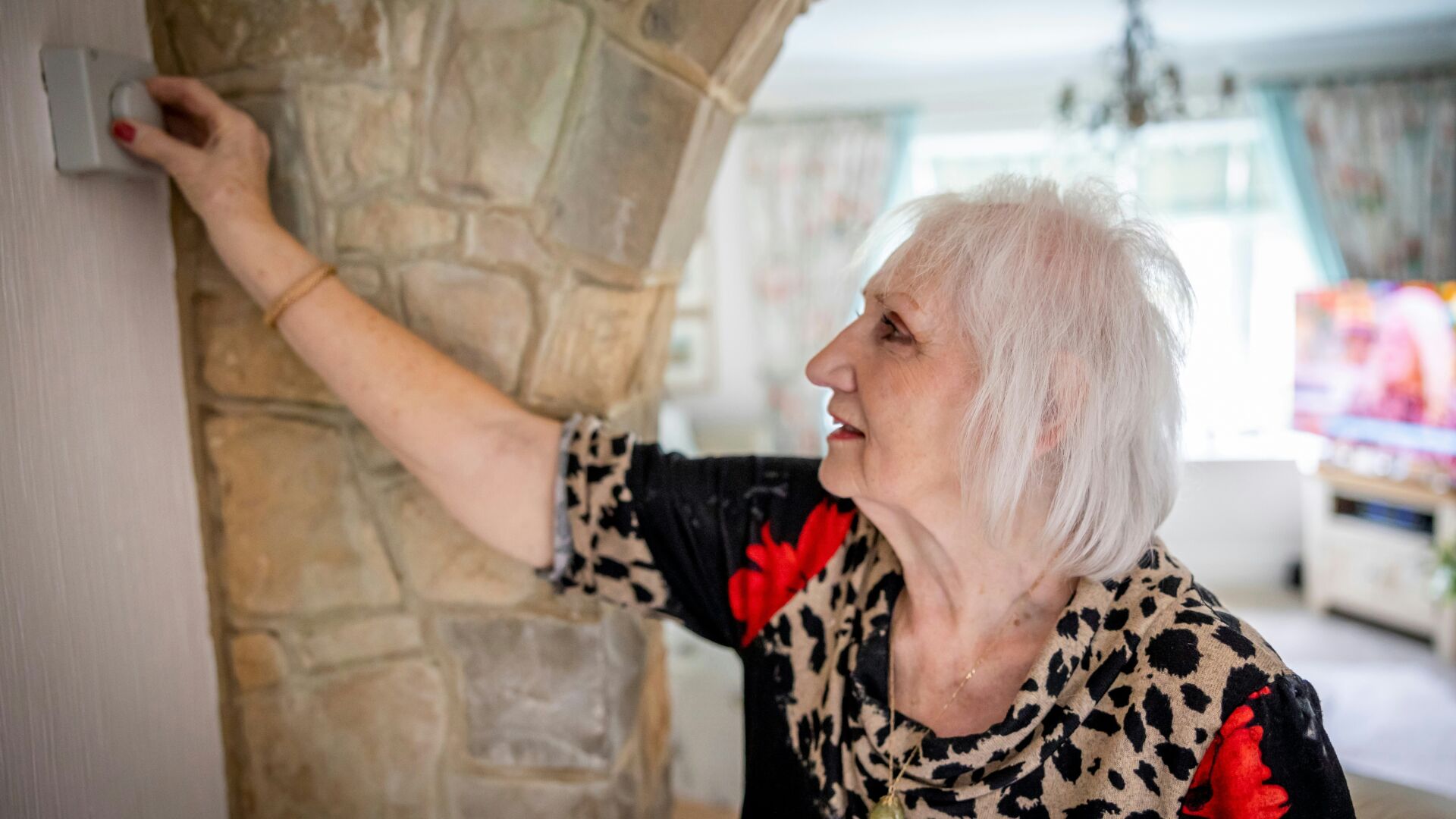
Smart Thermostats, Dumb Policy: How Central Control Normalizes Energy Poverty

[ad_1]

In late summer 2019, an elderly woman I knew from church asked me to stop by her house in our New Mexico neighborhood. It was late August, the kind of day when the desert sun turns homes into ovens, and her air conditioner simply wouldn’t keep up. I’m no HVAC expert, but I promised to look at her thermostat.

There was no problem with the thermostat inside. The problem was on the air conditioner outside, but not a mechanical function or broken part. Her utility company installed a regulator on her A/C unit – part of a so-called “power-saving” program. The catch? During the hottest part of the day, when she needed cooling the most, the utility cut her system back. In exchange for surrendering control of her own comfort, she received a rebate of just $25 a year.

And now, instead of just controlling the A/C, some want central control of your whole thermostat.

A new bill in Ohio would allow utilities to reach into homes and directly control customer thermostats. Supporters call it “demand management.” But the reality is clear: these programs are designed to normalize energy poverty by conditioning families to accept less comfort and less freedom in exchange for pennies on the dollar.

Ohio wouldn’t be the first. In Colorado, tens of thousands of families discovered they couldn’t change their Wi-Fi enabled thermostats during a sweltering day. They were locked out – literally – because the utility had triggered a “demand response event.” One home in the program reportedly reached 88 degrees inside. Additionally, in Colorado Springs, customers are offered $50 to enroll, but the company reserves the right to raise your thermostat up to four degrees during peak demand. Sure, you can opt out – but the normalization is the point.

– Advertisement –

In Indiana, a utility pilot remotely adjusted smart thermostats to cut demand by nearly a kilowatt per home in summer. While residents technically could override, the default was no longer their choice — it was the utility’s.

Different programs, same philosophy: normalize energy scarcity by quietly taking over the devices in your home.

Policymakers and utilities always sell these schemes as “partnerships” or “innovation.” But let’s be clear: it’s not innovation to make a grandmother sit in a sweltering house because her air conditioner has been throttled. It’s not progress when families discover their thermostats are frozen on a triple-digit day. These programs shift the burden of bad energy policy onto ordinary families. Instead of building reliable power plants that keep up with demand, utilities are trained to manage shortfalls by managing you. Your thermostat, your A/C, your comfort – they become their safety valve.

This is how energy poverty is normalized. Not through rolling blackouts, but through quiet intrusions that teach us to accept less as the new normal.

Think of it this way: we would never accept Comcast taking control of our television or your internet provider cutting out news sources and social media sites. Yet, when it comes to air conditioning – the very system that keeps us safe in dangerous heat – we are told it’s normal for strangers to decide how cool our homes are allowed to be.

That double standard is alarming. The things that make life bearable in the hottest summers and coldest winters are the very things we should be protecting from outside control. The price tag for this surrender isn’t just $25 a year. It’s our autonomy. It’s the principle that our homes are our own. Every locked thermostat, every cycling A/C switch, every “demand response event” is another step toward redefining reliability downward. Comfort becomes selfish. Scarcity becomes “noble.”

– Advertisement –

That’s not noble. It’s rationing with a smartphone app. And if a utility company – or a government bureaucrat – can dictate the temperature of your living room, then your home is no longer your castle. It’s just another outpost in the grid they control.

[ad_2]

Source link

Trending Topics

Features

Download and distribute powerful vaccination QI resources for your community.

Sign up now to support health equity and sustainable health outcomes in your community.

MCED tests use a simple blood draw to screen for many kinds of cancer at once.

FYHN is a bridge connecting health information providers to BIPOC communities in a trusted environment.

Discover an honest look at our Medicare system.

ARC was launched to create a network of community clinicians to diversify and bring clinical trials to communities of color and other communities that have been underrepresented.

The single most important purpose of our healthcare system is to reduce patient risk for an acute event.

Related Posts
How NMQF Advances Minority Health Through Data, Research and Health Access
Early Cancer Detection Is Entering a New Era. Flint Is Helping Lead the Way.
Why Your “Ozempic” May Not Be Ozempic: FDA Warnings Highlight Growing Risks of Unregulated GLP-1 Drugs
Scroll to Top
Featured Articles
How NMQF Advances Minority Health Through Data, Research and Health Access
Early Cancer Detection Is Entering a New Era. Flint Is Helping Lead the Way.
Why Your “Ozempic” May Not Be Ozempic: FDA Warnings Highlight Growing Risks of Unregulated GLP-1 Drugs
Why Your “Ozempic” May Not Be Ozempic: FDA Warnings Highlight Growing Risks o...
The Communities Most Burdened by Disease Should Be the First to Benefit from Artificial Intelligence
The Communities Most Burdened by Disease Should Be the First to Benefit from ...
Cancer Pain Care Access Gap Hits Black, Asian Patients
Black and Asian Cancer Patients Wait Longer for Pain Relief in New Study
What Is Cyclosporiasis Symptoms, Food Safety, and Reasons
What Is Cyclosporiasis? The Foodborne Illness Showing Up in the News
Categories
AI
ATTR-CM
BIPOC News
Cancer
Clinical Trials
Covid19
Diseases of the Body
Environment
Health Data
Health Equity Events
Health Policy
Health Tips
Subscribe to our newsletter to receive our latest news​
All Stories
How NMQF Advances Minority Health Through Data, Research and Health Access
Early Cancer Detection Is Entering a New Era. Flint Is Helping Lead the Way.
Why Your “Ozempic” May Not Be Ozempic: FDA Warnings Highlight Growing Risks of Unregulated GLP-1 Drugs
Why Your “Ozempic” May Not Be Ozempic: FDA Warnings Highlight Growing Risks o...
BIPOC News
How NMQF Advances Minority Health Through Data, Research and Health Access
Early Cancer Detection Is Entering a New Era. Flint Is Helping Lead the Way.
The Communities Most Burdened by Disease Should Be the First to Benefit from Artificial Intelligence
The Communities Most Burdened by Disease Should Be the First to Benefit from ...
Environment
UV Safety Awareness Month Raises Urgency on Skin Cancer Prevention and Sun Protection Equity
UV Safety Awareness Month Raises Urgency on Skin Cancer Prevention and Sun Pr...
Extreme Heat Safety Tips 5 Ways to Protect Your Health This Summer fyh.news
5 Heat Safety Tips That Could Protect Your Health This Summer
Lupus Awareness Event in Baltimore Aims to Support Research and Shine a Light on Health Disparities
Lupus Awareness Event in Baltimore Aims to Support Research and Shine a Light...
Work Force
A multigenerational Black and Hispanic family sitting together in a park, showing how Social Security helps support older adults, people with disabilities, and families across generations.
Millions of Older Americans Could Face Smaller Social Security Checks by 2032...
dreamstime_s_243253251
The Caregiver Journey: The Hidden Backbone of American Healthcare
Families gather at a Bronx community festival with live music, kids’ activities, and health booths sharing SOMOS social care resources and free screenings.
Celebrating Hispanic heritage while learning about health care

[xyz-ips snippet=”Output-Source-Name”]

Clinical Trials
Early Cancer Detection Is Entering a New Era. Flint Is Helping Lead the Way.
Why Your “Ozempic” May Not Be Ozempic: FDA Warnings Highlight Growing Risks of Unregulated GLP-1 Drugs
Why Your “Ozempic” May Not Be Ozempic: FDA Warnings Highlight Growing Risks o...
Clinical Trial Diversity Remains a Critical Challenge in Alzheimer’s Research
Vaccines and Outbreaks
A parent checking a child's temperature during summer, illustrating the changing RSV patterns and year-round respiratory virus risks.
Can You Get RSV During the Summer?
Michelle Lam, MBA, of NYC Health + Hospitals/Elmhurst & Amy Harris of NYC Health + Hospitals/Elmhurst
Healthcare Leaders Spotlight Vaccine Equity and Adult Immunization Strategies...
Measles Outbreaks Surge: Essential Facts and Prevention Strategies
Other Categories
AI
Read the latest AI News stories trending around the world
ATTR-CM
Cancer
Read the latest Cancer stories trending around the world
Covid19
Diseases of the Body
Read about the latest Diseases of the Body trending around the world
Friday Webinars
Every Friday, we bring you insightful webinars covering critical topics in healthcare, data equity, and policy reform.
Health Data
Read the latest Health Data stories trending around the world
Health Equity Events
Read the best Health Equity Events around the country.
Health Policy
Read the latest Health Policy stories trending around the world
Health Tips
Heart Health
Read the latest on Heart Health News, Stories and Tips.
kidney Health
Read more trending News about Kidney Health, Stories and Tips.



