













- By FYH News Team
[ad_1]
doi: 10.1089/jpm.2024.0525.
Online ahead of print.
Affiliations
Affiliations
- 1 RAND, Boston, Massachusetts, USA.
- 2 RAND, Santa Monica, California, USA.
- 3 Emory Palliative Care Center, Atlanta, Georgia, USA.
- 4 RAND, Pittsburgh, Pennsylvania, USA.
Item in Clipboard
Julia I Bandini et al.
J Palliat Med.
.
Display options
Format
doi: 10.1089/jpm.2024.0525.
Online ahead of print.
Affiliations
- 1 RAND, Boston, Massachusetts, USA.
- 2 RAND, Santa Monica, California, USA.
- 3 Emory Palliative Care Center, Atlanta, Georgia, USA.
- 4 RAND, Pittsburgh, Pennsylvania, USA.
Item in Clipboard
Display options
Format
Abstract
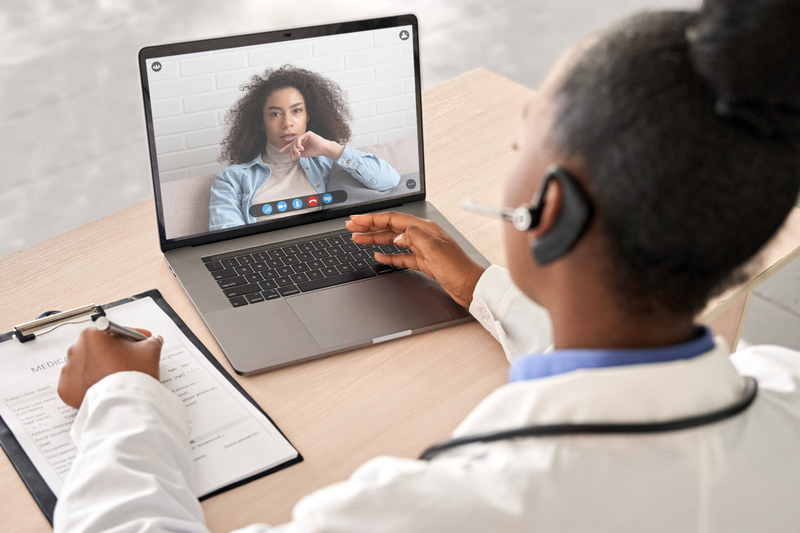
Background: Telehealth for outpatient palliative care has grown rapidly since the COVID-19 pandemic, yet there remain important questions about the use of telehealth for underserved patient populations in a “postpandemic” society. Objective: To examine current perspectives from interdisciplinary providers on the use of telehealth and in-person care for outpatient palliative care among underserved patients. Methods: We conducted semi-structured interviews with outpatient palliative care providers and clinic staff (n = 17) from one health system in the United States. Results: Providers endorsed tele-palliative care for underserved patients because it enhanced patient-centered care and increased equity. However, providers noted two main challenges to the use of telehealth: technological issues on the part of patients and policies around prescribing controlled substances. Conclusions: Future efforts to improve tele-palliative care for underserved patients may focus on technological and institutional infrastructure to support telehealth and consider policies around prescribing controlled substances for palliative care patients.
Keywords:
outpatient palliative care; qualitative; telehealth; underserved patients.
[ad_2]
Trending Topics
Features
- Drive Toolkit
Download and distribute powerful vaccination QI resources for your community.
- Health Champions
Sign up now to support health equity and sustainable health outcomes in your community.
- Cancer Early Detection
MCED tests use a simple blood draw to screen for many kinds of cancer at once.
- PR
FYHN is a bridge connecting health information providers to BIPOC communities in a trusted environment.
- Medicare
Discover an honest look at our Medicare system.
- Alliance for Representative Clinical Trials
ARC was launched to create a network of community clinicians to diversify and bring clinical trials to communities of color and other communities that have been underrepresented.
- Reducing Patient Risk
The single most important purpose of our healthcare system is to reduce patient risk for an acute event.
- Victor Mejia
- Victor Mejia





