









[ad_1]

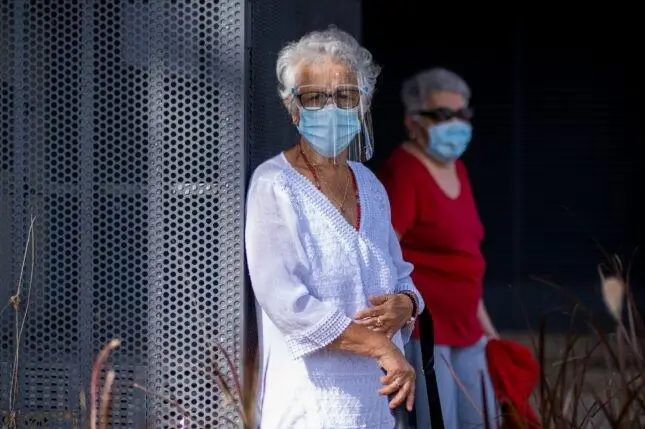
WASHINGTON — As Democrats close in on the biggest overhaul of the Medicare prescription drug benefit in 20 years, they’re ignoring a glaring health equity issue: unequal treatment for low-income adults 65 and older in Puerto Rico.
Residents of Puerto Rico pay the same Medicare taxes as other Americans, but they’re eligible for less help than other older adults when it comes to paying for their pharmacy drug premiums and their prescription drug costs. For all Democrats’ talk about health equity this Congress, they haven’t incorporated a bill that would level the playing field.
Right now, only adults 65 and older making below 75% of the federal poverty level, or $10,219 a year, are eligible for extra help in Puerto Rico. If the same patient lived in a state like Florida, they’d qualify even if they made up to 150% of the poverty level, or $20,385. One group representing insurers in the territory estimates that roughly between 120,000 and 150,000 people fall into that subsidy gap now.
“There’s a human side of it. Is the health situation of a grandmother in Florida, Alaska, Texas, or Tennessee of more value than in Puerto Rico? Morally, the answer is no,” said George Laws García, executive director of the Puerto Rico Statehood Council.
Residents of Puerto Rico are American citizens, but they can be treated unequally under many federal programs because they live in a territory instead of a state. The legal authority for Congress to set up discriminatory policies for residents of territories comes from a set of Supreme Court decisions that are based on racist stereotypes, but persist as the law of the land today. The Insular Cases, as they’re known, set out a legal framework that say the Constitution doesn’t fully apply to residents of U.S. territories. The first cases were decided in 1901.
One case held that residents of Puerto Rico were not entitled to full rights of U.S. citizens in part because citizens of territories are “alien races, differing from us in religion, customs, laws, methods of taxation and modes of thought.”
Residents in Puerto Rico continue to struggle to get equal federal benefits. In one case earlier this year, Jose Luis Vaello-Madero sued the government because his federal disability benefits were taken away when he moved from New York to Puerto Rico. The Supreme Court resoundingly ruled against him in an 8-1 decision, but conservative Justice Neil Gorsuch indicated there might be an opening to overrule the Insular Cases in the future.
“The Insular Cases have no foundation in the Constitution and rest instead on racial stereotypes. They deserve no place in our law,” he wrote in a concurring opinion.