The legacy of 1st African American astronaut lives on

[ad_1]

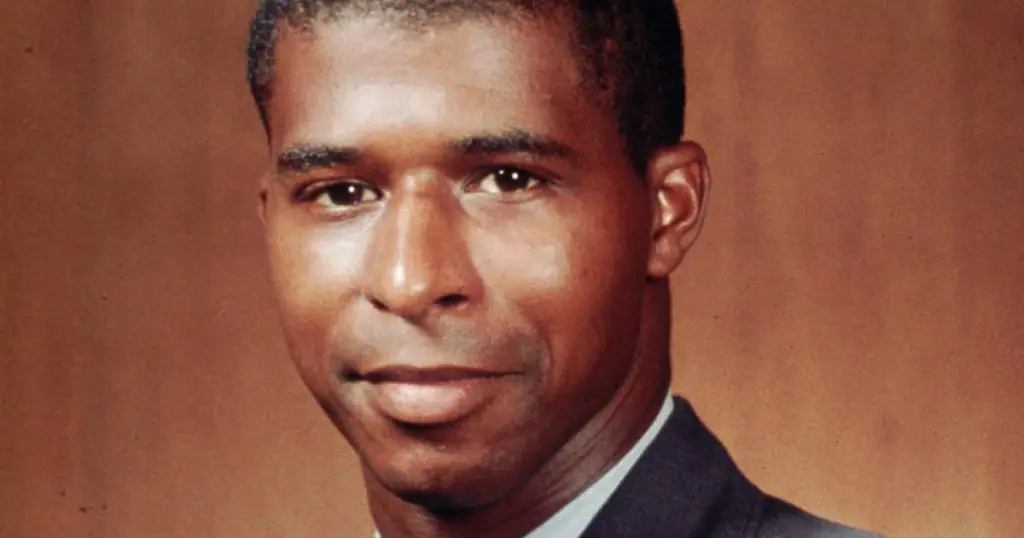
Maj. Robert Lawrence Jr. was an Englewood native whose contributions to the U.S. Air Force and NASA helped young scholars achieve their dreams in science. Though his untimely death prevented him from flying out of Earth’s atmosphere, his name has reached as far as the asteroid belt between Mars and Jupiter. He is considered the first African American astronaut.

Lawrence graduated from high school from the Englewood Technical Preparatory Academy in 1952 at age 16. At 20, he earned his bachelor’s degree in 1956 from Bradley University in Peoria and was an AirForce Pilot who in 1965 earned his doctorate in chemistry from Ohio State University.

“We know he was a hard worker and he worked hours in the cafeteria while he was a cadette commander in order to put himself through school,” said Michelle Fry, department chair and associate professor of the Mund-Lagowski Department of Chemistry and Biochemistry at Bradley University.

For more than two decades, endowed scholarships and lectureships named for Lawrence have been given to minority chemistry and biochemistry students at Bradley, Fry said. As of 2022, there have been 21 recipients.

“More than one went to medical school; others have gone directly into the workforce, so all of them have accomplished a lot and we’re really proud of them,” Fry said.

Ethan Tyner, who majored in biochemistry and minored in biology at Bradley is one of the two recipients of the Lawrence Scholarship this year, a recognition he called inspiring.

“I gained this hunger to push and further myself, not just for my own good, but for the people that have come before me,” Tyner said. “People like Maj. Lawrence, who paved the path I now walk on.”

Lawrence was invited to join the Manned Orbiting Laboratory, which launched in 1965. The MOL mission was a joint project for the U.S. Air Force and the National Reconnaissance Office to help capture high-resolution images of America’s Cold War adversaries.

The MOL program planned to have a series of mini space stations in low polar Earth orbit. The mission would be occupied by a two-man crew for 30 days at a time. Lawrence was accepted as a member of the third group.

Lawrence, who was 32, was training to be among the first Air Force astronauts. The idea was to help prepare military pilots to take high ground of space.

On Dec. 8, 1967, Lawrence went aboard a jet, the F-104 Starfighter, for training at Edwards Air Force Base in California.

He and a new flight instructor, Harvey Royer, were doing a trial on a technique called “flaring,” which is used when a pilot is preparing for landing.

While in flight, the new instructor tried the maneuver and both main gears collapsed. Lawrence and Royer we both ejected. Royer was severely hurt but survived the accident. Lawrence’s parachute did not fully deploy.

He was the sole trainee to be killed in the Air Force program.

In 1991, a monument created by the Astronauts Memorial Foundation honored 16 fallen astronauts by having their names engraved in the black granite Space Mirror Memorial.

Lawrence’s name was initially left out, and some cited discrimination.

It wasn’t until 1997, 30 years after Lawrence’s death, that his name was engraved. Since then, his name and legacy continued to be recognized.

In 2000, Lawrence was among 27 African American, Hispanic and Native American astronauts to have an asteroid named after them. Robertlawrence 92892, located in the asteroid belt between Mars and Jupiter, was officially dedicated to Lawrence.

In 2020, a spacecraft that would deliver goods to NASA was named after him.

Though Lawrence may still be considered an unsung hero, his contributions to science inspire scholars who want to build upon the legacy he created.

“I want to continue that path so the next person after me has an even greater path to walk on,” Tyner said.

tatturner@chicagotribune.com

[ad_2]

Source link

Trending Topics

Features

Download and distribute powerful vaccination QI resources for your community.

Sign up now to support health equity and sustainable health outcomes in your community.

MCED tests use a simple blood draw to screen for many kinds of cancer at once.

FYHN is a bridge connecting health information providers to BIPOC communities in a trusted environment.

Discover an honest look at our Medicare system.

ARC was launched to create a network of community clinicians to diversify and bring clinical trials to communities of color and other communities that have been underrepresented.

The single most important purpose of our healthcare system is to reduce patient risk for an acute event.

Related Posts
Early Cancer Detection Is Entering a New Era. Flint Is Helping Lead the Way.
Why Your “Ozempic” May Not Be Ozempic: FDA Warnings Highlight Growing Risks of Unregulated GLP-1 Drugs
The Communities Most Burdened by Disease Should Be the First to Benefit from Artificial Intelligence
Scroll to Top
Featured Articles
Early Cancer Detection Is Entering a New Era. Flint Is Helping Lead the Way.
Why Your “Ozempic” May Not Be Ozempic: FDA Warnings Highlight Growing Risks of Unregulated GLP-1 Drugs
Why Your “Ozempic” May Not Be Ozempic: FDA Warnings Highlight Growing Risks o...
The Communities Most Burdened by Disease Should Be the First to Benefit from Artificial Intelligence
The Communities Most Burdened by Disease Should Be the First to Benefit from ...
Cancer Pain Care Access Gap Hits Black, Asian Patients
Black and Asian Cancer Patients Wait Longer for Pain Relief in New Study
What Is Cyclosporiasis Symptoms, Food Safety, and Reasons
What Is Cyclosporiasis? The Foodborne Illness Showing Up in the News
Why Minority Mental Health Awareness Month Matters More Than Ever
Categories
AI
ATTR-CM
BIPOC News
Cancer
Clinical Trials
Covid19
Diseases of the Body
Environment
Health Data
Health Equity Events
Health Policy
Health Tips
Subscribe to our newsletter to receive our latest news​
All Stories
Early Cancer Detection Is Entering a New Era. Flint Is Helping Lead the Way.
Why Your “Ozempic” May Not Be Ozempic: FDA Warnings Highlight Growing Risks of Unregulated GLP-1 Drugs
Why Your “Ozempic” May Not Be Ozempic: FDA Warnings Highlight Growing Risks o...
The Communities Most Burdened by Disease Should Be the First to Benefit from Artificial Intelligence
The Communities Most Burdened by Disease Should Be the First to Benefit from ...
BIPOC News
Early Cancer Detection Is Entering a New Era. Flint Is Helping Lead the Way.
The Communities Most Burdened by Disease Should Be the First to Benefit from Artificial Intelligence
The Communities Most Burdened by Disease Should Be the First to Benefit from ...
Why Minority Mental Health Awareness Month Matters More Than Ever
Environment
UV Safety Awareness Month Raises Urgency on Skin Cancer Prevention and Sun Protection Equity
UV Safety Awareness Month Raises Urgency on Skin Cancer Prevention and Sun Pr...
Extreme Heat Safety Tips 5 Ways to Protect Your Health This Summer fyh.news
5 Heat Safety Tips That Could Protect Your Health This Summer
Lupus Awareness Event in Baltimore Aims to Support Research and Shine a Light on Health Disparities
Lupus Awareness Event in Baltimore Aims to Support Research and Shine a Light...
Work Force
A multigenerational Black and Hispanic family sitting together in a park, showing how Social Security helps support older adults, people with disabilities, and families across generations.
Millions of Older Americans Could Face Smaller Social Security Checks by 2032...
dreamstime_s_243253251
The Caregiver Journey: The Hidden Backbone of American Healthcare
Families gather at a Bronx community festival with live music, kids’ activities, and health booths sharing SOMOS social care resources and free screenings.
Celebrating Hispanic heritage while learning about health care

[xyz-ips snippet=”Output-Source-Name”]

Clinical Trials
Early Cancer Detection Is Entering a New Era. Flint Is Helping Lead the Way.
Why Your “Ozempic” May Not Be Ozempic: FDA Warnings Highlight Growing Risks of Unregulated GLP-1 Drugs
Why Your “Ozempic” May Not Be Ozempic: FDA Warnings Highlight Growing Risks o...
Clinical Trial Diversity Remains a Critical Challenge in Alzheimer’s Research
Vaccines and Outbreaks
A parent checking a child's temperature during summer, illustrating the changing RSV patterns and year-round respiratory virus risks.
Can You Get RSV During the Summer?
Michelle Lam, MBA, of NYC Health + Hospitals/Elmhurst & Amy Harris of NYC Health + Hospitals/Elmhurst
Healthcare Leaders Spotlight Vaccine Equity and Adult Immunization Strategies...
Measles Outbreaks Surge: Essential Facts and Prevention Strategies
Other Categories
AI
Read the latest AI News stories trending around the world
ATTR-CM
Cancer
Read the latest Cancer stories trending around the world
Covid19
Diseases of the Body
Read about the latest Diseases of the Body trending around the world
Friday Webinars
Every Friday, we bring you insightful webinars covering critical topics in healthcare, data equity, and policy reform.
Health Data
Read the latest Health Data stories trending around the world
Health Equity Events
Read the best Health Equity Events around the country.
Health Policy
Read the latest Health Policy stories trending around the world
Health Tips
Heart Health
Read the latest on Heart Health News, Stories and Tips.
kidney Health
Read more trending News about Kidney Health, Stories and Tips.