











[ad_1]
Follow the numbers. We knew that residents in certain ZIP codes lived shorter lives than others in different ZIP codes within the same city. (An NYU School of Medicine 2019 analysis found a 30-year life expectancy gap between those who live in the Streeterville and Englewood neighborhoods.) And that was before the COVID pandemic. As time went on, more stories about safety, violence and systemic racism added to that conversation.
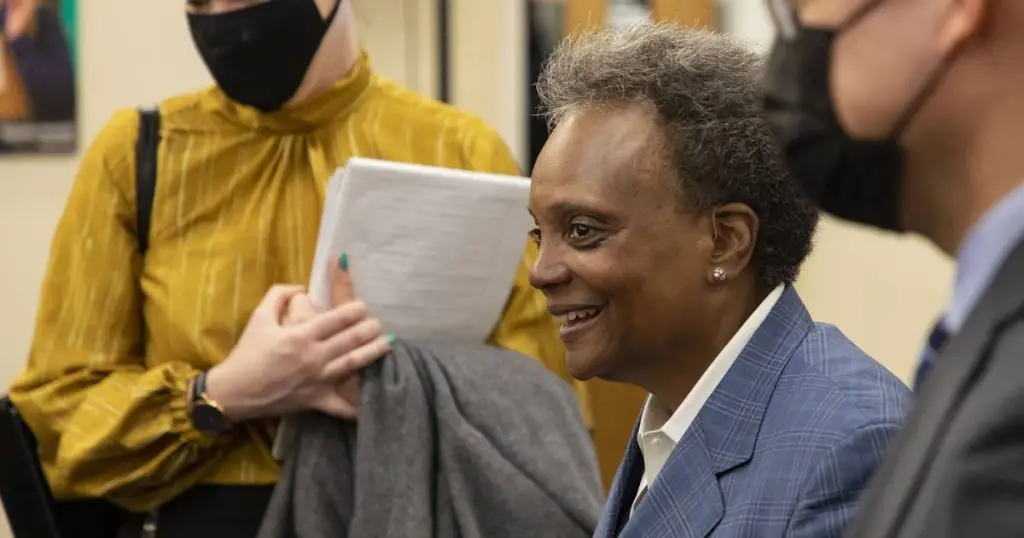
The Chicago Department of Public Health reported the life expectancy dropped almost two years from 2019-2020, the first year of the pandemic. Mayor Lori Lightfoot and Dr. Allison Arwady, head of the city’s Department of Public Health, announced an update on life expectancy in Chicago on Monday morning. According to the agency, this is one of the sharpest single-year decreases in life expectancy on record and the steepest declines for Black and Latinx Chicagoans, with COVID-19 driving those numbers. Life expectancy declines were seen in all races and nearly all community areas. Findings include:
- As of 2020, the gap in life expectancy between Black and white Chicagoans was 10 years, up from 8.8 years in 2017. For the first time in decades, life expectancy for Black residents of Chicago fell below 70 years (the majority of those communities exist on the South Side);
- Chicago Latinx residents saw a more than a three-year drop in life expectancy between 2019 and 2020, the steepest decline for any group, and have lost a total of seven years of life expectancy since 2012;
- Asian/Pacific Islander life expectancy showed a two-year drop from 2019 to 2020, while white Chicagoans’ life expectancy declined by one year;
- 18-to 44-year-old Chicagoans experienced a 45% increase in death rates from 2019, outpacing 65+ Chicagoans (30% increase) despite COVID’s severe impact on the population;
- Black Chicagoans experienced a higher rate of infant mortality while rates for other groups dropped sharply.
“We are looking at the direct and indirect impacts of COVID on Chicago and the news is not good,” Arwady said. “Even before COVID the CDPH had made a decision to focus on life expectancy. … I think it is the strongest indicator of a community’s health as well as opportunities. Even before COVID, there was a major life expectancy gap here in Chicago. In the first year of 2020, not only did we see life expectancy drop for all Chicagoans — all races and ethnicities — but we saw that gap widen for Black Chicagoans on average living about 10 years less than white Chicagoans and life expectancy for Black Chicagoans falling below 70 years for the first time in many years. This is not just about COVID, it’s not just about health care. It’s about opportunities and root causes and in addition to that, we also saw Latinx Chicagoans get hit really hard with COVID, with the biggest drop in life expectancy among Latino Chicagoans within that first year. We see this as sobering data.”
COVID-19 was a significant driver of decreases in life expectancy, but so were chronic diseases such as diabetes, cancer and heart disease. Homicide; infant mortality; HIV, flu, and other infections; and opioid overdoses factored into the racial life expectancy gap as well.
CDPH’s Healthy Chicago 2025, a five-year action plan, was created to help close the gap. Launched in 2020, CDPH has committed $30 million to establish Healthy Chicago Equity Zones to strengthen community infrastructure and neighborhood networks so people most affected by inequities have the power and resources to promote health and racial equity in their communities and citywide. Other initiatives working in concert with the zoned strategy is “Dr. Taylor’s Table,” a biweekly (every other Thursday at 6 p.m.) live talk Instagram program hosted by Dr. Erica Taylor, on various topics within the Black community regarding health disparities, health care, wellness, mental health and other related issues.
The health department will also launch a Community Health Response Corps, an effort to link community members to resources to mitigate social, economic, and health impacts of the pandemic; and equip them with health knowledge. Building on the ChiTracing Corps (the program that hired and trained hundreds of people for COVID contact tracing), the CHRC will create new pathways to employment for those who live in communities that are most affected by health and economic inequities. Arwady said the goal for the program was always hyperlocal decision-making and focus.
“The Healthy Chicago Equity Zone model is the city’s attempt to take some of what has been good with COVID — funding community based organizations, working together on things like the unvaccinated — moving that work forward to continue to fund these networks to work on things like chronic disease,” Arwady said. “Even in the year 2020, heart disease was still the number one thing that killed Chicagoans. COVID was number two and it goes on from there.”
Other endeavors aimed to reduce the life expectancy gap are:
- A citywide expansion of trauma-informed centers of care, a network of mental health service providers that provide services regardless of ability to pay, health insurance status or immigration status. The expansion seeks to reduce opioid deaths with a fentanyl test strip program and partnership with Chicago Public Libraries to distribute Narcan to treat opioid overdoses;
- A citywide expansion of the Family Connects program, which provides free, in-home health supports to new mothers and babies at the three-week postpartum mark. This coupled with the fact Illinois became the first state in the U.S. to extend full Medicaid benefits to new mothers from 60 days to one year postpartum is important, Dr. Melissa Simmons, co-chair of the Health & Policy Committee at Illinois Unidos said. “We know about half of all maternal mortality actually happens in that one year postpartum and that’s really critical because the gap in maternal mortality between Black and white mothers in our country is almost three- to fourfold and the most recent data released by the CDC in February of this year show Latinos maternal mortality rate at an all-time high, and losing a lot of ground. That is scary.”
- Strengthening violence prevention services, which includes the city’s network of street outreach providers.
:quality(70)/cloudfront-us-east-1.images.arcpublishing.com/tronc/D7UZ6HJIPBFPXGCLCMRRSJTBYE.jpg)
Lightfoot calls the new data an important level set. She said it’s that hyperlocal attention that is making a difference.
“We have to look ourselves and our city in the eye and deal with the devastating impact of what’s transpired from a public health and health care perspective over these last two years,” Lightfoot said. “This is an important and sobering milestone that really measures how far in the journey we are and what we need to do to get to the destination. The answer to a lot of these problems is access to high-quality health care — we have to keep that front and center in our efforts.”
[ad_2]
Source link