













[ad_1]
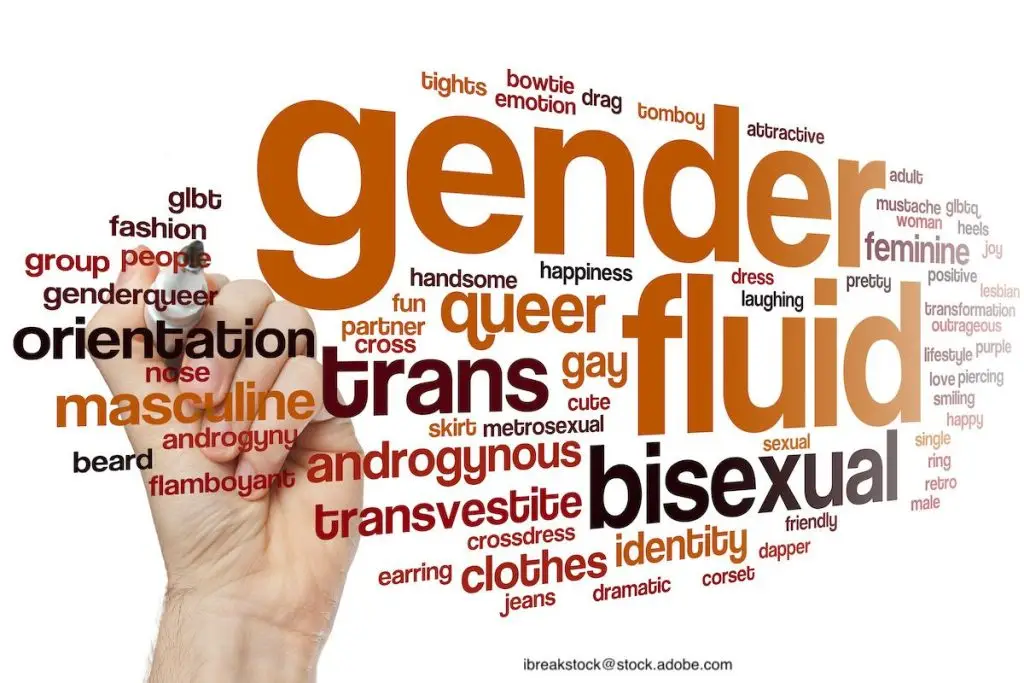
The lack of mental health services available to all youth exposed as a result of COVID-19 is particularly problematic for LGBTQ+ youth.1,2 Specifically, transgender and gender diverse (TGD) youth experience higher rates of depression, suicidal behaviors, and self-injury than their cisgender peers.3-6
A recent survey of adolescents across the United States indicated that about 2% of middle and high school students identify as transgender or gender diverse,7 a number that has been increasing over time.8 Importantly, although many TGD individuals feel a strong discomfort with their body and change their gender expression and roles and/or physical characteristics to align with their identity, not everyone experiences the distress related to the clinical diagnosis of gender dysphoria.2
With increased research looking at the experiences of TGD individuals separately from their sexual minority peers, we have begun to better understand cooccurring issues for this distinct population. Specifically, depression, self-injurious behaviors, substance use, disordered eating, and anxiety have been reported, as have high suicide attempt rates: These rates are at least 3 times higher than those of cisgender peers.5,9,10
Why are we seeing such increased rates of comorbidities with TGD individuals? Proposed by Hendricks and colleagues,11 the Gender Minority Stress and Resilience Model (GMSRM) is a framework through which we can understand the unique internal and external stressors that impact TGD individuals, as well as factors that contribute to resilience. The authors posit that external experiences of discrimination, victimization, rejection, and nonaffirmation of gender identity combine with internalized transphobia, negative expectations of the world and others, and concealment; these leave TGD individuals at risk for the development of negative mental health symptoms such as depression, suicidality, and self-injurious behavior.12
Therefore, when working with TGD individuals, we need to assess for the internal mechanisms related to any psychiatric diagnosis, but also the external/environmental factors that are contributing to and maintaining the symptoms. For example, numerous studies have looked at the relationship between invalidation and victimization in schools, hospitals, and therapy that led to individuals dropping out of school, not accessing care, or ending treatment.13,14 In addition, we must continuously use an intersectional lens to be able to understand how additional identities that have been marginalized (eg, race, ethnicity, sexual orientation, ability, religion) may also be impacting the individual’s functioning, as well as the level of gender dysphoria the individual is experiencing. Attention to all these contributing/maintaining factors—both internal and external—is necessary for the best treatment.
Consider this metaphor: If you have to put out a fire, it is important to understand what caused the fire in the first place. Putting water on a grease fire will not only not help—it can make it worse. Similarly, trying to use typical interventions for depression for dysphoria not only will not help, but may also invalidate the patient and make them feel worse about not being seen or heard.
Case vignette
To bring light to the issue of comorbidities and the need to understand the external and internal contributing and maintaining factors with TGD individuals, we will use a case example:
“Max” is an affirmed male (assigned female at birth), aged 14 years, who presented to our program to discuss gender-affirming care. Max reported that he had always known he was a boy and had preferred stereotypical masculine clothing, mannerisms, and activities for as long as he could remember. Max was raised by his maternal aunt, “Linda,” who was his sole custodian. Both of Max’s parents had struggled with substances since he was a young child, and they did not have secure housing. None of Max’s family consistently used his chosen name or pronouns, although teachers and peers regularly used them in school. Linda was convinced that Max’s identity was “just a phase” and that the real presenting problem was that he had an eating disorder and was depressed. Linda wanted Max to be admitted to an inpatient unit, as she believed he needed “to get more meds.” She was very upset that the school was “reinforcing ‘her’ issues.”
Upon further discussion alone with the patient, he reported he was restricting food intake because he wanted to stop his menses, as it was very distressing, and he wanted to prevent his chest from growing, as he did not have access to a binder to compress his chest area. He experienced a lot of gender dysphoria when thinking about or discussing his body/bodily functions. Max also reported that he felt like his family would never understand him, use his name or pronouns, or allow him to proceed with any medications to stop his menses, let alone masculinize his body. To “let out” some of his pain, Max would use pencil sharpeners to cut his arms and thighs. Although he felt supported by friends and teachers at school, he felt his family would never accept him, would always make fun of him, and would never support who he is.
Discussion
In this case example, we see cooccurring gender dysphoria (eg, discomfort with body, effects of estrogen-based pubertal development), symptoms of depression, and restrictive eating. Max’s discomfort with his body and attempts to align his body with his gender identity appear to be directly impacting his eating. Therefore, traditional treatment for an eating disorder would not work with Max, and it could potentially lead to more gender dysphoria, depressive symptoms, and self-injurious behavior. Relatedly, Max’s nonaffirmation at home, negative expectations about his future ability to identify as male in the eyes of his family, and negative expectations about treatment appear to be directly related to some of his depressive symptoms and self-injurious behaviors. In addition to a traditional cognitive behavioral therapy, dialectical therapy, or assertive community therapy approach, understanding the GMSRM and educating the family members on the importance of using chosen name/pronouns to decrease depression and suicidal ideation would be imperative to share, as would the general importance of family and peer support.15-18
To conceptualize the presenting problem as well as understand any maintaining factors, clinicians should consider exploring the following issues :
Their gender journey. What has their journey exploring their gender identity looked like? Who has been supportive of this exploration? How has society impacted their views on gender?
Experiences. What are their experiences of discrimination, rejection, victimization, and/or nonaffirmation in school? At home? With peers? With immediate as well as extended family members?
Support. Who is supportive of the youth, their gender journey, and the way they choose to express themselves? Are there differences by domain (eg, family, peers, school, online)?
Negative feelings. Is the youth experiencing negative mood, anger, or thoughts of suicide? How are these feelings related to their gender identity, internalized transphobia, or the felt need to conceal who they are for fear of repercussions or other fears of victimization/nonaffirmation?
Trauma. Have they experienced any traumatic events related to their gender identity or expression that may be impacting their sleep, eating, or ability or concentrate?19
Eating disorders. Have they been controlling their eating to change their body shape or functions to be more congruent with their gender identity (eg, restricting food to stop menses or decrease curves or eating more to increase curves)?
Joy. How does the youth experience gender joy? How does this impact mood? Can the youth experience gender joy in a safe manner?
Concluding Thoughts
TGD youth experience numerous environmental stressors (eg, victimization, invalidation, rejection) as well as gender dysphoria that can contribute and add to preexisting conditions (eg, depression, suicidality, self-injurious behavior, etc). As clinicians, it is our duty to assess these contributing factors and ensure the best treatment options for our patients by utilizing the most up-to-date data and protocols. We also have the unique opportunity to potentially be the first person who says to a trans young person, “I see you,” “You are valid,” and most importantly, “There is a future in which you can exist as the person you know you are.” The advocacy work necessary in providing support for TGD youth allows us to show our patients that they matter and deserve rights. It also shows them that they are not alone on their gender journey.
References
1. Hoffmann JA, Duffy SJ. Supporting youth mental health during the COVID‐19 pandemic. Acad Emerg Med. 2021;28(12):1485-1487.
2. National Survey on LGBTQ Youth Mental Health. The Trevor Project. 2021. Accessed January 3, 2022. https://www.thetrevorproject.org/survey-2021/
3. Alcalde Aromin R Jr. Substance abuse prevention, assessment, and treatment for lesbian, gay, bisexual, and transgender youth. Pediatr Clin North Am. 2016;63(6):1057-1077.
4. Kuper LE, Adams N, Mustanski BS. Exploring cross-sectional predictors of suicide ideation, attempt, and risk in a large online sample of transgender and gender nonconforming youth and young adults. LGBT Health. 2018;5(7):391-400.
5. Toomey RB, Syvertsen AK, Shramko M. Transgender adolescent suicide behavior. Pediatrics. 2018;142(4):e20174218.
6. Marshall E, Claes L, Bouman WP, et al. Non-suicidal self-injury and suicidality in trans people: a systematic review of the literature. Int Rev Psychiatry. 2016;28(1):58-69.
7. Johns MM, Lowry R, Andrzejewski J, et al. Transgender identity and experiences of violence victimization, substance use, suicide risk, and sexual risk behaviors among high school students – 19 states and large urban school districts, 2017. MMWR Morb Mortal Wkly Rep. 2019;68(3):67-71.
8. Meerwijk EL, Sevelius JM. Transgender population size in the United States: a meta-regression of population-based probability samples. Am J Public Health. 2017;107(2):e1-e8.
9. Thoma BC, Salk RH, Choukas-Bradley S, et al. Suicidality disparities between transgender and cisgender adolescents. Pediatrics. 2019;144(5):e20191183.
10. Mak J, Shires DA, Zhang Q, et al. Suicide attempts among a cohort of transgender and gender diverse people. Am J Prev Med. 2020;59(4):570-577.
11. Hendricks ML, Testa RJ. A conceptual framework for clinical work with transgender and gender nonconforming clients: an adaptation of the Minority Stress Model. Professional Psychology: Research and Practice. 2012;43(5):460-467.
12. Austin A, Craig SL, D’Souza S, McInroy LB. Suicidality among transgender youth: elucidating the role of interpersonal risk factors. J Interpers Violence. Published online April 29, 2020.
13. James S, Herman J, Rankin S, et al. The report of the 2015 US transgender survey. National Center for Transgender Equality. 2016. Accessed January 3, 2022. https://transequality.org/sites/default/files/docs/usts/USTS-Full-Report-Dec17.pdf
14. Kosciw JG, Clark CM, Truong NL, Zongrone AD. The 2019 National School Climate Survey: The Experiences of Lesbian, Gay, Bisexual, Transgender, and Queer Youth in Our Nation’s Schools. A report from GLSEN. 2020. Accessed January 3, 2022. https://www.glsen.org/sites/default/files/2020-10/NSCS-2019-Full-Report_0.pdf
15. Austin A, Craig SL. Transgender affirmative cognitive behavioral therapy: clinical considerations and applications. Professional Psychology: Research and Practice. 2015;46(1):21-29.
16. Russell ST, Pollitt AM, Li G, Grossman AH. Chosen name use is linked to reduced depressive symptoms, suicidal ideation, and suicidal behavior among transgender youth. J Adolesc Health. 2018;63(4):503-505.
17. Bochicchio L, Reeder K, Aronson L, et al. Understanding factors associated with suicidality among transgender and gender-diverse identified youth. LGBT Health. 2021;8(4):245-253.
18. Price MN, Green AE. Association of gender identity acceptance with fewer suicide attempts among transgender and nonbinary youth. Transgender Health. 2021.
19. Price MA, Hollinsaid NL, Bokhour EJ, et al. Transgender and gender diverse youth’s experiences of gender-related adversity. Child Adolesc Social Work J. 2021.
[ad_2]
Source link
Trending Topics
Features
- Drive Toolkit
Download and distribute powerful vaccination QI resources for your community.
- Health Champions
Sign up now to support health equity and sustainable health outcomes in your community.
- Cancer Early Detection
MCED tests use a simple blood draw to screen for many kinds of cancer at once.
- PR
FYHN is a bridge connecting health information providers to BIPOC communities in a trusted environment.
- Medicare
Discover an honest look at our Medicare system.
- Alliance for Representative Clinical Trials
ARC was launched to create a network of community clinicians to diversify and bring clinical trials to communities of color and other communities that have been underrepresented.
- Reducing Patient Risk
The single most important purpose of our healthcare system is to reduce patient risk for an acute event.
- Jessica Wilson
- Subash Kafle