














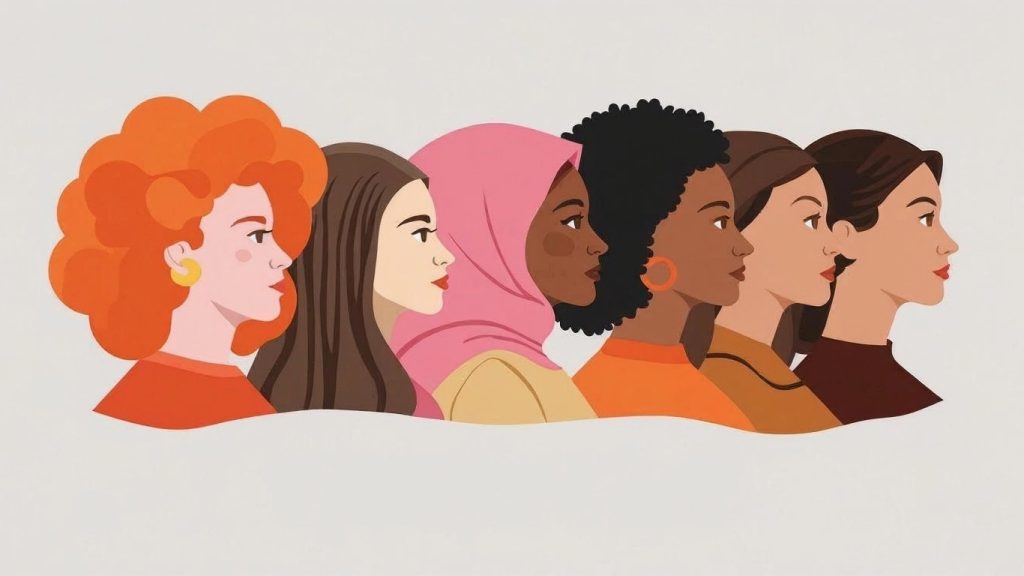
Women’s History Month 2026 Puts Women’s Health Access in Focus
Women’s History Month 2026 Health Equity in Focus fyh.news

Women’s History Month is being marked across the United States this March with tributes to women’s leadership in public life, science, education and community organizing. But the 2026 observance is also arriving with a harder public-health reality: even as national data show some signs of progress, many women still face unequal risks tied to race, income, geography and access to care. In a March 12 proclamation, the White House formally designated March 2026 as Women’s History Month, while the National Women’s History Alliance named this year’s theme “Leading the Change: Women Shaping a Sustainable Future.”

Quick Answer: Why does Women’s History Month matter for health equity?

Women’s History Month is not only a time to celebrate women’s achievements, but also a chance to spotlight ongoing health disparities that affect women, especially Black and Hispanic women, in areas such as maternal health, heart disease, insurance coverage, and access to quality care.

_]

For health advocates, that theme carries special weight. Some of the country’s most persistent disparities continue to fall heavily on women of color, especially in pregnancy-related care. New federal data show that 649 women died of maternal causes in the United States in 2024, with an overall maternal mortality rate of 17.9 deaths per 100,000 live births. But the burden was far from equal: the rate for Black women was 44.8 deaths per 100,000 live births, compared with 14.2 for White women, 12.1 for Hispanic women and 18.1 for Asian women. The CDC has also said that more than 80% of pregnancy-related deaths in the United States are preventable. CDC

nmqf40under40Desktopversion-ezgif.com-optimize

Public-health officials say those outcomes are shaped by far more than what happens in a delivery room. The CDC points to differences in quality of care, chronic conditions and social factors such as unstable housing, transportation barriers, food insecurity, violence and economic inequality. Those pressures can make it harder for women to get prenatal care early, return for postpartum care, or have serious warning signs taken seriously. For many Black women, Women’s History Month therefore lands not only as a celebration of achievement, but as a reminder that respectful, timely and equitable care is still unevenly delivered.

The gaps behind the celebration

The disparities do not end with maternal health. Cardiovascular disease remains the leading cause of death for women, and the latest figures suggest the burden could grow. The American Heart Association reported this year that heart disease remains the top killer in the United States and that cardiovascular disease and stroke together accounted for more than a quarter of all U.S. deaths in 2023, the most recent year available. In a separate 2026 scientific statement, the association warned that nearly 6 in 10 women in the United States could have some form of cardiovascular disease within the next 25 years, with some of the steepest projected increases among American Indian and Alaska Native, Black, Hispanic and multiracial women and girls. “Cardiovascular disease is the leading cause of death for women and remains their #1 health risk overall,” Stacey E. Rosen, president of the American Heart Association, said in the report.

Access to insurance remains another fault line. The CDC reported in 2025 that 8.2% of Americans were uninsured in 2024, down from 9.7% in 2020, but the overall improvement masked significant racial and ethnic gaps. Among adults ages 18 to 64, nearly one in four Hispanic adults, or 24.6%, lacked health insurance in 2024. That compared with 10.5% of Black adults, 7.9% of White adults and 5.4% of Asian adults. The same report found that adults living in states that had not expanded Medicaid were almost twice as likely to be uninsured as those in expansion states, underscoring how policy decisions continue to shape who gets timely access to care.

Cancer outcomes show similar patterns. The National Cancer Institute has reported that deaths from uterine cancer have been rising in the United States and are highest among non-Hispanic Black women, who had more than twice the death rate from uterine cancer overall and from aggressive non-endometrioid subtypes compared with other racial and ethnic groups in the study. Taken together with the country’s maternal health and cardiovascular data, those findings point to a broader truth: women’s health disparities are not limited to a single diagnosis or stage of life. They stretch across prevention, diagnosis, treatment and survival.

That is what gives Women’s History Month its urgency in 2026. The month honors the women who built institutions, changed laws, led movements and expanded opportunity. It also raises a practical question about the present: whether the health systems women depend on are becoming more responsive, more affordable and more equitable. The latest public data suggest that progress is real in some areas, but for many women, especially women of color, the promise of a healthier future remains unfinished work.

Also Read: NMQF Announces 2026 “40 Under 40 Leaders in Minority Health” Honorees

Stay Informed. Stay Empowered.

Trending Topics

Features

Download and distribute powerful vaccination QI resources for your community.

Sign up now to support health equity and sustainable health outcomes in your community.

MCED tests use a simple blood draw to screen for many kinds of cancer at once.

FYHN is a bridge connecting health information providers to BIPOC communities in a trusted environment.

Discover an honest look at our Medicare system.

ARC was launched to create a network of community clinicians to diversify and bring clinical trials to communities of color and other communities that have been underrepresented.

The single most important purpose of our healthcare system is to reduce patient risk for an acute event.

Related Posts
PCOS to PMOS: Why the 2026 Name Change Matters for Women’s Health

At NMQF Leadership Summit Day 2, Leaders Put Access, Affordability and Trust at the Center of Health Equity
Lupus Awareness Month Highlights Ongoing Gaps in Clinical Trials for Black and Brown Communities
Scroll to Top
Featured Articles
dreamstime_s_174488289
PCOS to PMOS: Why the 2026 Name Change Matters for Women’s Health

NMQF Leadership Summit Day 2 Highlights Access and Access
At NMQF Leadership Summit Day 2, Leaders Put Access, Affordability and Trust ...
Lupus Awareness Month Highlights Ongoing Gaps in Clinical Trials for Black and Brown Communities
Lupus Awareness Month Highlights Ongoing Gaps in Clinical Trials for Black an...
A close-up of a healthcare provider’s hands holding a patient’s hand, representing compassionate care and the importance of heart health screenings in minority communities.
ATTR-CM - Finding Answers for a Hidden Heart Condition
NMQF 2026 Summit Day 1 Highlights Health Access
NMQF Leadership Summit Opens With Call to Turn Health Equity Into Action
GLP-1 Weight Loss Drug Coverage Cuts Backlash Massachusetts
Massachusetts Faces Backlash Over Proposed Cuts to Obesity Treatment Coverage
Categories
AI
ATTR-CM
BIPOC News
Cancer
Clinical Trials
Covid19
Diseases of the Body
Environment
Health Data
Health Equity Events
Health Policy
Health Tips
Subscribe to our newsletter to receive our latest news​
All Stories
dreamstime_s_174488289
PCOS to PMOS: Why the 2026 Name Change Matters for Women’s Health

NMQF Leadership Summit Day 2 Highlights Access and Access
At NMQF Leadership Summit Day 2, Leaders Put Access, Affordability and Trust ...
Lupus Awareness Month Highlights Ongoing Gaps in Clinical Trials for Black and Brown Communities
Lupus Awareness Month Highlights Ongoing Gaps in Clinical Trials for Black an...
BIPOC News
dreamstime_s_174488289
PCOS to PMOS: Why the 2026 Name Change Matters for Women’s Health

Lupus Awareness Month Highlights Ongoing Gaps in Clinical Trials for Black and Brown Communities
Lupus Awareness Month Highlights Ongoing Gaps in Clinical Trials for Black an...
Black Women Are Still Dying in Childbirth. Midwives May Hold Part of the Answer.
Environment
Microplastics in Water Fyh.news
HHS and EPA Launch Landmark Initiatives for Microplastics-Free Drinking Water
69c2f4108da0f.image_.jpg
Organizers assist homeless amidst record heat | City News

thefoothillsfocus

Public health scientist collecting wastewater sample to test for viral concentrations as part of community disease surveillance in the United States.
What Wastewater Testing Reveals About Viruses Spreading in Your Community
Work Force
dreamstime_s_243253251
The Caregiver Journey: The Hidden Backbone of American Healthcare
Families gather at a Bronx community festival with live music, kids’ activities, and health booths sharing SOMOS social care resources and free screenings.
Celebrating Hispanic heritage while learning about health care

msn

Racial/Ethnic Minorities have Greater Declines in Sleep Duration with Higher Risk of Cardiometabolic Disease
Racial/Ethnic Minorities have Greater Declines in Sleep Duration with Higher ...

pubmed

Clinical Trials
dreamstime_s_174488289
PCOS to PMOS: Why the 2026 Name Change Matters for Women’s Health

Lupus Awareness Month Highlights Ongoing Gaps in Clinical Trials for Black and Brown Communities
Lupus Awareness Month Highlights Ongoing Gaps in Clinical Trials for Black an...
Black Family Wellness Expo 2026 Atlanta
Black Family Wellness Expo Brings Healing, Resources, and Community Together
Vaccines and Outbreaks
Measles Outbreaks Surge: Essential Facts and Prevention Strategies
U.S. measles cases 2026: Outbreaks Spread as MMR Coverage
2026 Measles Spike: U.S. Cases Rise Fast as Outbreaks Grow
the importance of childhood immunization and public health
When Childhood Vaccines Become a Personal Choice, Public Health Pays the Price
Other Categories
AI
Read the latest AI News stories trending around the world
ATTR-CM
Cancer
Read the latest Cancer stories trending around the world
Covid19
Diseases of the Body
Read about the latest Diseases of the Body trending around the world
Friday Webinars
Every Friday, we bring you insightful webinars covering critical topics in healthcare, data equity, and policy reform.
Health Data
Read the latest Health Data stories trending around the world
Health Equity Events
Read the best Health Equity Events around the country.
Health Policy
Read the latest Health Policy stories trending around the world
Health Tips
Heart Health
Read the latest on Heart Health News, Stories and Tips.
kidney Health
Read more trending News about Kidney Health, Stories and Tips.

