











- By FYH News Team
[ad_1]
Story at a glance
- A new study analyzed 2017 traffic fatality and travel data by race to understand disparities in traffic deaths.
- The results showed Black and Hispanic Americans have a higher fatality rate when walking, cycling and driving.
- Researchers attribute the differences to structural racism, concluding road safety needs to be prioritized for Black and Hispanic Americans.
In 2021 the number of motor vehicle-related crashes in the U.S. hit a 16-year high and a new study revealed that Black and Hispanic Americans are disproportionately affected by traffic-related deaths.
Nearly 43,000 people died in motor vehicle-related crashes in 2021, the highest number of traffic fatalities since 2005, according to the National Highway Traffic Safety Administration (NHTSA). That’s about a 10 percent increase from 2020.
Researchers from Boston University and Harvard University analyzed 2017 national traffic fatality and household travel data by race and ethnicity to understand disparities in traffic deaths. Their results were recently published in the American Journal of Preventive Medicine and revealed that Black and Hispanic Americans have a higher fatality rate across multiple modes of transportation, such as cycling, walking and driving.
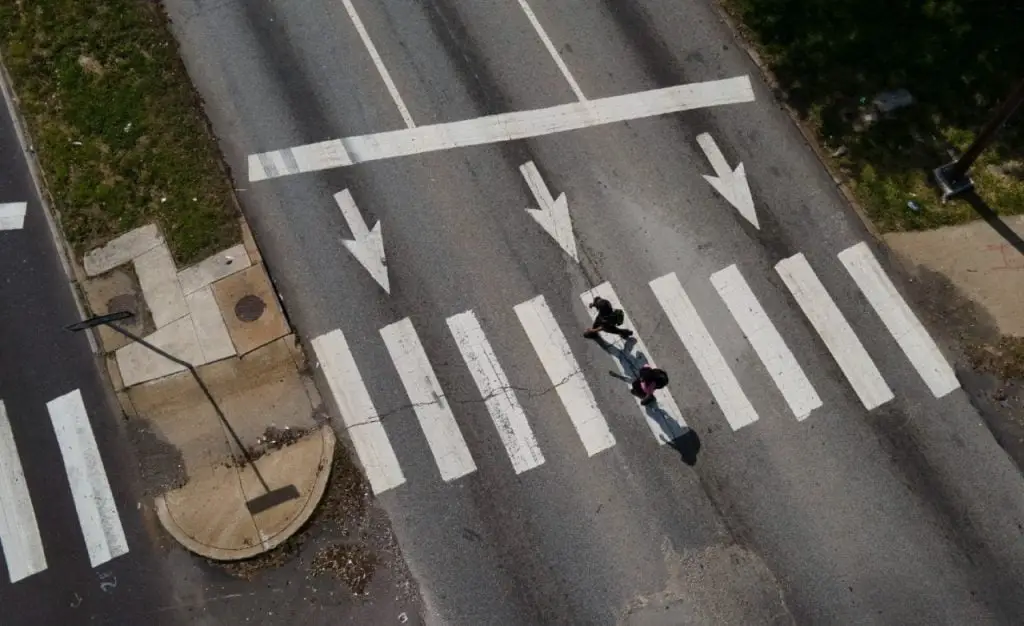
During all hours of the day, white Americans biked at almost four times the distance per capita as Black Americans, but Black Americans died at more than four times the rate per mile cycling.
Black Americans also experienced traffic deaths at more than twice the rate per mile walking and nearly twice the rate per mile driving or riding in a car.
America is changing faster than ever! Add Changing America to your Facebook or Twitter feed to stay on top of the news.
Evening hours exacerbated risk, with researchers finding Black Americas were 3.4 times more likely to die during this time of the day than white Americans.
Hispanic Americans’ traffic fatality rates and travel activity followed similar patterns as Black Americans’ but were less stark. Asian Americans had the lowest fatality rates compared to whites across all modes of travel and situations analyzed by researchers.
Regardless of race or ethnicity group, researchers found that fatality rates were highest for walking, followed by cycling and then light-duty vehicles.
“We have created a system where walking and cycling are more dangerous than driving, and where Black and Hispanic Americans are at greater risk of fatality per mile traveled than White Americans,” said Matthew Raifman, coauthor of the study, in a statement.
“It’s important to consider these disparities in traffic fatalities within the context of a transport system that suffers from racial bias—from the placement of roads, to traffic stops, to the way that ride-hail applications pair riders with drivers.”
The study concluded that its findings, in aggregate, were proof of structural racism in the safety and transportation sector, and it merits further analysis.
Systemic underinvestment in pedestrian and cycling infrastructure, like bike lanes, in communities of color, disparities in emergency response, quality of care and outcomes and access to medical insurance are just some explanations researchers outlined that could be causing racial disparities in traffic fatalities.
“The authors believe that the findings are suggestive of the need to prioritize road safety for Black and Hispanic Americans, especially vulnerable road users,” wrote researchers.
Risks to walking and cycling extend to the overall health of Black and Hispanic Americans, with researchers also noting that those activities are linked to improved cardiovascular and respiratory health.
“We know that chronic diseases, such as diabetes and cardiovascular disease, disproportionately affect Black and Hispanic Americans and can be improved through increased physical activity,” said Ernani Choma, coauthor of the study, in a statement.
“But each time a Black American takes a one-mile cycling trip, the fatality risk is 4.5 times the risk of a White American. Policy decisions could be made to reduce these disparities, so that Black Americans are able to safely and equitably enjoy the health benefits of cycling.”
President Biden has attempted to fix infrastructure throughout the country through his Infrastructure Investment and Jobs Act that includes funding for highway and pedestrian safety and provides for bicycle transportation and pedestrian walkways.
Published on Jun. 14, 2022
[ad_2]
Source link
Trending Topics
Features
- Drive Toolkit
Download and distribute powerful vaccination QI resources for your community.
- Health Champions
Sign up now to support health equity and sustainable health outcomes in your community.
- Cancer Early Detection
MCED tests use a simple blood draw to screen for many kinds of cancer at once.
- PR
FYHN is a bridge connecting health information providers to BIPOC communities in a trusted environment.
- Medicare
Discover an honest look at our Medicare system.
- Alliance for Representative Clinical Trials
ARC was launched to create a network of community clinicians to diversify and bring clinical trials to communities of color and other communities that have been underrepresented.
- Reducing Patient Risk
The single most important purpose of our healthcare system is to reduce patient risk for an acute event.
- Jessica Wilson
- Jessica Wilson
- Jessica Wilson




