











CNN
†
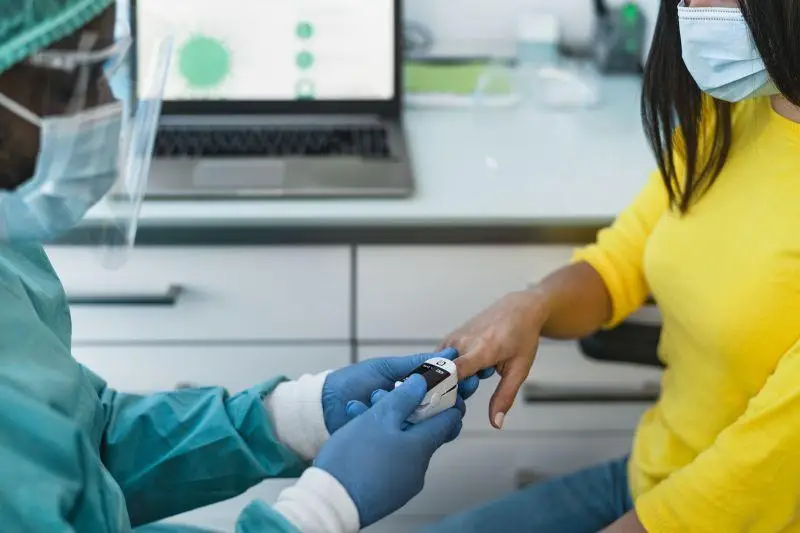
When Dr. Thomas Valley sees a new patient in Michigan Medicine’s intensive care unit in Ann Arbor, he often clamps a pulse oximeter on their finger — one of several devices he uses to measure their health and what care they need, whether it be now concerns a child with seizures, a teenage car accident victim or an elderly person with Covid-19.
But recently, Valley, an assistant professor in the Department of Pulmonary and Critical Care at the University of Michigan, realized firsthand that the tiny device may provide less accurate oxygen readings in darker skinned patients.
One end of the device sends light through the finger, while a sensor on the other side receives this light and uses it to detect the color of your blood; bright red blood is highly oxygenated, while blue or purplish blood is less so. If the device is not calibrated for darker skin tones, the pigmentation of the skin can affect the way light is absorbed by the sensor, leading to defective oxygen readings.
In a colored person, the pulse oximeter could indicate that a patient’s oxygen levels are normal, suggesting they can be discharged home – but then their blood samples may show low oxygen levels, suggesting that they not only needed extra care, but also oxygen support.
“At the time, it was during the spring of 2020 in Michigan, and we didn’t really figure out that this was a racing issue,” Valley told CNN. “We thought this might be a Covid problem because we were inundated with that – hundreds of patients with Covid.”
Before the pandemic, the majority of Valley’s patients at Michigan Medicine were white. But as the hospital treated more Covid-19 patients, Valley realized that many were black or brown patients coming from other congested facilities.
Since then, Valley and his colleagues have collected data on how often pulse oximeters overestimate oxygen levels in their black and brown patients. Their findings suggest that black patients experience blood oxygen levels of less than 88% almost three times more often than white patients, despite showing 92% to 96% on a pulse oximetry machine. A normal oxygen level is usually around 95% or higher.
“At 92%, we typically don’t make any clinical changes to that, but if that 92% on a pulse oximeter means their oxygen levels are actually below 88%, well, then I’d make a clinical change to that. — whether it’s starting someone on oxygen, or whether it’s increasing their oxygen levels,” Valley said.
“I’m still struggling with what to do when I have a black patient with a pulse oximeter reading that’s marginal,” he said. “I think for a person at home, I think it increases the need to be mindful of your symptoms.”
Valley and his colleagues’ experiences add to a growing body of research — dating back to the 1980s — suggesting flawed pulse oximeter readings in black and brown patients could be a real and life-threatening problem in medical care.
The latest study of flawed pulse oximeter readings, published Monday in the journal JAMA Internal Medicine and which did not involve Valley, found that of more than 3,000 hospitalized patients who received intensive care, Asian, black and Hispanic patients received less supplemental oxygen than whites. patients, and that was associated with differences in their pulse oximeter readings.
Research published last week by Valley and his colleagues in the medical journal BMJ found that black patients were more likely than white patients to have low blood oxygen levels, noted in their blood draws, but not detected by pulse oximetry. That finding was based on data from the Veterans Health Administration, where pulse oximeter readings were combined with oxygen level readings from blood draws.
A separate study of about 7,000 Covid-19 patients, previously published in May in the journal JAMA Internal Medicine, found that compared with Caucasian patients, pulse oximetry overestimated blood oxygen levels by an average of 1.7% in Asian patients, 1 2% in Black patients and 1.1% in Hispanic patients. That overestimation may have contributed to unrecognized or delayed recognition of a patient’s eligibility to receive certain Covid-19 therapies.
But only recently has the public become more aware of these health inequalities, and US health officials have announced plans to investigate the accuracy of pulse oximeters.
“It’s problematic,” Valley said.
“In 1990 there was a study like ours, but on a smaller scale in a single center. The problem from 1990 to 2020 is really a diffusion and education problem. In medical school, in residency, in fellowship, I knew nothing about this problem,” he said. “It is not the case that we now use pulse oximeters more often. I use a pulse oximeter every day, several times a day, all day in the intensive care unit, and that is unchanged from 10 years ago. It’s almost like my right hand man in an intensive care unit. We depend on what someone’s oxygen level is.”
The pulse oximeter was invented in 1974 by Japanese bioengineer Dr. Takuo Aoyagi, who died in 2020 at the age of 84 – the same year of Covid-19, a disease whose symptoms are controlled with pulse oximetry, was declared a public health emergency of international concern.
Some experts view the pandemic as a spotlight on the pulse oximeter’s limitations in measuring oxygen levels in black and brown patients.
“I think the Covid-19 pandemic has exacerbated this problem,” said Rutendo Jakachira, a Ph.D. student in Brown University’s Department of Physics, who studies racial inequalities in pulse oximetry.
“People know there is a problem with the overestimation of these oxygen saturation levels, especially in dark-skinned patients, but they only realized the importance of this issue during the Covid-19 pandemic,” she said. “The pandemic has led to increased use of pulse oximeters in the hospital and in the home setting and so the consequences of neglecting the problems with errors in these pulse oximeters have come to light.”
Jakachira and her research advisor Kimani Toussaint argue that in the years since Aoyagi’s invention, not enough clinical trials have been done to improve the device to ensure equality across all demographics and skin tones.
“So, one thing that needs to be done immediately is improved calibration tests,” said Jakachira, adding that currently U.S. Food and Drug Administration guidelines recommend that such tests on pulse oximeters include at least 10 healthy subjects ranging in age and sex with a range of skin pigmentations, of which two individuals or 15% of the group — “whichever is greater,” the FDA guideline specifies — have dark skin.
“This is probably not sufficient and not to draw statistical conclusions about differences,” she said. “So, using a more diverse population, calibration would be a great first step.”
In April, the FDA issued a new draft guidance recommending that medical product companies develop and submit to the agency a “race and ethnic diversity plan” early in their product development, and that plan should enroll diverse groups of people in their clinical trials. taste.
Jakachira, Toussaint and their colleagues are developing noninvasive methods to make pulse oximeters more accurate in their blood oxygen readings for dark-skinned people.
“What we’re working on, we’re trying to reduce the skin tone issues by doing something interesting with the light, but it’s a big challenge and this really emphasizes the need for diversity and inclusion,” said Toussaint, a professor and senior associate dean of the School of Engineering at Brown University.
When pulse oximeters send rays of light through the fingertips to measure oxygen levels in the blood, they measure how much oxygen has been taken up by a particular molecule in the blood called hemoglobin. It turns out that both melanin and hemoglobin absorb light at similar wavelengths and separating their relative contributions can be challenging. Melanin is the substance that produces pigmentation in our skin, hair and eyes.
“So, the melanin will overlap with the absorption properties of the hemoglobin in your blood,” Toussaint said, which can lead to the pulse oximeter’s flawed blood oxygen readings, because different people have different amounts of melanin.
The approach that Jakachira and Toussaint are taking in their search for a solution is to try to negate the effect that absorbed melanin can have on the way pulse oximeters measure oxygen levels in the blood.
“That’s something that we think would certainly be a contribution, but maybe translate to other similarly-based technologies that aren’t just pulse oximeters,” Toussaint said, adding that he couldn’t share additional details of this work. , as the research team is currently completing an investigation. patent application.
The U.S. Food and Drug Administration plans to convene a meeting of its medical device advisors later this year to evaluate how pulse oximeters can provide inaccurate oxygen readings in people of color.
A patient’s oxygen levels are sometimes referred to as the “fifth vital sign,” and there’s growing concern about how such investigations into how pulse oximeter inaccuracies in people of color haven’t happened before, according to an editorial published Monday in the journal JAMA. Internal Medicine .
“While the pulse oximeter’s technical limitations have been recognized for more than 30 years, studies of clinical implications of hidden hypoxemia in darker-skinned patients are relatively (and disturbingly) recent,” Dr. Eric Ward of the University of California, San Francisco and Dr. Mitchell Katz of NYC Health + Hospitals, wrote in their editorial.
They described one plan of action for change.
“There are devices that perform more fairly, but that have never been widely distributed,” Ward and Katz wrote. “Healthcare systems, including academic centers, are large-scale purchasers of pulse oximeters. If they commit to only buying devices that work for different skin tones, manufacturers would respond.”