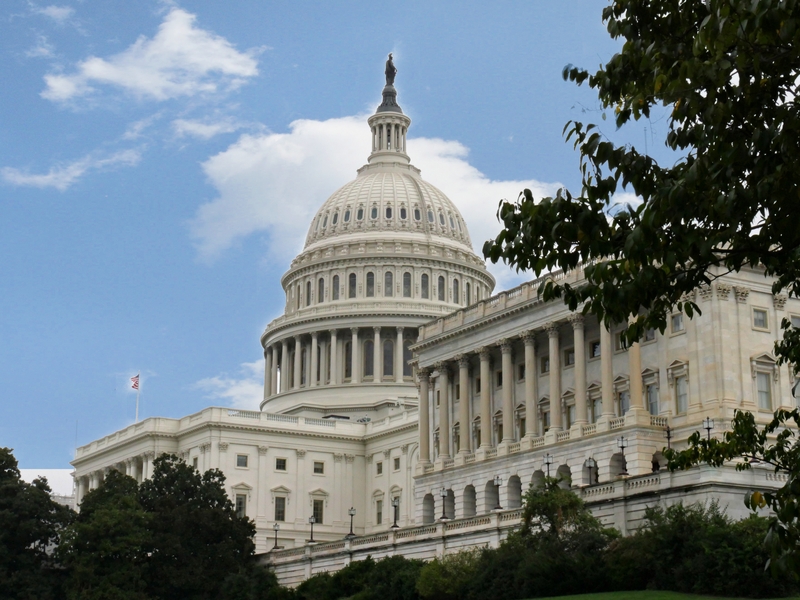









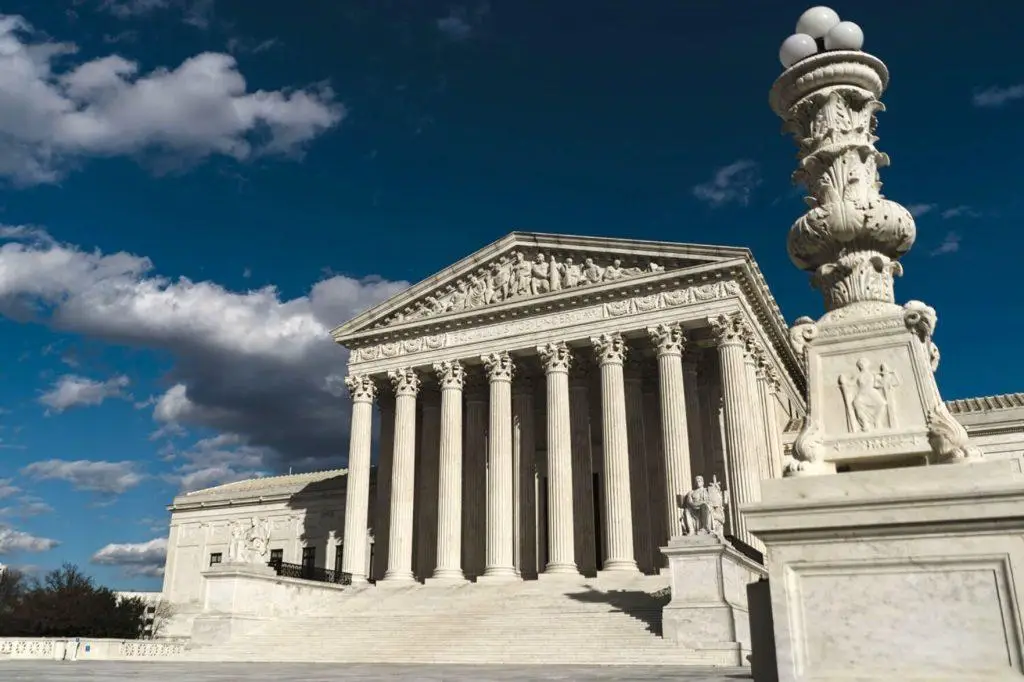
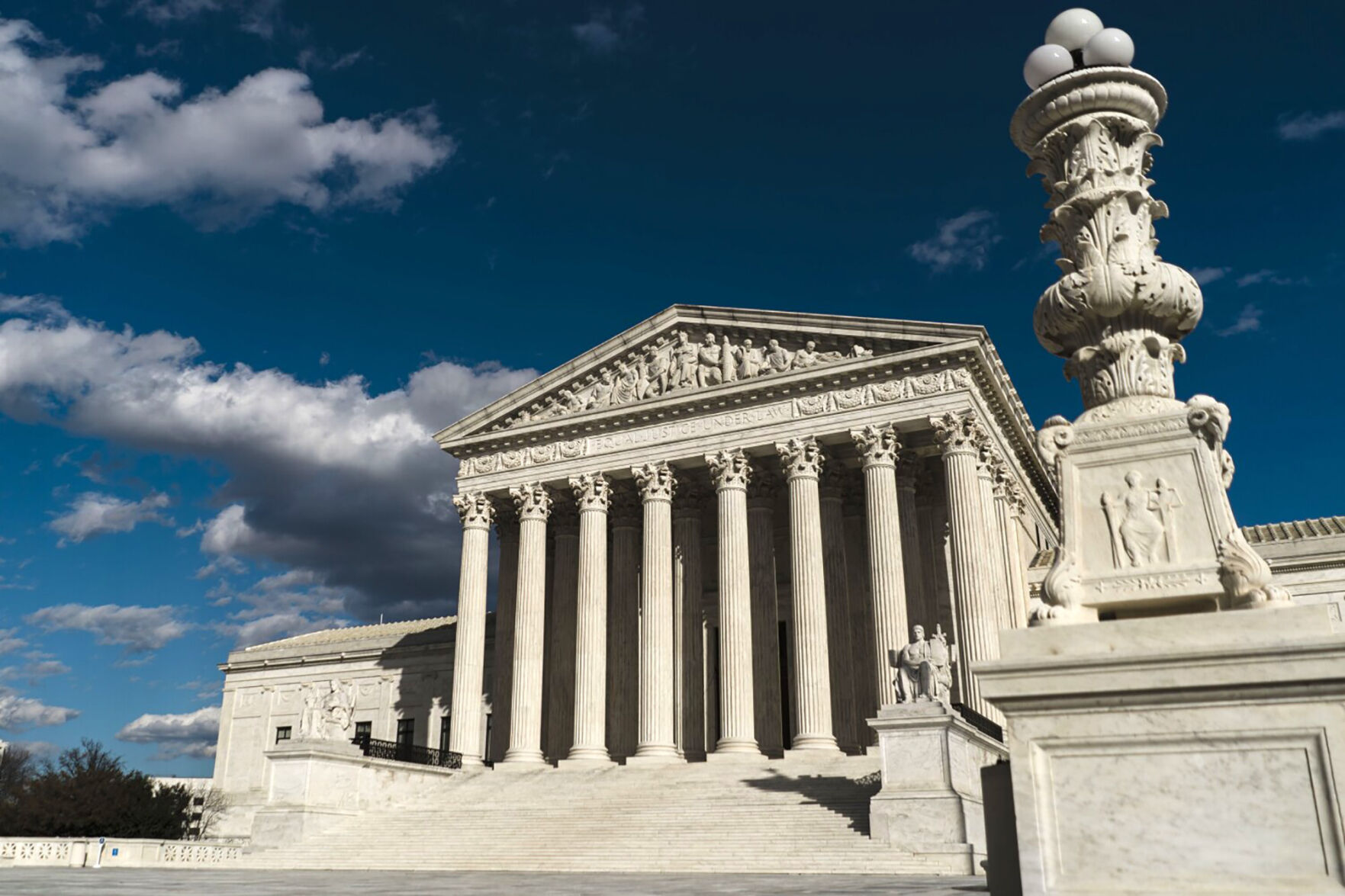
On June 24, the Supreme Court ruled on the controversial Dobbs v. Jackson Women’s Health Organization abortion case, wiping out decades of legal precedents on abortion. The decision to turn around Roe v. Wade and Planned Parenthood v. Casey was met demonstrations from both sides on the fight for abortion rights. Outside the Supreme Court, on the day the advice was made public, crowds of anti-abortion supporters celebrated the arrival of the post-roe era, as abortion rights advocates mourned and rose up against the shocking Supreme Court ruling.
The Supreme Court states that its job is to protect and ensure: “equal justice before the law” in interpreting and applying the United States Constitution to cases brought before the courts. It protects the fundamental rights accorded to American citizens in the Constitution. This gives the Supreme Court a wide range of political and judicial powers; it sets a legal precedent for all state and federal courts beneath it and is considered the supreme law of the land.
The final decision in dobbs deleted the constitutional right to abortion, a right established by the Supreme Court ruling on roe in 1973. Instead of protecting a constitutional right, the Court now chose the exact opposite and deprived women of the right to abortion. The decision is a huge blow to the fight for women’s rights across the country and has significantly eroded public confidence in the Court. dropped to 25% this year — a historically low confidence level.
Several states had enacted trigger bans on abortion, meaning they have laws that would go into effect immediately or shortly after roe was destroyed, including Arkansas, Idaho, Kentucky, Louisiana, Mississippi, Missouri, North Dakota, Oklahoma, South Dakota, Tennessee, Texas, Utah, and Wyoming. States without trigger bans, such as Alabama, Arizona, Georgia, Iowa, Michigan, Ohio, South Carolina, West Virginia and Wisconsin, have already banned or plan to ban or severely restrict access to the procedure in the coming weeks and months. so far, 10 states have banned the procedure — South Dakota, Wisconsin, Oklahoma, Arkansas, Alabama, Louisiana, Missouri, Mississippi, and West Virginia. General, 25 states are expected to ban or severely restrict abortion now that the issue has been left in the hands of the states.
While the decision will have little to no effect in states where abortion is a protected right, such as Washington, Oregon, Minnesota, California, New York, New Mexico, New Jersey, Vermont, Massachusetts, Connecticut, Hawaii, Maryland, and Delaware, a have a tragic effect on people in states that do not guarantee the right to abortion.
The decision will have serious consequences for people of color and people from low-income socioeconomic backgrounds. While wealthier populations have the opportunity to travel to other states to have an abortion that is illegal in their home state, those who are impoverished will not have the same privilege.
People across the country will face the ramifications of the Supreme Court’s decision — and students are no exception. Not only does it negatively affect students’ ability to attend college, but it also affects students’ school choice. High school students may wonder if they are enrolling in schools in states with abortion bans and states that plan to impose severe restrictions in the near future.
In an article by Nell Gluckman from The Chronicle of Higher Education, a rising high school senior explained how her search for a university has been limited as a result of the recent ruling.
“As a woman, but also as a woman of color, I think it’s very important that the schools that I look at are schools in states that give me the ability to access abortion when I need to, as well as just general access to reproductive health care,” she told the Chronicle.
Since the ruling, many may have wondered if they went to their dream schools because they are in states with little to no access to abortion and reproductive health care. It is not only female students who are questioning their best choices, but also male students. In Gluckman’s articleone high school boy mentions how he took Texas A&M off his list, in part because of Texas laws on abortion, saying, “it’s just not who I am.”
Certain factions of college students will also be disproportionately affected, namely students who are expecting or already have young children. Some call this the “maternity punishment.”
In her article about the future of reproductive rights and medical education in schools, author Katherine Mangan explains that students with children or those expecting children are more likely to drop out of school or skip college altogether. Further restrictions on the procedure may result in women with unexpected pregnancies staying home rather than attending school.
University faculties also expect to be affected. In Gluckman’s article, a female professor explained her reluctance to return to Texas for work.
“There’s the philosophical issue of living in a regime that doesn’t believe I’m a fully autonomous human being with the power to make decisions about myself,” the professor told The Chronicle.
The Supreme Court’s ruling on the dobbs abortion case and overthrowing roe and Planned Parenthood will undoubtedly have serious consequences not only for young parents and low-income students, but also for university teachers and emerging students. Large segments of the American population oppose the court’s decision and loathe the Supreme Court — for valid reasons — and are terrified of the insurmountable effect this decision will have on not just women, but the country as a whole.
The ruling raised concerns about the slow erosion of American democracy. The January 6, 2021 uprising marked the beginning of a possible democratic setback in the land of the free. In fact, the International IDEA has a Global State of Democracy Report in 2021, which reported that the US exhibited anti-democratic tendencies and was listed as a declining democracy.
Relapse is more likely in countries like the US with deep political and cultural divides across the country and in government, the report said. It also stated that Trump’s efforts to undermine the 2020 elections and his spread of misinformation about electoral fraud sparked the January 6 uprising. While the Supreme Court dobbs decision is not mentioned in the report, released last year, political scientists and journalists have their own concerns.
The Supreme Court, which abolishes the right to abortion, also contributes to this erosion. Sophia Jordan Wallace, an associate professor at the University of Washington states that “reversal of abortion rights is rare in democracies and is a sign of democratic regression.” She mentions two other countries that follow a similar path, Poland and Brazil. Abolishing a fundamental right for women goes against democratic morality, with the opposition to abortion often basing their beliefs on religion.
The religious law has secured its hold on the Supreme Court and its future decisions – a major cause for concern in a country that prides itself on separation of church and state. America is already on fragile ground, and with culture wars raging and an increasingly unstable political climate, the glass floor beneath our feet is beginning to crack.
Contact senior writing, rhetoric and technical communications major Emma Seli at seliek@dukes.jmu.edu. For more editorials on the JMU and Harrisonburg communities, follow the opinion desk on Instagram and Twitter @breeze_opinion