








[ad_1]

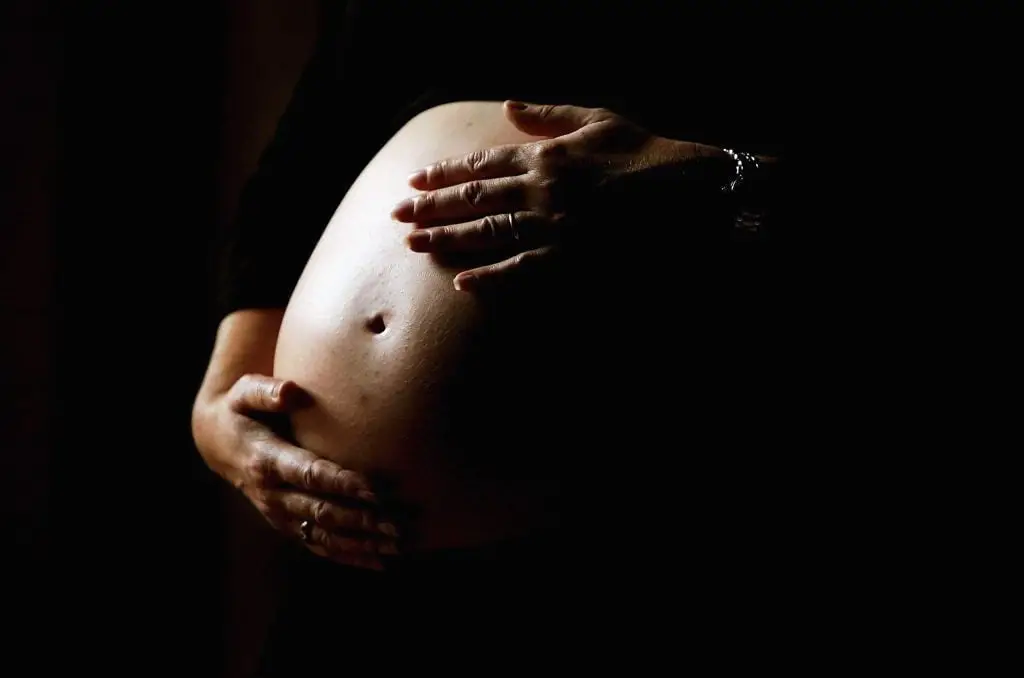
SYDNEY, NSW – JUNE 07: A pregnant woman holds her belly on June 7, 2006 in Sydney, Australia. , [+]
New one BMJ Global Health The study warns that being infected with the SARS-CoV-2 virus on any given night during pregnancy increases the risk of death of the mother by almost eight times compared to those who remain uninfected. A group of researchers examined 137 studies and analyzed 12 studies conducted in Sweden, Italy, Spain, the United States, Turkey, the Democratic Republic of the Congo, South Africa, Uganda, Kenya, Nigeria, Ghana, Hong Kong and China.
In this analysis, the researchers considered four categories of outcomes: hospital and critical care, maternal mortality and morbidity, adverse birth outcome, and fetal and neonatal mortality. A total of 13,136 participants were enrolled from February 2020 to July 2021 across 12 studies. All participants were subjected to RT-PCR testing and one tested positive for COVID-19 during pregnancy in 1942.
The study found that pregnant women with COVID-19 infection were four times more likely to be admitted to the intensive care unit (ICU) and 15 times more likely to be placed on ventilator support. Pregnant women who have COVID-19 are at highest risk of developing pneumonia, as they are 23 times more likely to develop the disease. And the risk of developing blood clots is five times higher.
Babies of mothers with a Covid-19 infection were almost twice as likely to end up in the neonatal care unit. They were also three times more likely that the babies would be born prematurely or before 34 weeks. Low birth weight was another risk factor (19% more likely) for infants born to mothers with SARS-CoV-2 infection.
The researchers concluded, “These findings underscore the need for global efforts to prevent COVID-19 during pregnancy through the targeted administration of vaccines and non-pharmaceutical interventions.” “Further efforts are needed to advance our understanding of the best clinical care and management strategies for SARS-CoV-2-infected pregnant women and their newborns.”
Doctors say that pregnant women are at a higher risk of developing complications due to COVID-19 infection because there may be changes in their immune system that could potentially make them more vulnerable to the respiratory virus.
The Centers for Disease Control and Prevention states that certain factors may put pregnant women with COVID-19 infection at a higher risk of experiencing complications during or after pregnancy. This includes underlying medical conditions such as chronic kidney disease, chronic liver disease, cancer, asthma, chronic obstructive pulmonary disease (COPD), bronchitis and hypertension.
According to the CDC, women belonging to racial and ethnic minority groups may be at higher risk of becoming very ill with COVID-19 during or after pregnancy. This is mainly due to the health inequalities faced by them and lack of access to adequate healthcare facilities or treatments.
One way to reduce the risk of being exposed to the SARS-CoV-2 virus during pregnancy is to opt for telemedicine consultations with your gynecologist and primary doctor, to visit clinics and hospitals in high-risk areas Frequent visits can be avoided. In addition to wearing a well-fitted N95 mask, it is best to avoid poorly ventilated indoor spaces and crowds.
[ad_2]
Source link