








Covid-19 is killing more people now than during most of the pandemic. Here's who's still at risk

[ad_1]

More than 2,000 Covid-19 deaths have been reported in the United States each day for the past month. Average daily deaths are falling, but from a very high point. They dipped just below that mark in recent days, to about 1,900 on Monday; the federal holiday may have delayed reporting.

Before Omicron became the dominant coronavirus strain in the US, there were only about 100 other days when there were more than 2,000 Covid-19 deaths, according to data from Johns Hopkins University.

The only other time that deaths have been this high for this long was during the first winter surge, before vaccines were available. The Omicron wave has also been deadlier for longer than the Delta surge: In September, when Delta was dominant, average daily deaths topped 2,000 for half as long.

More than 120,000 people in the US have died of Covid-19 since Omicron became the dominant variant in December, and Covid-19 has accounted for more than 1 in 5 deaths reported in 2022.

A common refrain early in the pandemic was that Covid-19 was most deadly for the elderly and people with certain health conditions. The people dying from Covid-19 now tend to be younger than before, and they’re overwhelmingly unvaccinated, experts say.

“I’ve long since lost track of the number of people I’ve seen die of the disease, but the reality is that almost everybody who is critically ill, in the ICU or dying now remains unvaccinated. That has been true since the beginning. But in the beginning, people didn’t have the opportunity to be vaccinated,” said Dr. Stephen Threlkeld, medical director of the infectious diseases program at Baptist Memorial Health Care in Memphis.

“None of us taking care of Covid patients need CDC statistics or anyone else to tell us that, because we simply see that reality play out every day and have for quite some time.”

But the data from the US Centers for Disease Control and Prevention is clear. In December, the risk of dying from Covid-19 was 14 times higher for unvaccinated adults than it was for adults who were fully vaccinated with their initial series. The gap was even larger when looking at those who also got their booster shot: 51 times higher.

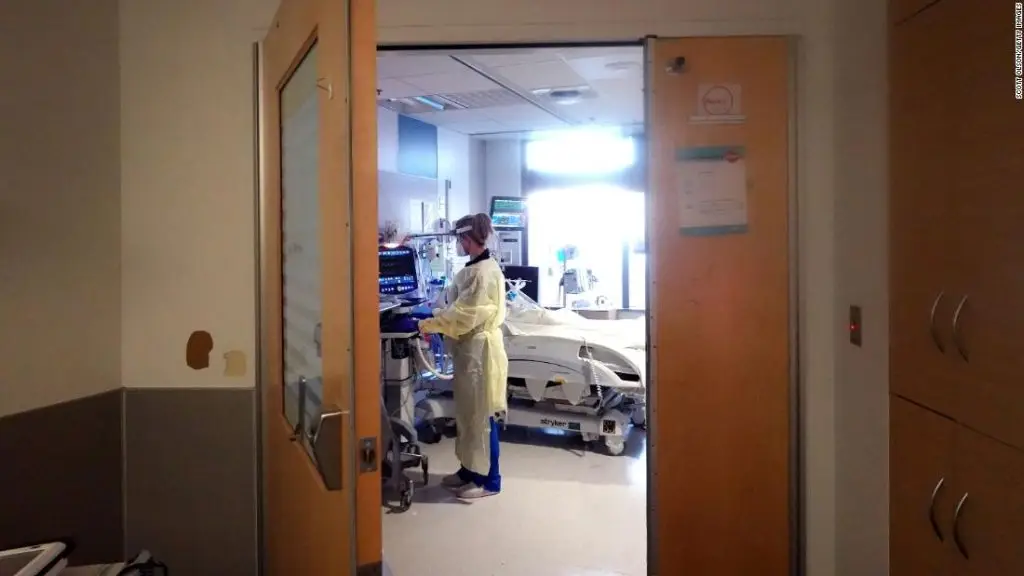
Throughout the pandemic, the majority of Covid-19 deaths have happened in hospitals. But that share is even larger now, as nursing homes have become less of a hotspot. In 2020, more than 1 in 5 Covid-19 deaths was in a nursing home. But in 2022, fewer than 1 in 10 deaths have been in nursing homes, according to provisional data from the CDC.

Vaccination rates are higher among older people in the US, leaving a larger share of younger, unvaccinated people at higher risk for severe outcomes.

Nearly 90% of seniors 65 and older are fully vaccinated with their initial vaccine series, and about two-thirds of those eligible have gotten their booster shot. But less than two-thirds of adults under the age of 40 and less than a third of children are fully vaccinated.

And the vaccines are working. Seniors accounted for 81% of Covid-19 deaths in 2020, a number that dropped to 69% in 2021 and has stayed at 76% so far in 2022, despite the increased risk for breakthrough infection amid exponential community spread.

“The virus simply went to the fuel that it had remaining,” Threlkeld said.

Racial disparities in Covid-19 deaths persist, but have decreased over time. Black, Hispanic and American Indian people are still about twice as likely to die of Covid-19 than White people, but that risk has fallen from about three times higher at the end of 2020.

And White people, who are less likely to be vaccinated than Hispanic people, have accounted for a growing share of deaths recently. An analysis by the Kaiser Family Foundation found that early in the Omicron surge, the death rate for Hispanic people remained lower than the rate for White people, but death rates among Black people rose.

And as the virus spread rapidly throughout the country, social determinants of health have started to play a larger role in who becomes seriously ill and dies from Covid-19.

“Delta was much more deadly. But Omicron is so widespread,” said Dr. Faisal Masud, director of the critical care center at Houston Methodist.

Extremely high transmission rates mean the virus is reaching everyone, but it’s hitting those from disadvantaged neighborhoods especially hard, he said. These are the people who are more likely to be uninsured and who may delay care, leaving chronic conditions such as diabetes and hypertension untreated.

“Patients who start with poor health come at a disadvantage,” he said.

Texas has reported more Covid-19 deaths than any other state in the past week and is on track to soon outpace California in terms of total Covid-19 deaths. It’s important to note the significant differences in health insurance rates and vaccination rates in the two states, Masud said. More than 70% of Californians are fully vaccinated, compared with about 60% of Texans, according to CDC data.

Overall, the proportion of Omicron cases that have resulted in deaths appears to be lower than the case-mortality ratio for Delta.

But it’s a “denominator phenomenon,” Threlkeld said, meaning a lower percentage of a much larger number is still going to be large.

“I think that’s what people have forgotten: Just because something is a little less likely in a given person to cause severe disease, there are so many more people who’ve contracted this infection that you’re going to have a lot of people who are ill,” he said.

“We’ve certainly seen a lot of unvaccinated people who’ve done very poorly.”

[ad_2]

Source link

Trending Topics

Features

Download and distribute powerful vaccination QI resources for your community.

Sign up now to support health equity and sustainable health outcomes in your community.

MCED tests use a simple blood draw to screen for many kinds of cancer at once.

FYHN is a bridge connecting health information providers to BIPOC communities in a trusted environment.

Discover an honest look at our Medicare system.

ARC was launched to create a network of community clinicians to diversify and bring clinical trials to communities of color and other communities that have been underrepresented.

The single most important purpose of our healthcare system is to reduce patient risk for an acute event.

Related Posts
R&B Singer Nivea Reveals Leukemia Diagnosis at 44, Says Treatment Is Going Well
Health Equity Act Reintroduced to Expand Access
Senate Committee Advances 11 Health Care Access Bills
Scroll to Top
Featured Articles
Nivea Leukemia Diagnosis Singer Shares Treatment Update
R&B Singer Nivea Reveals Leukemia Diagnosis at 44, Says Treatment Is Goin...
Sen. Alex Padilla speaks during the announcement of the Health Equity and Accountability Act of 2026, legislation aimed at reducing health disparities and expanding access to healthcare for underserved communities.
Health Equity Act Reintroduced to Expand Access
Senate HELP Committee advances bipartisan health care bills on insulin, biosimilars, rural care and price transparency.
Senate Committee Advances 11 Health Care Access Bills
Bottle and tablets representing the recall of some cetirizine 5 mg allergy medicine
Cetirizine Recall: Check Your Allergy Medicine
House Advances Bipartisan EARLY Act Reauthorization, Renewing Focus on Early Breast Cancer Detection for Young Women
House Advances Bipartisan EARLY Act Reauthorization, Renewing Focus on Early ...
Cyclospora Outbreak Linked to Lettuce Sickens 1,600+ fyh.news
Cyclospora Outbreak Linked to Recalled Lettuce Sickens More Than 1,600 Across...
Categories
AI
ATTR-CM
BIPOC News
Cancer
Clinical Trials
Covid19
Diseases of the Body
Environment
Health Data
Health Equity Events
Health Policy
Health Tips
Subscribe to our newsletter to receive our latest news​
All Stories
Nivea Leukemia Diagnosis Singer Shares Treatment Update
R&B Singer Nivea Reveals Leukemia Diagnosis at 44, Says Treatment Is Goin...
Sen. Alex Padilla speaks during the announcement of the Health Equity and Accountability Act of 2026, legislation aimed at reducing health disparities and expanding access to healthcare for underserved communities.
Health Equity Act Reintroduced to Expand Access
Senate HELP Committee advances bipartisan health care bills on insulin, biosimilars, rural care and price transparency.
Senate Committee Advances 11 Health Care Access Bills
BIPOC News
Senate HELP Committee advances bipartisan health care bills on insulin, biosimilars, rural care and price transparency.
Senate Committee Advances 11 Health Care Access Bills
Bottle and tablets representing the recall of some cetirizine 5 mg allergy medicine
Cetirizine Recall: Check Your Allergy Medicine
How NMQF Advances Minority Health Through Data, Research and Health Access
Environment
UV Safety Awareness Month Raises Urgency on Skin Cancer Prevention and Sun Protection Equity
UV Safety Awareness Month Raises Urgency on Skin Cancer Prevention and Sun Pr...
Extreme Heat Safety Tips 5 Ways to Protect Your Health This Summer fyh.news
5 Heat Safety Tips That Could Protect Your Health This Summer
Lupus Awareness Event in Baltimore Aims to Support Research and Shine a Light on Health Disparities
Lupus Awareness Event in Baltimore Aims to Support Research and Shine a Light...
Work Force
A multigenerational Black and Hispanic family sitting together in a park, showing how Social Security helps support older adults, people with disabilities, and families across generations.
Millions of Older Americans Could Face Smaller Social Security Checks by 2032...
dreamstime_s_243253251
The Caregiver Journey: The Hidden Backbone of American Healthcare
Families gather at a Bronx community festival with live music, kids’ activities, and health booths sharing SOMOS social care resources and free screenings.
Celebrating Hispanic heritage while learning about health care

[xyz-ips snippet=”Output-Source-Name”]

Clinical Trials
House Advances Bipartisan EARLY Act Reauthorization, Renewing Focus on Early Breast Cancer Detection for Young Women
House Advances Bipartisan EARLY Act Reauthorization, Renewing Focus on Early ...
Early Cancer Detection Is Entering a New Era. Flint Is Helping Lead the Way.
Why Your “Ozempic” May Not Be Ozempic: FDA Warnings Highlight Growing Risks of Unregulated GLP-1 Drugs
Why Your “Ozempic” May Not Be Ozempic: FDA Warnings Highlight Growing Risks o...
Vaccines and Outbreaks
Cyclospora Outbreak Linked to Lettuce Sickens 1,600+ fyh.news
Cyclospora Outbreak Linked to Recalled Lettuce Sickens More Than 1,600 Across...
A parent checking a child's temperature during summer, illustrating the changing RSV patterns and year-round respiratory virus risks.
Can You Get RSV During the Summer?
Michelle Lam, MBA, of NYC Health + Hospitals/Elmhurst & Amy Harris of NYC Health + Hospitals/Elmhurst
Healthcare Leaders Spotlight Vaccine Equity and Adult Immunization Strategies...
Other Categories
AI
Read the latest AI News stories trending around the world
ATTR-CM
Cancer
Read the latest Cancer stories trending around the world
Covid19
Diseases of the Body
Read about the latest Diseases of the Body trending around the world
Friday Webinars
Every Friday, we bring you insightful webinars covering critical topics in healthcare, data equity, and policy reform.
Health Data
Read the latest Health Data stories trending around the world
Health Equity Events
Read the best Health Equity Events around the country.
Health Policy
Read the latest Health Policy stories trending around the world
Health Tips
Heart Health
Read the latest on Heart Health News, Stories and Tips.
kidney Health
Read more trending News about Kidney Health, Stories and Tips.