









Paul Farmer inspired the global health community to improve cancer care in low- and middle-income countries

[ad_1]

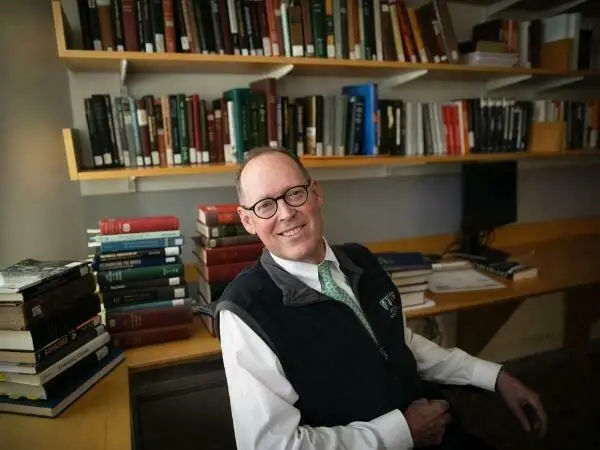
Last week, the world lost a true visionary and a wonderful human being. Paul Farmer was committed to equity in health and beyond. His life’s work served to help make this world a fairer, better place. He was a humanitarian, champion of human rights. 

He was kind and generous with his time, and fun to be around. Paul just loved people, all people, and they loved him. He was not only comfortable in settings and situations that would be out of most of our comfort zones, but he routinely sought out such situations. 

Photo courtesy of Stephanie Mitchell/Harvard University
Copyright: President and Fellows of Harvard College

I first met Paul during residency in Boston. He and Jim Kim were behind me in training, and I was in charge of scheduling internal medicine clinical rotations for the year. Paul and Jim were what we called “hemi-docs”­—the two split one internship slot so they could pursue chunks of time outside of Boston, essentially creating Partners in Health (PIH). When they came to me with requests for time off, I’d ask where they were going and what they were doing. Haiti? What in the world were they doing there? Really? I was intrigued and inspired and wanted to know more. 

I followed Paul’s career, and our paths intersected at various points along the way. After completing my fellowship training in oncology, I developed my own interests in global oncology, in part inspired by Paul. On a trip to Rwanda in 2009, I was invited to visit the PIH Rwinkwavu clinic. On the walls of the clinic, I saw the phrase “Inshuti Mu Buzima”—Friends in Life—which was how Partners in Health was known in Rwanda. During my visit a meal was served—not just to the patients, but to their families, the staff, the visiting medical students—to everyone. Paul believed that optimal health and healing for a patient could not occur without addressing food, clean water, housing, transportation, as well as the support and health of the family and community. Paul was teaching and addressing “social determinants of health” before the phrase became the buzzword that it is today. 

Although trained in anthropology and infectious disease, Paul also cared deeply about inequities he saw in cancer care and survival in low-resource settings.  In 2010, Paul was the lead author on a Call to Action published from the Global Task Force on Cancer Care and Control in Developing Countries, a group led by Felicia Knaul and the Harvard Health Equity Initiative. The paper challenged the global health community’s assumption that cancers could not be adequately treated in poor countries, noting the analogy to similar unfounded arguments against HIV treatment when skeptics argued against using anti-retroviral medications in low-resource settings in the early 1990s. The Call to Action explored how the HIV/AIDS response could provide a model for confronting the global burden of cancer, and concluded that that much could be done to prevent and treat cancer even in the most resource-constrained settings.

In 2013, at the invitation of then-President of the American Society of Clinical Oncology Sandy Swain, Paul spoke at the ASCO annual meeting opening ceremony. He spoke to a standing-room only crowd about “Building Bridges to Improve Cancer Care in the Setting of Poverty: Lessons from Haiti, Rwanda, and Malawi.” I watched that talk again this week after Paul’s death, reflecting on his enthusiasm and support for improving global cancer outcomes conveyed in his speech, and the wisdom in his words of encouragement. 

Paul challenged us to commit to serious efforts to confront the huge cancer outcomes gap in low- and middle-resource countries, calling for urgent action, and yet recognizing the challenges. He called on academic medicine to establish health equity tracks to bring oncology trainees to underserved communities, wherever they may be. Paul took aim at what he called the failure of imagining that we can’t treat cancer patients in low-resource setting, urging us to “Bring the staff and stuff and take the fight against cancer to Africa.” 

He concluded by saying that it would not be easy, but we could do it, and we needed to set high goals. “The provision of adequate health care in settings of poverty is by definition difficult, but the past two decades have taught us that setting our standards high can help bring new resources to bear on old problems.” Paul’s words continue to influence and shape our priorities and direction today—our ASCO mission statement strives for “promotion of the highest quality, equitable patient care,” and one of our four primary strategic goals is “to make a global impact.” We heard you, Paul!

In 2017, I visited the PIH Butaro District Hospital in Rwanda, an amazing facility, providing state-of-the art cancer care in a setting that could only have been achieved by dreaming big, setting the highest standards, and not listening to the skeptics. The visit focused on a project involving patient navigation, peer-to-peer support, and community engagement­—driven by an understanding that in healing the patient we must address the patient’s whole community and cultural context. 

If we had to lose Paul so soon, it is comforting to know that he died at Butaro after a week of participating in teaching and cancer rounds with medical students, in a facility, community and country that he loved, doing what he loved.

Paul Farmer inspired and influenced the entire global health community. His passion and his contributions will continue to inspire generations to come. On behalf of myself, ASCO, and the global oncology community, I commit to honoring Paul’s legacy by working to achieve equitable access to high-quality cancer prevention, diagnosis, treatment, and supportive care for everyone, no matter where they live. My thoughts are with Paul’s wife and children, his Partners in Health family, and all of those who knew and loved him around the world. 

[ad_2]

Source link

Trending Topics

Features

Download and distribute powerful vaccination QI resources for your community.

Sign up now to support health equity and sustainable health outcomes in your community.

MCED tests use a simple blood draw to screen for many kinds of cancer at once.

FYHN is a bridge connecting health information providers to BIPOC communities in a trusted environment.

Discover an honest look at our Medicare system.

ARC was launched to create a network of community clinicians to diversify and bring clinical trials to communities of color and other communities that have been underrepresented.

The single most important purpose of our healthcare system is to reduce patient risk for an acute event.

Related Posts
Cyclospora Outbreak Linked to Recalled Lettuce Sickens More Than 1,600 Across Five States
How NMQF Advances Minority Health Through Data, Research and Health Access
Early Cancer Detection Is Entering a New Era. Flint Is Helping Lead the Way.
Scroll to Top
Featured Articles
Cyclospora Outbreak Linked to Lettuce Sickens 1,600+ fyh.news
Cyclospora Outbreak Linked to Recalled Lettuce Sickens More Than 1,600 Across...
How NMQF Advances Minority Health Through Data, Research and Health Access
Early Cancer Detection Is Entering a New Era. Flint Is Helping Lead the Way.
Why Your “Ozempic” May Not Be Ozempic: FDA Warnings Highlight Growing Risks of Unregulated GLP-1 Drugs
Why Your “Ozempic” May Not Be Ozempic: FDA Warnings Highlight Growing Risks o...
The Communities Most Burdened by Disease Should Be the First to Benefit from Artificial Intelligence
The Communities Most Burdened by Disease Should Be the First to Benefit from ...
Cancer Pain Care Access Gap Hits Black, Asian Patients
Black and Asian Cancer Patients Wait Longer for Pain Relief in New Study
Categories
AI
ATTR-CM
BIPOC News
Cancer
Clinical Trials
Covid19
Diseases of the Body
Environment
Health Data
Health Equity Events
Health Policy
Health Tips
Subscribe to our newsletter to receive our latest news​
All Stories
Cyclospora Outbreak Linked to Lettuce Sickens 1,600+ fyh.news
Cyclospora Outbreak Linked to Recalled Lettuce Sickens More Than 1,600 Across...
How NMQF Advances Minority Health Through Data, Research and Health Access
Early Cancer Detection Is Entering a New Era. Flint Is Helping Lead the Way.
BIPOC News
How NMQF Advances Minority Health Through Data, Research and Health Access
Early Cancer Detection Is Entering a New Era. Flint Is Helping Lead the Way.
The Communities Most Burdened by Disease Should Be the First to Benefit from Artificial Intelligence
The Communities Most Burdened by Disease Should Be the First to Benefit from ...
Environment
UV Safety Awareness Month Raises Urgency on Skin Cancer Prevention and Sun Protection Equity
UV Safety Awareness Month Raises Urgency on Skin Cancer Prevention and Sun Pr...
Extreme Heat Safety Tips 5 Ways to Protect Your Health This Summer fyh.news
5 Heat Safety Tips That Could Protect Your Health This Summer
Lupus Awareness Event in Baltimore Aims to Support Research and Shine a Light on Health Disparities
Lupus Awareness Event in Baltimore Aims to Support Research and Shine a Light...
Work Force
A multigenerational Black and Hispanic family sitting together in a park, showing how Social Security helps support older adults, people with disabilities, and families across generations.
Millions of Older Americans Could Face Smaller Social Security Checks by 2032...
dreamstime_s_243253251
The Caregiver Journey: The Hidden Backbone of American Healthcare
Families gather at a Bronx community festival with live music, kids’ activities, and health booths sharing SOMOS social care resources and free screenings.
Celebrating Hispanic heritage while learning about health care

[xyz-ips snippet=”Output-Source-Name”]

Clinical Trials
Early Cancer Detection Is Entering a New Era. Flint Is Helping Lead the Way.
Why Your “Ozempic” May Not Be Ozempic: FDA Warnings Highlight Growing Risks of Unregulated GLP-1 Drugs
Why Your “Ozempic” May Not Be Ozempic: FDA Warnings Highlight Growing Risks o...
Clinical Trial Diversity Remains a Critical Challenge in Alzheimer’s Research
Vaccines and Outbreaks
Cyclospora Outbreak Linked to Lettuce Sickens 1,600+ fyh.news
Cyclospora Outbreak Linked to Recalled Lettuce Sickens More Than 1,600 Across...
A parent checking a child's temperature during summer, illustrating the changing RSV patterns and year-round respiratory virus risks.
Can You Get RSV During the Summer?
Michelle Lam, MBA, of NYC Health + Hospitals/Elmhurst & Amy Harris of NYC Health + Hospitals/Elmhurst
Healthcare Leaders Spotlight Vaccine Equity and Adult Immunization Strategies...
Other Categories
AI
Read the latest AI News stories trending around the world
ATTR-CM
Cancer
Read the latest Cancer stories trending around the world
Covid19
Diseases of the Body
Read about the latest Diseases of the Body trending around the world
Friday Webinars
Every Friday, we bring you insightful webinars covering critical topics in healthcare, data equity, and policy reform.
Health Data
Read the latest Health Data stories trending around the world
Health Equity Events
Read the best Health Equity Events around the country.
Health Policy
Read the latest Health Policy stories trending around the world
Health Tips
Heart Health
Read the latest on Heart Health News, Stories and Tips.
kidney Health
Read more trending News about Kidney Health, Stories and Tips.