










[ad_1]
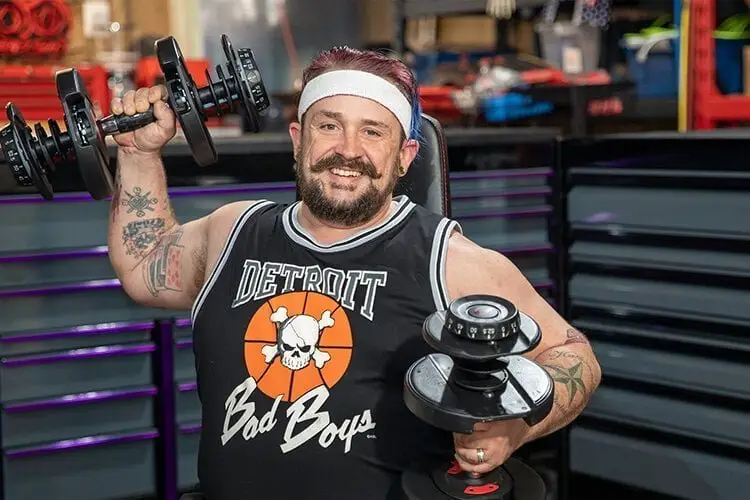
15 years ago, Miller, a 22-year-old mechanic at the time, found out that he had a torn labrum in both shoulders. Based on his age and treatment options, it was recommended that he undergo labral repair surgery which would have kept him out of work for at least seven months.
“I started looking into other ways to deal with it, so I went to weightlifting and tried to strengthen all the muscles around the injury so that I had more support,” Miller says.
He managed his pain this way for years until he became a business owner four years ago and was no longer able to put in as much time at the gym.
“The pain came back with a vengeance,” Miller says. “I drive a big 22-foot box truck and it became hard to steer the truck. Putting on a shirt was horrible, sleeping at night — anything where I had to rotate my shoulder was just excruciating. It’s been absolutely horrible on my mental health as well.”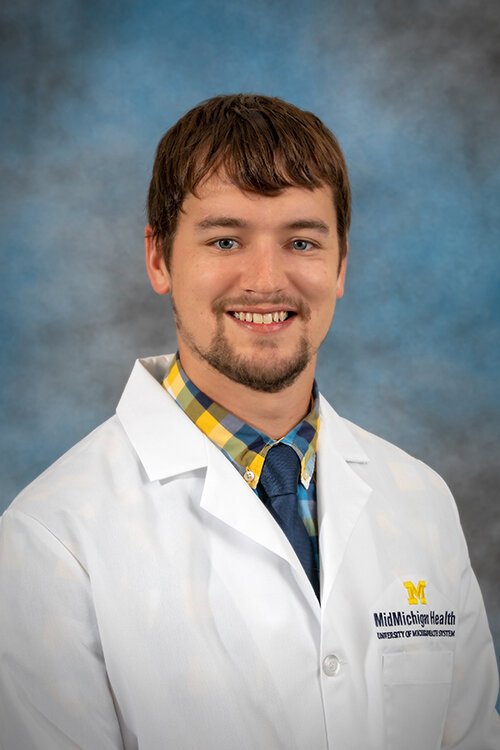 A.J. Pinney, D.O., non-surgical sports medicine specialist with MyMichigan Health
His family’s physician referred Miller to A.J. Pinney, D.O., a non-surgical sports medicine specialist with MyMichigan Health who spoke to him about platelet-rich plasma (PRP) therapy or PRP treatment.
The treatment is a form of regenerative medicine that uses an injection of concentrated growth factors derived from the patient’s own blood cells, or platelets, to encourage healing in damaged tissue such as muscles and ligaments.
“Cartilage has a poor blood supply so we know it has difficulty already trying to heal itself,” Dr. Pinney says. “In many cases, the role of the injection is to signal to the body that there is damage and decrease inflammation of the areas so that the patient can be significantly more functional.”
Other than some initial soreness, Miller was able to continue working and says the procedure for his one-time injection took less than an hour. According to Dr. Pinney, Miller was able to return to full activity after eight weeks.
“In my opinion, it’s nothing short of a miracle. I didn’t have to have the surgery and a lot of the technicians and other people that I know of that have had the surgery done, not only are they out for a long time, but they still feel the pain and have a limited range of motion,” Miller says. “I didn’t have to go through any of that and I can use my shoulder confidently 100% every day — the pain is just gone.”
Miller says he’s glad that the worked for him, but he empathizes with others struggling with this pain.
“I know how debilitating it can be,” he says. “I service the same community that I live in and I see mechanics every day deal with this pain under the same assumption that I did, that their only recourse is surgery. If there’s an option like this out there available, more people should know about it.”
To learn more about PRP treatment, visit mymichigan.org/prp.
[ad_2]
Source link