











[ad_1]
It is a stark statistic — according to the Centers for Disease Control and Prevention, the U.S. maternal mortality rate jumped in 2020 with the biggest increases seen in Black and Hispanic women.The death rate for Black women was almost three times higher than for white women.Experts said that continues a decades-long trend that disproportionately affects Black people, according to the recent CDC report.| PDF: Read the full CDC report here”The rate of maternal mortality for Black women is about three times the rate of white women in the United States and that gap has widened a little bit,” University of Maryland Medical Center OBGYN Dr. Doee Kitessa said.According to the CDC, overall, in 2020, there were almost 24 deaths per 100,000 births, or 861 deaths total — numbers that reflect mothers dying during pregnancy, childbirth or the year after. Among Blacks, there were 55 maternal deaths per 100,000 births — almost triple the rate for whites. Kitessa said there are many reasons for the disparity.”One is structural racism that exists in the United States and everywhere and it’s not absent in health care either. Unconscious bias that exists as well and in health care and interactions with health care providers and patients,” she said.Kitessa said that determines how women are treated in pregnancy. One of the major causes of maternal mortality in the U.S. is hypertension and complications from it.”Also, substance use in pregnancy and in the postpartum period, so substance use disorder is another factor — a major factor in the state of Maryland. Most of the maternal deaths were due to substance use disorder,” Kitessa said.Kitessa said the health care industry needs to reflect on unconscious bias and make sure it’s discussed in medical education.”Black women need to feel comfortable with their OBGYN provider and it’s important to ask questions where you feel comfortable with your care with how you’re being treated to keep yourself safe,” she said.Kitessa said there are many choices out there for those who don’t feel comfortable with their physician and need to make changes.
It is a stark statistic — according to the Centers for Disease Control and Prevention, the U.S. maternal mortality rate jumped in 2020 with the biggest increases seen in Black and Hispanic women.
The death rate for Black women was almost three times higher than for white women.
Experts said that continues a decades-long trend that disproportionately affects Black people, according to the recent CDC report.
| PDF: Read the full CDC report here
“The rate of maternal mortality for Black women is about three times the rate of white women in the United States and that gap has widened a little bit,” University of Maryland Medical Center OBGYN Dr. Doee Kitessa said.
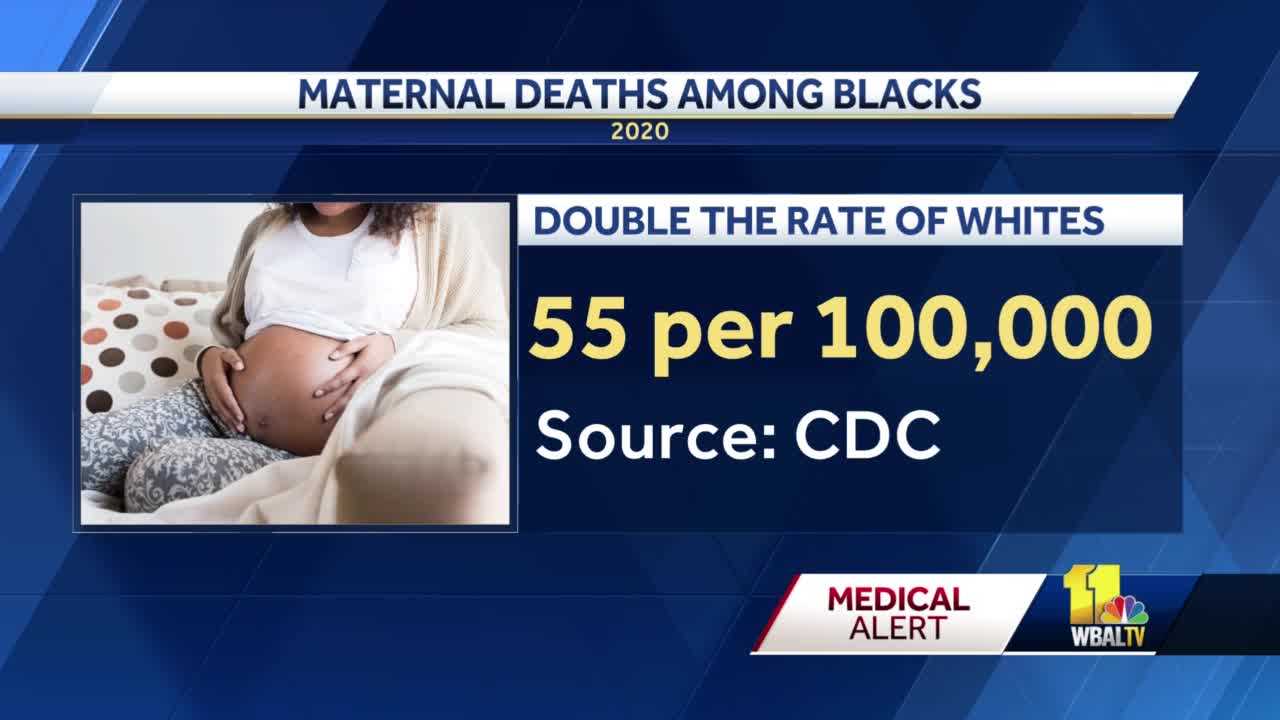
According to the CDC, overall, in 2020, there were almost 24 deaths per 100,000 births, or 861 deaths total — numbers that reflect mothers dying during pregnancy, childbirth or the year after. Among Blacks, there were 55 maternal deaths per 100,000 births — almost triple the rate for whites.
Kitessa said there are many reasons for the disparity.
“One is structural racism that exists in the United States and everywhere and it’s not absent in health care either. Unconscious bias that exists as well and in health care and interactions with health care providers and patients,” she said.
Kitessa said that determines how women are treated in pregnancy. One of the major causes of maternal mortality in the U.S. is hypertension and complications from it.
“Also, substance use in pregnancy and in the postpartum period, so substance use disorder is another factor — a major factor in the state of Maryland. Most of the maternal deaths were due to substance use disorder,” Kitessa said.
Kitessa said the health care industry needs to reflect on unconscious bias and make sure it’s discussed in medical education.
“Black women need to feel comfortable with their OBGYN provider and it’s important to ask questions where you feel comfortable with your care with how you’re being treated to keep yourself safe,” she said.
Kitessa said there are many choices out there for those who don’t feel comfortable with their physician and need to make changes.
[ad_2]
Source link