








- By FYH News Team
[ad_1]
One of the primary goals of the ECOG-ACRIN Health Equity Committee is to continue addressing disparities that limit the representation of minority populations in cancer clinical trials.
One of the primary goals of the ECOG-ACRIN Health Equity Committee is to continue addressing disparities that limit the representation of minority populations in cancer clinical trials, according to Edith P. Mitchell, MD, MACP, FCPP, FRCS.
Data from a 2019 study showed there is limited understanding of the impact of race on the efficacy of approved immunotherapy agents because of the disappointingly low number of ethnic and minority patients enrolled on pivotal trials that led to drug approval.1 Those gaps in enrollment limit the understanding of real-world applications of drugs used in clinical trials, Mitchell said.
“African Americans have the highest rates of cancer mortality [compared with] any other group in the country. [It is important to] evaluate and contribute information to other groups regarding specific cancers,” Mitchell said. “For example, for Native Americans, there is a higher incidence of liver cancer and hepatocellular carcinomas. It is [about] understanding all of the groups so that we are incorporating those factors into our clinical trials during their development.”
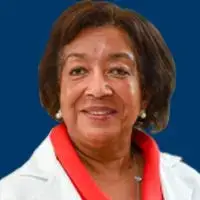
In an interview with OncLive®, Mitchell, clinical professor, director, Center to Eliminate Cancer Disparities, program leader, Gastrointestinal Oncology, Sidney Kimmel Medical College, Thomas Jefferson University; and co-chair, Health Equity Committee, ECOG-ACRIN, discussed current efforts being made to improve equity in clinical trial enrollment within oncology and other objectives to aid underrepresented patients and doctors in the cancer field.
OncLive®: What is being done to address disparities in clinical trial enrollment?
Mitchell: The Health Equity Committee of ECOG-ACRIN addresses cancer in many different areas. One area is education of our clinicians and practitioners, as well as researchers, to include minority communities as a part of the research. With that, the executive committee of ECOG-ACRIN has unanimously supported our recommendations regarding [the development of] clinical trials and the input of individuals who are experts in understanding disparities in communities. That has been weaved into every committee, the clinical research that is ongoing, and the clinical trials. It is [about] understanding those racial and ethnic groups, and the contributing factors to higher mortality rates, especially in African American populations.
African Americans have the highest rates of cancer mortality [compared with] any other group in the country. [It is important to] evaluate and contribute information to other groups regarding specific cancers. For example, for Native Americans, there is a higher incidence of liver cancer and hepatocellular carcinomas. It is understanding all the groups so that we are incorporating those factors into our clinical trials during their development.
We also have our advocacy groups. Advocacy groups understand their respective communities and the contributing factors and barriers to cancer diagnosis and treatment, as well as cancer prevention. Therefore, we are incorporating this [knowledge] into our clinical trials. Another is education of the practitioner, such that we are educating our clinicians and researchers on aspects of understanding clinical trials, understanding the research, and understanding our own biases that may be contributing factors to understanding people [in general] and minority communities.
[We are also] educating those individuals who are part of the clinical trials process so that we all understand not only general barriers, but [also] barriers that may be in a single city or other areas throughout the country, making sure that we understand those barriers in center cities, as well as rural areas. We are trying to ensure that we give the advantages of cancer research to all communities. We have had a special program on genetics of cancer for clinicians and practitioners, as well as other members of the health care team.
How do you reach individuals who are interested in careers in either clinical oncology or cancer research?
The Accreditation Council for Graduate Medical Education and the Association of American Medical College on Education have shown that if we look at [the past] several decades, there has been no or little change in the number of practicing clinicians who are members of racial and ethnic groups. While we think about, for example, that African Americans account for approximately 13% of the population of the United States, yet for practicing clinicians, Blacks only account for a little less than 5%. Those numbers have not changed substantially over several decades, and therefore, efforts to increase the number of physicians entering careers in medicine, cancer medicine, or cancer research is a very important part of what ECOG-ACRIN has done.
What research is happening right now regarding health care equity?
Much of my efforts recently have been [dedicated to] increasing [awareness of] screening for cancer, especially in disparate populations. As I talk around the country, [it is evident that there] has been a lack of cancer screening, especially lung cancer screening. Lung cancer screening has been our latest of the screening modalities [that have emerged] for various cancers; however, many people do not know about it since they will have graduated from their medical training prior to the event and establishment of low-dose CT scan for this disease. [This effort] has included informing and educating clinicians on the process for lung cancer screening and ensuring that our populations understand that if someone is at a higher risk for development of lung cancer, they have the resources to enter screening programs.
I have also been interested in the history of medicine and giving the information to my colleagues and others around the country regarding the culture within the United States, and how in medical education, the culture has permitted the low levels of minority physicians. Many of us do not understand how the 1910 Flexner Report affected the culture of medicine in this country. It is not recognized or promoted that the 1910 Flexner Report decreased the number of Black doctors in this country, as well as the opportunities for Black doctors. That has affected the overall health care of Black individuals in this country.
Many doctors practice in areas where they grew up or in nearby areas. Consequently, that has had a negative effect on Black health care in this country. We all must accept the responsibility, develop methods to address those issues, collaborate, and work together to fix the issues. We need to fix our health care systems, fix our medical schools, so that more individuals from minority communities are admitted to medical school and play a role in health care in this country.
What would you tell other clinicians or institutions in terms of what they can do to help address these disparities?
We have got to educate our clinicians, our communities, and take care of our patients. [We must] develop both basic research and clinical research entities that affect our patients, ensure that we have management [that allows us] to compile data and put it in a format that is usable. [We must use] all this information to focus on our patient populations, ensuring that we are including all individuals equally in the research process, and therefore, increasing the number of minority patients into our research.
If we understand the health care system, how many individuals are excluded and not a part of the equity, and we all collaborate to ensure that all members of the American society have access to the American dream. Of course, when we think about Martin Luther King Day, we think about what he said:
that of all the disparities, disparities in health care are the most inhumane. If we can think about that and think about how we can all play a role in addressing that statement, we can all work together in this country to fix health care disparities, and ensure that all members of our society have equity in reaching health care, delivery, and access to care.
References
- Nazha B, Mishra M, Pentz R, Owonikoko TK. Enrollment of racial minorities in clinical trials: old problem assumes new urgency in the age of immunotherapy. Am Soc Clin Oncol Educ Book. 2019;39:3-10. doi:10.1200/EDBK_100021
[ad_2]
Source link
Trending Topics

Features
- Drive Toolkit
Download and distribute powerful vaccination QI resources for your community.
- Health Champions
Sign up now to support health equity and sustainable health outcomes in your community.
- Cancer Early Detection
MCED tests use a simple blood draw to screen for many kinds of cancer at once.
- PR
FYHN is a bridge connecting health information providers to BIPOC communities in a trusted environment.
- Medicare
Discover an honest look at our Medicare system.
- Alliance for Representative Clinical Trials
ARC was launched to create a network of community clinicians to diversify and bring clinical trials to communities of color and other communities that have been underrepresented.
- Reducing Patient Risk
The single most important purpose of our healthcare system is to reduce patient risk for an acute event.
- Jessica Wilson
- Jessica Wilson
- Jessica Wilson