










[ad_1]

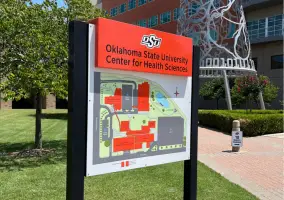
The U.S. Department of Health and Human Services awarded $10 million over five years to OSU’s Center for Health Sciences to address Indigenous health disparities and advance equity.
OSU and the University of Hawai’i were awarded the grant, and they work as partners under the department’s Center for Indigenous Innovation and Health Equity. Valarie Blue Bird Jernigan, OSU’s Center for Indigenous Health Research and Policy director, said the center was established in 2021 through a cross-cultural learning exchange between Oklahoma, Hawaii and New Zealand Indigenous populations.
“We met together in Hawaii, and we looked at similar themes that were prevalent across all of these communities. … And we looked at ways that we can intervene that were culturally centered, and that involved getting better access to healthy foods, and healthy fruits and vegetables in these populations,” Jernigan said.
The grant will help both universities continue evaluating culturally appropriate approaches through local partnerships to reduce and eliminate Indigenous health disparities.
Jernigan said Oklahoma Indigenous populations experience significant health disparities with higher cardiovascular disease risks, rates of obesity and hypertension, and limited access to healthy food sources. She said the award will help them improve these disparities.
One example of OSU’s local partnerships includes the Choctaw Nation’s Growing Hope program. Jernigan said this helps distribute heirloom seeds which were carried over as a part of the Trail of Tears to tribal members. The program also helps members develop their own gardens and provides cooking demonstrations and techniques for food preservation and storage.
“Native women actually sowed the seeds into their dresses and carried them from the eastern part of the U.S. during the Trail of Tears to what is now Oklahoma, the new homeland, and the stories of those seeds and the families who have them over the generations are included in the program,” Jernigan said.
OSU’s Center for Indigenous Health Research and Policy is looking into the outcomes of this program.
“Does it improve blood pressure? Does it improve dietary intake if you’re a diabetic? Does it improve your hemoglobin A1C?” Jernigan said. “We expect to see positive outcomes from all of those clinical measures, as well as cultural connectedness, transmission of knowledge across generations and improved overall well being.”
Jernigan said the most effective intervention science occurs when communities are involved at every level. The Center for Indigenous Health Research and Policy supports communities by helping them structure their research questions and conduct evaluations in partnerships.
The grant supports that mission, Jernigan said.
“I think people are recognizing that these Indigenous cultures that have been sustained over time have a lot of pragmatic knowledge that we haven’t really tapped into, and so this grant really supports and elevates that at a very high national level,” Jernigan said.
[ad_2]
Source link