









📢 Axios Latino is the newsletter that summarizes every Tuesday and Thursday the key news for Latino communities throughout the hemisphere. You can subscribe by clicking here.
1. The Theme to Highlight: A Push to Get Environmental Funds to Those Who Need Them
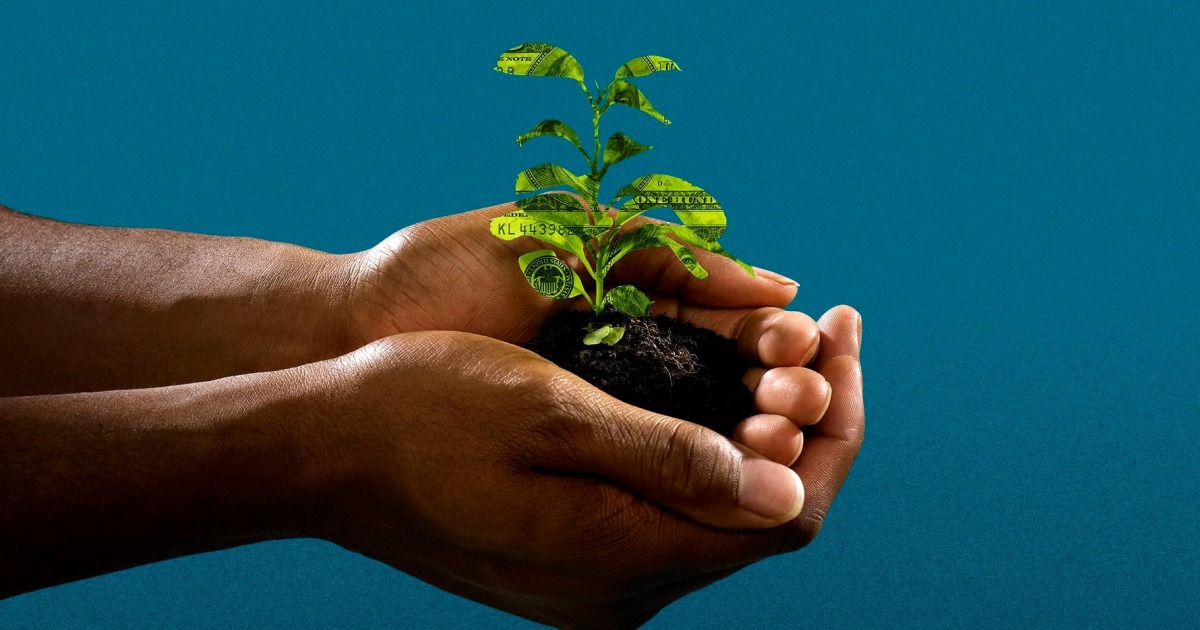
Community-based organizations in the U.S. that serve or are led by Latino, Black, Indigenous, or Asian people have been joining forces, seeking to secure some of the billions in federal funds designed to mitigate the effects of climate change and empower diverse people in the face of potential environmental disasters.
Why it matters: These demographics tend to be more affected by weather and pollution, according to studies.
- However, several organizations criticize that, until now, many of the funds intended for climate resilience strategies or cleanup of areas affected by pollution have been allocated to large national organizations when they would be most useful to groups at the community level.
Context: The U.S. federal government has created special environmental funds in recent years. For example, this year, the Inflation Reduction Act set aside $27 billion for grants to groups fighting the effects of greenhouse gases, to be awarded through the Environmental Protection Agency (EPA).
- In many cases, however, it is too difficult for community organizations to access these funds because the process takes time and resources that grassroots groups don’t always have, says Sharon H. Chen, a member of the Front and Centered coalition. This collective, in Washington state, works to highlight disparities in climate impacts in diverse communities and in favor of climate justice.
- Chen adds that even if community groups do manage to access a federal grant, sometimes that means making the initial expenses and having the grant serve as reimbursement. Many environmental justice organizations don’t have the budgets for it, she adds.
What’s going on: In response, a number of nonprofit or advocacy groups are joining forces to collectively improve their access to federal funds.
- Earlier this year, several came together to launch the Justice Climate Fund, which they say is the first-of-its-kind coalition for grassroots organizations to secure EPA grants.
- On the government side, Joe Biden’s administration also created a program for local and community organizations to support each other to share the funding. The Front and Centered group where Chen works serves as one of those grantmaker-type agencies.
Closely: Cynthia Torres, director for resource and development issues at the group Affordable Homes of South Texas, tells Axios Latino that her organization is getting help through grantmakers like this. In the case of Affordable Homes, access to funds is through the National Association for Latino Community Asset Builders (nicknamed NALAB, which stands for National Association of Latino Community Asset Builders); NALCAB is part of the Justice Climate Fund.
Illustration: Allie Carl/Axios
- Affordable Homes of South Texas is using the money to install energy-efficient appliances and solar panels on homes being built or renovated with the organization’s support.
- The group also provides mortgage loans and financial counseling to low-income families in McAllen, Texas. That city is majority-Hispanic and, like many cities in the U.S., affordable housing is in short supply.
- Many of the families supported by Affordable Homes of South Texas “live in substandard conditions,” says Cynthia Torres.
- “Some don’t have the money to pay for electricity… So it sounds far-fetched to talk to them about solar panels on the roof or something like that, because they can’t afford to imagine that they will be able to afford it,” he adds. With access to federal funds, it is more possible for the organization to ensure that these families do have renewable energy tools like this, with which they could also access special tax credits.
2. What the drought laid bare
Brazil’s Amazon region is experiencing an unprecedented drought, which has also uncovered archaeological sites not seen in years or never before.
Overview: Rivers in the Brazilian Amazon are at their lowest point in 120 years. At least three new archaeological sites have been found in recent weeks, and many new petroglyphs have been exposed at a site previously sighted in 2010, according to Brazil’s National Institute of Historical and Artistic Heritage.
- At the sites there are rock carvings from centuries ago, some of which depict people (usually in the area there had been more representations of animals), as well as funerary urns with ceramics.
- The drought, however, has had an immense impact on marine life — with several species dying — and on the local economy.
An archaeologist points to one of the rock carvings on stones spotted by the drought at the site of Ponte das Lajes, in Manaus, BrazilMichael Dantas/AFP via Getty Images
Details: The findings open the door for archaeologists in Brazil to have greater clarity about the populations that have been in the area for thousands of years.
- By being able to see the engravings on the stones and other elements usually underwater, it is possible to study how the groups that have populated parts of the Amazon moved from place to place or adapted centuries ago to the flows of water, archaeologist Claide de Paula Moraes tells the Brazilian media UOL.
- “It points to the fact that there were large human settlements around the year 1000 and that after that there were greater difficulties in maintaining their way of life” in the face of droughts or rising water levels, says De Paula Moraes.
- Another archaeologist, Filippo Stampanoni Bassi of the Museum of the Amazon in Manaus, told UOL that changes in river currents and depths have become much more frequent in modern times, making the area less habitable.
Between the lines: The worst of Brazil’s dry season usually ends in October, but this time it has been prolonged due to the impacts of the climate emergency, deforestation and the El Niño phenomenon.
3. Fewer Latinas own their own homes
Latina women in the U.S. who live alone have the lowest rates of real estate ownership of any demographic group in the U.S.
- Experts tell Astrid that it’s probably because those women often have jobs that companies pay poorly, and that better regulation of the housing market is needed to even the playing field.
Overview: Owning a home is considered a way to prosper financially. Not being able to afford it often pushes people to rent when rents have skyrocketed in many U.S. cities.
In her own words: “Before the COVID-19 pandemic and the economic downturn that came with it, Black and Latina women [in the U.S.] were already facing insecurity in terms of access to housing. That was compounded by the circumstances, and the recovery since then has not been equitable,” says Sarah Hassmer, director for housing issues at the NWLC.
Illustration: Allie Carl/Axios
- Hassmer says a Latina woman in the U.S. is less likely to have generational wealth (e.g., savings or inheritances) and the jobs they do are often underpaid by employers, making it harder for those Latinas to make down payments to make a mortgage more bearable.
- There have been poorly regulated credit bureau practices that have disproportionately given Black and Latina women subprime mortgages, Hassmer says. Those mortgages, called subprime mortgages, have higher interest rates and during the 2008 financial crisis were the ones that caused many people to be evicted for mortgage defaults.
- Hassmer says it would help to have a more equitable plan if there were better assistance programs for those who are going to buy a home for the first time or will be the first in their family to buy a home, such as support to make the down payment. He says other programs would also help, such as enabling rent-to-own or acquiring land in community land trusts
By the numbers: 39% of single and single Latina women in the U.S. owned a home in 2021, according to data released last week by the National Women’s Law Center (NWLC). In contrast, 62% of single non-Hispanic white women living alone owned their homes in that same year.
- Real estate ownership rates for non-Hispanic black women were 37% and 52% for women of Native or Indigenous descent and for those of Asian or Pacific descent. On average, 54% of all single women living alone in the United States in 2021 owned their home.
- The average for single non-Hispanic white men was 57% in that same year.
Yes, but: Overall, for the U.S. Latino population, homeownership rates have been rising since 2008, according to Orlando Camargo, spokesman for the National Association of Hispanic Real Estate Professionals (NAHREP).
- For example, in 2022 there were on average 349,000 more Latino homeowners, one of the steepest annual increases in a decade, according to NAHREP.
- As of September 2023, the homeownership rate among Latinos was 49%, according to data from the Census Bureau.
4. Roundup of key news from Latin America and the Caribbean
1. Colombian President Gustavo Petro announced that he will travel this week to the Asia-Pacific Economic Cooperation (APEC) summit to seek his country’s inclusion in the group.
- The annual summit was hosted this year in San Francisco hosted by U.S. President Joe Biden and will take place on Thursday and Friday. It will include face-to-face meetings, including one between Biden and Mexico’s Andrés Manuel López Obrador.
- Mexico, Peru and Chile already belong to APEC, although the group has not accepted new members for more than two decades.
2. Ociel Baena, who was the first person in Mexico to be issued a passport with a non-binary gender designation and served as an electoral judge, died yesterday at his home.
- Authorities say Baena was having knife cuts, and Baena a few months ago had said he was receiving threats for his advocacy for LGBTQ+ rights, which some observers say points to a possible hate crime.
- It has not been confirmed by the authorities that this is the case. Mexico doesn’t have official statistics, but a tally by the nonprofit Letra Ese found that an average of seven LGBTQ+ people were killed in the country each month in 2022.
3. The legalization of euthanasia will be debated in Ecuador’s Constitutional Court starting next week, based on the case of a woman with a serious degenerative disease.
- The discussion around “right to die” laws has been growing in Latin America over the past two years.
5. Farewell Smile: Historical Barter
Those looking for commodities in this special market in the State of Mexico don’t need to worry about having cash.
Details: The Santiago Tianguistengo market preserves the pre-Hispanic legacy of barter trade.
- People who would otherwise struggle to acquire fresh produce can get it there in exchange for firewood, soap, hand-woven clothing, and more.
- That market has been listed by Mexican authorities as one of the oldest barter markets to continue operating.
Thanks for reading! We came back on Thursday.
If you would like to share your experiences with us or send us suggestions and comments, please send an email to axioslatino@axios.com.
Do you want to read any of the previous editions?
How Bad Bunny’s Success Spurs U.S. Audiences to Explore More Latin Genres and Artists
“Colonized People”: What Explains Broad Support for Palestinians in Latin America
Artificial intelligence is ‘learning’ to use Spanish