













[ad_1]
As clinical evidence supporting the therapeutic potential of psilocybin continues to grow, efforts are underway to understand how this treatment could be delivered equitably—particularly to underserved communities grappling with mental health challenges and substance use disorders. One such initiative involves a partnership between Compass Pathways and HealthPort, a Maryland-based integrated community health organization, to explore real-world implementation strategies for psilocybin-assisted therapy (PAT) if approved by regulators.1 This work underscores the urgent need to ensure that access to novel therapies doesn’t leave behind the communities that need them most.
Mental Health Advancements and Underserved Populations
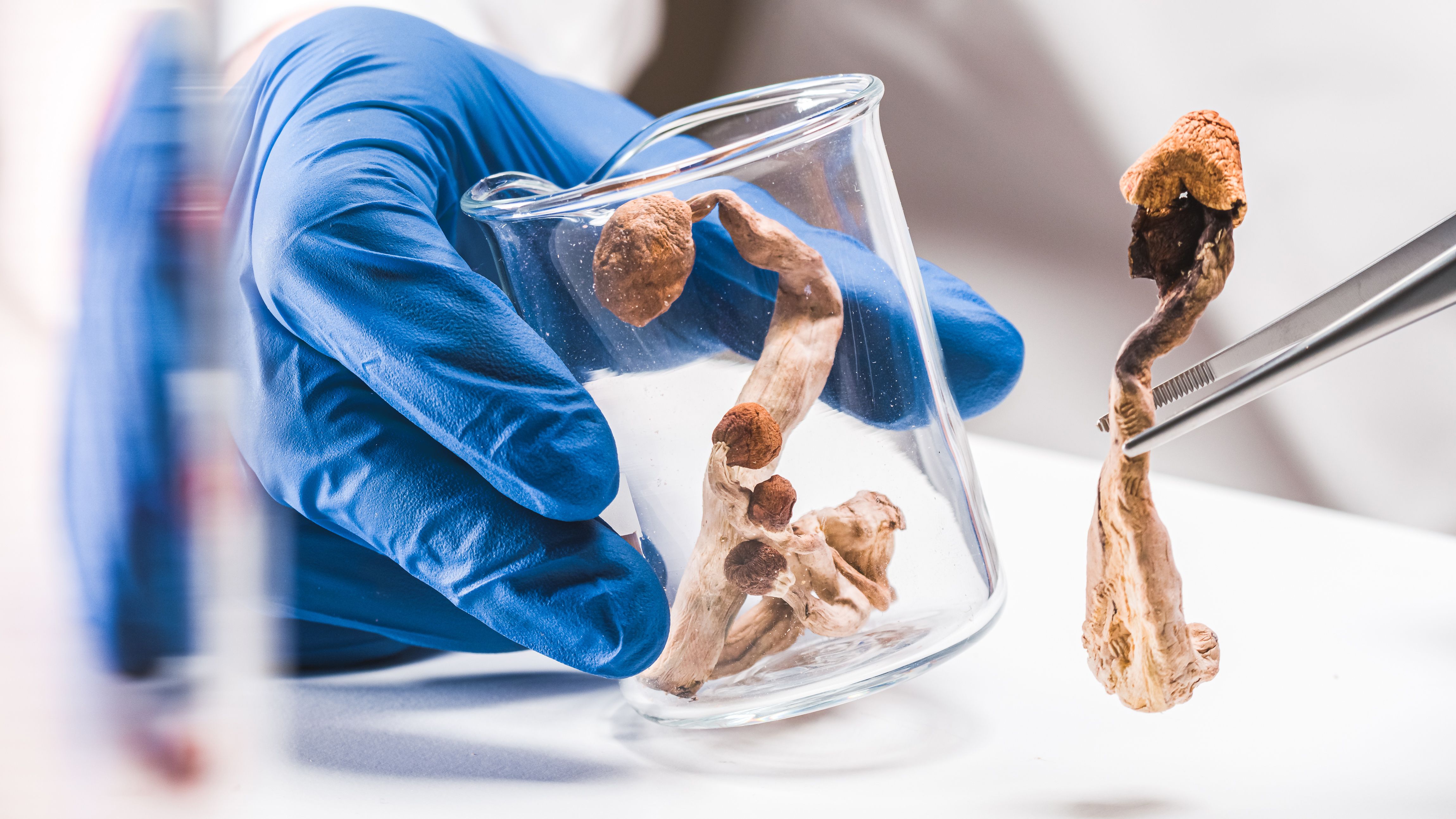
Psilocybin research in a laboratory. Image Credit: © 24K-Production – stock.adobe.com
Recent research highlights psilocybin’s promise in addressing severe and persistent mental health conditions. In a 2024 Nature Mental Health study involving cancer patients experiencing anxiety, depression, OCD, paranoia, and psychosis, those who received psilocybin paired with psychotherapy reported substantial and lasting improvements across multiple symptom areas. Six months after treatment, patients continued to show reduced anxiety, depression, hostility, and interpersonal distress, with no persistent adverse effects. These benefits were consistent across 2 randomized, placebo-controlled trials.2
In addition, a 2024 American Journal of Psychiatry study found that psilocybin-assisted therapy for alcohol use disorder resulted in measurable and enduring personality shifts. Patients who received psilocybin showed reduced neuroticism and impulsiveness—traits strongly linked to relapse risk—and increased openness and extraversion. Notably, decreases in impulsiveness were associated with lower post-treatment alcohol consumption, indicating a possible mechanism for lasting behavioral change.3
These studies suggest that psilocybin can offer more than symptom management: It may catalyze deep psychological transformation, particularly when combined with psychotherapeutic support. For historically underserved populations, who may be burdened by trauma, chronic stress, and limited access to effective behavioral health care, this therapeutic approach could represent a meaningful shift in outcomes.
Addressing the Opioid Crisis Through Innovation
The opioid epidemic continues to devastate communities across the United States. In 2020 alone, the economic impact of the crisis was estimated at nearly $1.5 trillion, a 37% increase from 2017.4,5 When accounting for the full value of lives lost to overdose, some estimates suggest the annual cost could exceed $500 billion—approximately 2% of the US gross domestic product.5 Many of the hardest-hit regions are also those with limited access to comprehensive behavioral health care, creating a compounding public health crisis.
While traditional opioid use disorder (OUD) treatments such as methadone, buprenorphine, and naltrexone remain essential, they are not universally effective.6 Relapse rates remain high, and access barriers persist—especially for people who inject drugs, individuals with co-occurring mental health conditions, or those in rural or economically disadvantaged areas. For these populations, new treatment models that integrate both neurobiological and psychosocial healing are urgently needed.6,7
Psilocybin’s mechanism of action—thought to involve serotonin receptor modulation and promotion of neuroplasticity—may offer a unique pathway for disrupting entrenched addiction patterns.8 Early research suggests it can reduce cravings, mitigate withdrawal symptoms, and support emotional processing through structured therapy.6,7 While research on psilocybin for OUD is still in early stages, its potential to fill critical gaps in treatment is being closely studied.9
Equitable Access: From Policy to Practice
Ensuring equitable access to psilocybin therapy means addressing not only affordability and insurance coverage, but also cultural, geographic, and systemic barriers to care. Community-based models—particularly those embedded within integrated health systems serving Medicaid and uninsured populations—are likely to be essential for delivering PAT where it’s needed most.1
Psilocybe cubensis mushrooms growing on mycelium. Image Credit: © mindhive – stock.adobe.com

This includes investing in workforce development to train culturally competent psychedelic therapists, ensuring safe and regulated treatment settings, and fostering trust in historically marginalized communities who may be wary of experimental treatments.1,9,10 Policymakers must also grapple with the implications of federal drug scheduling and state-level reforms to prevent uneven access as psilocybin moves closer to broader clinical use.9,10
Importantly, psilocybin is already legally accessible in Oregon and Colorado through ballot measures, and New Mexico recently became the third state to authorize regulated access via legislative action.9,11 Meanwhile, over two dozen US cities have decriminalized psilocybin, raising the likelihood that patients will seek psilocybin outside of formal medical systems. Health care providers, including pharmacists, will increasingly be asked to provide guidance—even in the absence of FDA approval.9
The Role of Pharmacists and Interdisciplinary Collaboration
Pharmacists, as accessible medication experts, have a vital role to play in ensuring the safe and ethical use of psilocybin in clinical settings. This includes helping develop evidence-based treatment protocols, managing medication interactions, and supporting patients transitioning from traditional pharmacotherapies to psychedelic-assisted care. Organizations such as the Psychedelic Pharmacists Association are advocating for pharmacist inclusion in policy discussions and providing resources for those interested in contributing to this emerging field.
Interdisciplinary collaboration between pharmacists, mental health professionals, addiction specialists, and community organizations will be crucial to building effective care models. By working together, these stakeholders can design holistic treatment pathways that reflect the realities of patients’ lives, especially in communities facing overlapping challenges of poverty, systemic discrimination, and health care inaccessibility.1,9
Looking Ahead
As the science behind psilocybin matures, health equity will become increasingly critical. The opportunity for this novel therapeutic approach to address complex conditions, such as depression, anxiety, alcohol dependence, and OUD, has the potential to benefit a significant number of individuals in the US, but it will be important to ensure that access is made available regardless of wealth, privilege, or geographic proximity to major medical centers.
REFERENCES
-
Compass Pathways Establishes Strategic Collaboration with HealthPort to Inform the Potential Delivery of COMP360 Synthesized Psilocybin Treatment in Underserved Communities. April 29, 2025. Accessed May 1, 2025. https://www.businesswire.com/news/home/20250429198140/en/Compass-Pathways-Establishes-Strategic-Collaboration-with-HealthPort-to-Inform-the-Potential-Delivery-of-COMP360-Synthesized-Psilocybin-Treatment-in-Underserved-Communities
-
Petridis PD, Grinband J, Agin-Liebes G, et al. Psilocybin-assisted psychotherapy improves psychiatric symptoms across multiple dimensions in patients with cancer. Nat. Mental Health 2024;2:1408–1414. doi:10.1038/s44220-024-00331-0
-
Vanderijst L, Hever F, Buot A, et al. Psilocybin-assisted therapy for severe alcohol use disorder: protocol for a double-blind, randomized, placebo-controlled, 7-month parallel-group phase II superiority trial. BMC Psychiatry. 2024;24(1):77. Published 2024 Jan 26. doi:10.1186/s12888-024-05502-y
-
The Opioid Crisis: Protecting Medicaid Members. AmeriHealth Caritas; 2019. Accessed March 15, 2025. https://www.amerihealthcaritas.com/assets/pdf/the-opioid-crisis-protecting-medicaid-members.pdf
-
The economic toll of the opioid crisis reached nearly $1.5 trillion in 2020. Joint Economic Committee. 2022. Accessed March 15, 2025. https://www.jec.senate.gov/public/_cache/files/67bced7f-4232-40ea-9263-f033d280c567/jec-cost-of-opioids-issue-brief.pdf
-
Treatment of opioid use disorder. CDC. August 12, 2024. Accessed March 13, 2025. https://www.cdc.gov/overdose-prevention/treatment/opioid-use-disorder.html
-
Nunes EV, Gordon M, Friedmann PD, et al. Relapse to opioid use disorder after inpatient treatment: protective effect of injection naltrexone. J Subst Abuse Treat. 2018;85:49-55. doi:10.1016/j.jsat.2017.04.016
-
Smausz R, Neill J, Gigg J. Neural mechanisms underlying psilocybin’s therapeutic potential – the need for preclinical in vivo electrophysiology. J Psychopharmacol. 2022;36(7):781-793. doi:10.1177/02698811221092508
-
Kimble C, Coustasse A. The Promise of Psilocybin-Assisted Therapy for Opioid Use Disorder. Pharmacy Practice in Focus: Health Systems. May 2025.
-
Halpern L, Hippensteele A. MDMA Rejected: The Story of a Study Participant Entrenched in Ethical Violations. Pharmacy Practice in Focus: Health Systems. Updated March 18, 2025. Accessed May 1, 2025. https://www.pharmacytimes.com/view/mdma-rejected-the-story-of-a-study-participant-entrenched-in-ethical-violations-and-a-data-breach
-
Breaking: New Mexico passes nation’s first legislature-driven psilocybin access act. Psychedelic Alpha. April 8, 2025. Accessed April 14, 2025. https://psychedelicalpha.com/news/breaking-new-mexico-passes-nations-first-legislature-driven-psilocybin-access-act
[ad_2]




