








- By FYH News Team
[ad_1]
Guest post by Patrick Williams, PhD
AACR Scientific Research Analyst
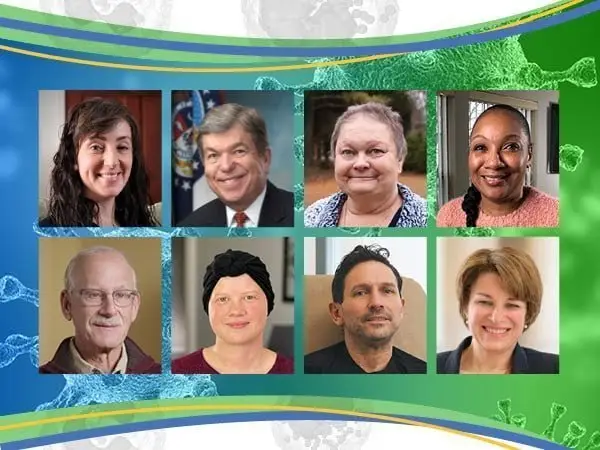
In a virtual Congressional briefing on February 9, 2022, the American Association for Cancer Research (AACR) released its Report on the Impact of COVID-19 on Cancer Research and Patient Care, a comprehensive report that draws attention to the multifaceted ways COVID-19 has affected the cancer community. The report presents current evidence on the burden of COVID-19 among patients with cancer and highlights both the challenges and opportunities created by the pandemic to improve cancer research and patient care. The report includes remarks from patients with cancer, cancer researchers, and policymakers who discussed their personal experiences over the past two years of the pandemic.
Early in 2020, the Centers for Medicare and Medicaid Services recommended that health care institutions prioritize COVID-19 care and cease all non-urgent, preventative services including cancer screening examinations (See sidebar: Impact of the COVID-19 Pandemic on Cancer Screening). This led to a precipitous drop in the U.S. screening rates for breast, colon, cervical, and prostate cancer.
Wenora Johnson, from Joliet, Illinois, has Lynch syndrome, a genetically inherited condition that predisposes individuals to certain types of cancer. Johnson is a three-time cancer survivor who requires constant monitoring for precancers or cancerous growths. Therefore, routine cancer screenings are vital to her preventative care. “It’s so important to stay on top of it,” she emphasized. Johnson’s colonoscopy was delayed due to the pandemic. During her rescheduled screening examination, she was diagnosed with three precancerous polyps. “It really brought home to me the effects of what COVID has done. It made me realize just how important these scans are—they’re lifesaving for me.”
The importance of cancer screening is also emphasized by U.S. Senator Amy Klobuchar, who was diagnosed with stage 1A breast cancer following a delayed routine mammogram. Because of this early diagnosis, her cancer was safely removed with a lumpectomy and radiation.
“Those aren’t the stories that you used to hear—that cancer was caught so early,” Klobuchar reflected. In the report, Klobuchar discussed the introduction of legislation that prioritizes equitable preventative care such as cancer screenings. The decline in cancer screening during COVID-19 has been followed by an increase in cancer diagnoses at an advanced stage, further emphasizing the importance of early detection and the need for developing novel ways to detect cancer early on, such as at-home tests.
Timely access to treatment, a critical aspect of cancer care, was significantly disrupted due to the pandemic. Many patients reported delays in their treatment schedules, which may have led to cancer progression.
When the pandemic began, Federico de Armas Heinzen was participating in a clinical trial to treat his melanoma. During the first surge of the pandemic, Heinzen experienced interruptions to his treatment, which includes a combination of an immunotherapeutic and two molecularly targeted therapeutics. “For five months, he was not able to come and continue on the clinical trial. That’s troublesome because we knew the treatment was keeping his melanoma under control,” recalled his oncologist, Antoni Ribas, MD, PhD, FAACR, the AACR’s immediate Past President, who led the development of the report. Heinzen was subsequently able to receive two of his cancer treatments, thanks to revised guidance issued by the U.S. Food and Drug Administration that allowed for experimental drugs to be shipped in the mail.
While discussing these adaptations to clinical research, Ribas said, “We went from doing [treatments] in person to doing video visits and were able to ship drugs to him, which was not allowed before the pandemic. That’s one of the things that I hope will be carried on after the pandemic when we go back to normal business.” The report also highlights other changes to the conduct of clinical trials, including the use of telehealth in place of in-person visits and decentralized testing at local hospitals to minimize travel time for patients with cancer (See sidebar: Lessons From COVID-19 to Streamline Cancer Clinical Trials).
There is overwhelming evidence that cancer is an independent risk factor for adverse outcomes in patients who develop COVID-19 and that the risk of infection is seven times higher in recently diagnosed cancer patients (See sidebar: COVID-19 in Patients With Cancer). For many patients with cancer, vaccination is one of the safest and most effective ways to reduce COVID-19 infection and severe disease (See sidebar: COVID-19 Vaccines and Patients with Cancer).
However, vaccination response varies depending on cancer type. For instance, patients with hematologic cancers, such as Larry Saltzman, MD, who is immunocompromised because of his treatment, generally have poorer immune responses than healthy individuals, making them more susceptible to COVID-19 infection. Because of this, Saltzman is a strong advocate of vaccination. “I rely on people around me to get vaccinated and protect themselves. Ultimately that protects me from this infection. And it’s just very hard to hear about people who are vaccine-hesitant,” Saltzman reflected. The U.S. Centers for Disease Control and Prevention recommends that patients with cancer, as well as their caregivers, should exercise all the necessary protective and preventative measures to minimize the chances of COVID-19 infection.
The COVID-19-related disruptions to the cancer research continuum have also affected the careers of researchers, especially early-stage, minority, and female investigators (See sidebar: Disruption of the Medical Research Cycle During the COVID-19 Pandemic).
For this report, the AACR surveyed 66 cancer researchers in North America, Europe, and Asia who received one of the many research awards that were offered by the AACR in the past five years; 99 percent of survey respondents said that COVID-19 had negatively impacted their research, career in cancer research, and/or patient care. The researchers cited factors ranging from lab shutdowns to reduced philanthropic funding.
Sara G.M. Piccirillo, PhD, an assistant professor at the University of New Mexico Health Sciences Center, said, “I started my lab in August 2019 and when the pandemic hit, I was in the set-up phase and had just started recruiting personnel to my lab. The pandemic delayed the hiring of lab personnel, reduced the opportunities for funding, and drastically limited the experimental work that I was planning to perform to generate preliminary data for grant submissions.”
Other researchers highlighted the impact of the pandemic on networking and collaboration opportunities. For example, Ali Azhdarinia, PhD, an associate professor at The University of Texas Health Science Center, noted, “the major impact of the pandemic has been the inability to attend conferences, share our research, and learn about new developments in the field.”
Despite these setbacks, the cancer research community actively participated in addressing the challenges posed by the pandemic by harnessing the discoveries and technological innovations in cancer science and medicine, due in large part to decades of investment in cancer research (See sidebar: Lessons From Cancer Research Helped Address COVID-19). The report highlights many of these contributions, such as the rapid establishment of large databases and national networks by the National Cancer Institute to track COVID-19 genetics, immune response, and mortality, as well as the impact of COVID-19 on cancer patients. Notably, mRNA vaccines relied extensively on research in cancer immunotherapy, helping pave the way for their development at an unprecedented pace.
Building on these experiences, the report concludes with a set of actionable, evidence-based policies that Congress should consider to rebuild U.S. public health infrastructure, enhance medical research, and modernize how patients receive care and enroll in clinical trials. As highlighted by U.S. Senator Roy Blunt, robust and sustained investments in medical research will foster future scientific advances, support lifesaving breakthroughs, and strengthen the United States as a powerhouse of science and medicine.
The AACR continues to disseminate the latest information on COVID-19 and cancer through a collection of open-access, freely available research articles, webinars, and news related to COVID-19 and cancer
[ad_2]
Source link
Trending Topics

Features
- Drive Toolkit
Download and distribute powerful vaccination QI resources for your community.
- Health Champions
Sign up now to support health equity and sustainable health outcomes in your community.
- Cancer Early Detection
MCED tests use a simple blood draw to screen for many kinds of cancer at once.
- PR
FYHN is a bridge connecting health information providers to BIPOC communities in a trusted environment.
- Medicare
Discover an honest look at our Medicare system.
- Alliance for Representative Clinical Trials
ARC was launched to create a network of community clinicians to diversify and bring clinical trials to communities of color and other communities that have been underrepresented.
- Reducing Patient Risk
The single most important purpose of our healthcare system is to reduce patient risk for an acute event.
- Jessica Wilson
- Victor Mejia
- Jessica Wilson