- By Jessica Wilson
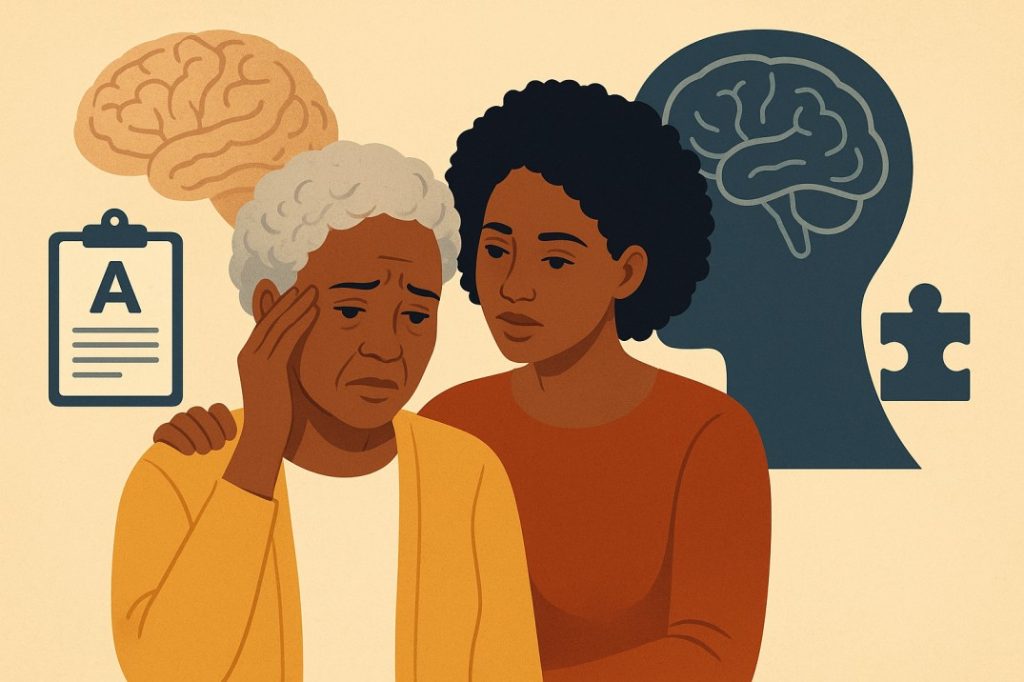
Alzheimer’s disease (AD) is the most common cause of dementia, affecting millions of people worldwide. In the United States, the burden of Alzheimer’s falls disproportionately on the Black community. Black Americans are about twice as likely to develop Alzheimer’s or other dementias compared to non-Hispanic white adults, yet they often face systemic barriers to early diagnosis, quality treatment, and support services. Understanding the interplay of biological, social, and healthcare factors is critical to improving outcomes and equity.
Higher Risk in the Black Community
Several factors contribute to the higher prevalence of Alzheimer’s disease in Black adults: Genetic and biological factors- research suggests that certain genetic variants may play a role in dementia risk, but genes alone do not explain the disparity. Chronic conditions such as hypertension, diabetes, and cardiovascular disease—more prevalent in Black populations—are also linked to increased Alzheimer’s risk. Social Determinants of Health- limited access to healthy food, safe housing, and opportunities for physical activity contribute to health conditions that increase dementia risk. Lower access to consistent, high-quality healthcare means prevention and management of risk factors often start later. Lastly, Healthcare Barriers- black adults are less likely to receive an early and accurate Alzheimer’s diagnosis, which delays treatment and care planning. Mistrust of the healthcare system, rooted in historical and ongoing inequities, can discourage people from seeking care or participating in research studies.
The Impact of Alzheimer’s on Families and Caregivers
Alzheimer’s does not affect only individuals—it deeply impacts families and caregivers. Black families are more likely to provide informal caregiving at home, often with limited financial or institutional support. This can lead to significant emotional, physical, and financial strain.
Closing the Gap: Solutions and Support
Reducing disparities in Alzheimer’s disease within the Black community requires systemic change and culturally responsive approaches. Improved access to care, expanding memory screenings and ensuring healthcare systems are equipped to recognize early signs of dementia in diverse populations. Culturally tailored education, community outreach programs designed to build awareness and reduce stigma around Alzheimer’s in Black communities. Support for caregivers, expanding respite services, financial assistance, and caregiver training to reduce the burden on families. Inclusive research, increasing representation of Black participants in clinical trials to ensure that emerging treatments are effective across populations.
Conclusion
Alzheimer’s disease poses a significant and disproportionate challenge for the Black community in the U.S. Addressing this disparity requires a combination of medical, social, and policy solutions—centered on equity and trust. By improving access to care, supporting caregivers, and expanding culturally informed education, we can work toward earlier detection, better treatment, and ultimately, healthier aging in the Black community.
Trending Topics
Features
- Drive Toolkit
Download and distribute powerful vaccination QI resources for your community.
- Health Champions
Sign up now to support health equity and sustainable health outcomes in your community.
- Cancer Early Detection
MCED tests use a simple blood draw to screen for many kinds of cancer at once.
- PR
FYHN is a bridge connecting health information providers to BIPOC communities in a trusted environment.
- Medicare
Discover an honest look at our Medicare system.
- Alliance for Representative Clinical Trials
ARC was launched to create a network of community clinicians to diversify and bring clinical trials to communities of color and other communities that have been underrepresented.
- Reducing Patient Risk
The single most important purpose of our healthcare system is to reduce patient risk for an acute event.
- Jessica Wilson
- Subash Kafle