








[ad_1]
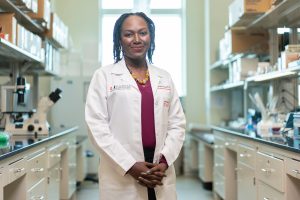
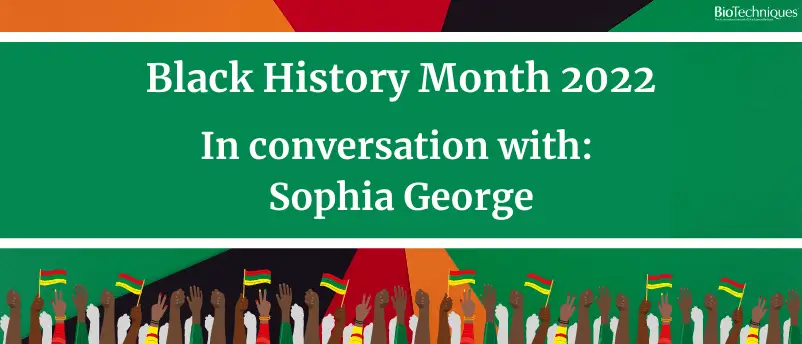
We speak to Sophia George, a molecular geneticist at the Sylvester Comprehensive Cancer Center (FL, USA) studying hereditary cancer syndromes, common in people of the African diaspora. Here, George talks about her research career, advice for other Black scientists pursuing this field, the importance of community and having fun in your research.
Please tell us about yourself and how you got to where you are today
I am a wife, a mother, a sister, a mentor, and a scientist. I grew up on a tiny island in the Caribbean called Dominica where my upbringing helped shape who I am as an adult. My community propels me towards the unknown, the science and the possibility of discoveries that could positively impact countless lives.
I am a molecular geneticist, and I am passionate about my work, which is focused on breast and ovarian cancer, more specifically, the incidence of hereditary cancer syndromes in people of the African diaspora, which includes the Caribbean, the United States and Africa.
I remember being quite curious as a child, and as I grew up, that curiosity turned into a great desire to learn. I graduated from the University of Toronto (Canada) and did post-doctoral training in molecular pathology and gynecological pathology at the Princess Margaret Cancer Center of the Ontario Cancer Institute (Canada) and a second post-doc at Duke University (NC, USA) in the Department of Medical Oncology focusing on hereditary breast cancer syndromes.
In 2015, I joined the Sylvester Comprehensive Cancer Center, at the University of Miami Miller School of Medicine (FL, USA), where I work today in the Cancer Control and Population Health department, and as an Associate Professor in the Division of Gynecological Oncology.
What led to your interest in studying gynaecologic cancers, especially the disparities between Black and non-Black women?
Once I earned my PhD, I studied hereditary cancers among Ashkenazi Jewish women, but work relevant to my community has always been important to me. From there, I realized that the diseases I was studying were common, even prevalent, among people with my background, and I was given the opportunity to participate in a study that focused on people who live in a place and region where I lived and still call home.
There was something special in the easy connections I made with so many people involved, from the participants to the clinicians and fellow scientists I worked beside. It was satisfying, every day I asked direct questions and I would probe. I focused on the biology, the genetics, and societal factors.
So, when you ask, “why Black people?” My answer is because I am Black and why not study Black people? There is a need. There is a health disparity. The more people that can work on this problem to decrease the disparity, increase length of life, detect cancer earlier and prevent cancer, the better.
As a Black woman, and someone living in the multicultural city that is Miami, I continue to feel driven by these unanswered questions. So, I am not just a molecular geneticist, I am a scientist and a community advocate. I move from the lab to the community to the clinic and back, again and again. Beside me are epidemiologists, gynaecologic oncologists and medical oncologists. We use a multi-disciplinary approach with a single goal, which is to save lives.
What are some of the techniques you use to study the genetic drivers of this difference?
We use many tools from whole-exome sequencing to RNA sequencing, single-cell sequencing, spatial genomics, CRISPR-Cas9, bioinformatic tools, epidemiological data and other molecular tools. With these, we study the germ line, the tumours, and sometimes, the preinvasive lesions. I work very closely with pathologists, biomathematicians and my students, who are also focused on integrated cancer research.
In your career, have you ever felt that you were at a disadvantage because of your race?
Yes, of course there were times I felt that. What did I do about it? I had to find the courage to double down, but I also have been fortunate and worked with people who have mentored and encouraged me to persist.
I have three words that I use on regular basis; to remind myself that I must persist, I must persevere, and in that, I am prepared for the next thing.
Persist, persevere, and prepare.
I am in academic medicine, and it is tough environment, but I keep navigating to achieve my goals.
Are there any key resources or places that you found support when facing challenges?
The American Association for Cancer Research (PA, USA) has a Minorities in Cancer Research Council. I would go to the annual meetings to find other Black and Brown scientists to talk about our training, research, jobs, our progress and setbacks. It brings me so much joy to attend these meetings, and we often reminisce saying “remember us then?” Today, we are the teachers. We are the panellists talking about health disparities and cancer as respected experts in the field.
It is a wonderful community. I am not alone. I am not an only.
I am also a member of the African Caribbean Cancer Consortium. You meet people from all over the world and, here, you do not have to explain why you are doing what you are doing. It is focused not on the difficult but instead on how we become successful. How do we best navigate to accomplish our goals?
At home, I am also fortunate to participate in multiple groups on campus where I connect with likeminded individuals who see value in the work I do. We have built a wonderful group, who are not all Black, but are open to receiving and learning about the “why’s” and working together to solve real problems. I am also a member of an interdisciplinary group of university faculty studying race in Miami from different lenses and am involved in a newly established Miami Center for Global Black Studies.
What is your greatest achievement?
When I make a commitment, and I do it well, it is always a wonderful feeling, and I don’t think there is just one.
I do a lot of work in developing countries, and the foundation of that work is transparency, collaboration and service. When we can publish our work, win a grant or whatever else it might be, like developing a program, that is an achievement.
I am a mom. To me that is a great achievement.
There is so much more to achieve. I have so much more to achieve with the work that is being done, and I don’t think I have reached my greatest yet.
What advice would you give to young Black scientists to help them thrive in the scientific field?
Number one, ask for help. If you do not get help the first time, ask someone else. Do not give up because a door was closed, there are many more doors to knock on and eventually you will get the help you need.
Two, take care of yourself, physically and mentally.
Three, work in alignment with your own values. If you are doing work that doesn’t feel good to your gut, don’t be afraid to pivot, try multiple things or get creative.
Four, remember, if you are in academia or are a student in training, understand that we need to publish, and to do so we need to write. Develop a good writing habit as writing is pivotal. I changed my mode of thinking from “I do not enjoy writing” to “I want a certain outcome,” and that outcome is something to be proud of.
Lastly, find a community.. Science can be isolating, and it is good to have a group of people that you can talk to, hang out with and laugh. It is not just about science, but it is about the people doing the work.
Is there anything else you’d like to mention?
Have fun!
I really enjoy what I do. I am fortunate. I am blessed. I am working at an institution that is supportive of me and my work. I have wonderful colleagues at Sylvester, across the United States and internationally. I am in my happy place doing this type of work. It was not easy to get here, but my work is impactful and yet I am still a student, learning something new every day. I am fascinated by this work and am always hopeful for the future.
[ad_2]
Source link