








[ad_1]
LOUISVILLE, Ky. (AP) — When Rich Strike bolted into horse racing’s spotlight in a little over two minutes with his Kentucky Derby upset victory, he shared the stage with his handler, who has long toiled in the shadows constantly tending to the champion colt.
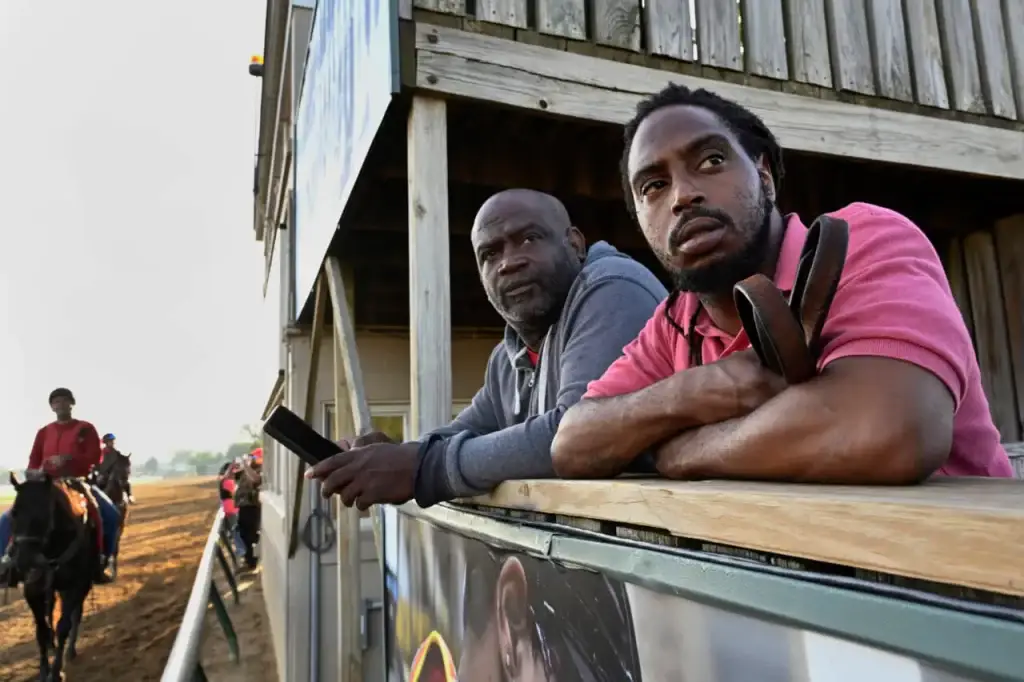
Rich Strike’s attention stems for winning as a nearly 81-1 long shot, but groom Jerry Dixon Jr.’s new-found recognition comes from being one of few Black horsemen left in the sport once dominated by people who look like him.
“I totally understand it because I was looking at something about the Derby and I saw how there were Blacks in the beginning,” said Dixon, 31 and a fourth-generation horseman who works with his father — trainer Jerry Sr. — for Eric Reed, who trains Rich Strike.
“And then years afterward, you can see the change, like we were slowly fading away.”

A lack of diversity is one of the biggest obstacles to growth in horse racing, along with inconsistent safety and medication standards. The government stepped in to address safety and doping concerns, but there is no national program to increase diversity — by gender or race — in the industry.
That wasn’t always the case for African-Americans, who were a key part of early Derby history and thoroughbred racing.
Black jockeys won 15 of the first 28 Derbys with Isaac Murphy winning the marquee race three times from 1884-91 before Willie Simms and Jimmy Winkfield each won twice between 1986 to 1902. Black people also owned and trained thoroughbreds through the early 20th century before segregation and Jim Crow laws in the South pushed many away from horse racing by restricting jockey licensing and ownership.
That history is fairly well known, but what’s new is how the few members of the Black community still engaged in the sport seems to be shrinking.
A handful of Black horsemen can be seen around the backside barns of tracks working as trainers, grooms and hot walkers, but their numbers are scarce compared to the overwhelming presence of Latino workers.
With no governing body in horse racing, exact numbers are not available. However, no one disputes the shift in demographics.
“What the racism did in America, Caucasian people didn’t want to see Black people have stuff like that,” said historian and horseman John Taylor Jr.
“And as time went by and Blacks stopped taking an interest in the sport and stopped working on the backside, that’s when you started seeing the (Latinos) coming in. The jobs that they’re doing now, we used to do.”

Economics and the time demands of tending to horses are factors often cited in the low number of Black and white people working in the barns. But while Saturday’s Belmont Stakes — the last leg of the Triple Crown — pays a prize purse of $1.5 million, everyday races are much less lucrative with smaller payouts that must be divided multiple ways among owners, trainers and workers.
It does not make for a lavish lifestyle.
Many backside workers at Churchill Downs live in dormitories near the barns or above them. Compared to other industries that pay higher wages and offer set hours with health benefits, horse racing is a daily job that requires getting up well before sunrise to train and care for horses. Then, coming back in the afternoon to do it again. Days off are hard to come by.
Horsemen interviewed for this story declined to discuss wage rates, pay scales and benefits — which can vary. They are quick to point out that horse racing is not for everybody.
Horsemen such as the Dixons and trainer Mark Simms Jr. say they do it for love of the animals and the sport. Not to mention, it’s in their blood.
“My grandpa would have told you that I learned how to walk walking over towards the barn,” said Simms, whose great-grandfather, grandfather and uncle are among several relatives in racing.

“You can go to Target and can probably make 15 bucks an hour or something like that. And you work for five days a week,” Simms said. “This really is something that you have to have a passion for to do, to get up and do it every day.”
The stables are an entry point into horse racing, but Greg Harbut is working to increase the involvement of Black people in all phases of the sport, including thoroughbred ownership and management.
The third-generation horseman and partner Ray Daniels comprise leadership of the Ed Brown Society and Living The Dream Stables, a thoroughbred syndicate comprised of minority ownership. The two partnered on colt Necker Island, who finished ninth in the 2020 Kentucky Derby.
EBS recently partnered with Churchill Downs for an internship program to follow up a previous pairing with the Stronach Group that owns Baltimore’s Pimlico Race Course and Santa Anita Park in California. The Society has two college interns currently working at Santa Anita and looks to introduce current and future generations to horse racing.
“When you look at a lot of minorities, they’ve got two to three generations removed where they couldn’t even go to someone to get the history, the horsemanship or have a mentor to come up with,” said Harbut, whose great-grandfather, Will Harbut, was a groom to legendary thoroughbred Man o’War.

“And that’s really what’s missing,” Harbut said. “The horsemanship has not been passed down from generation to generation as it once was.”
But the involvement of the Dixons, Harbut and Simms demonstrate it’s still there. And they hope their dedication to the sport in different capacities helps raise awareness in the Black community.
Rich Strike’s stunning Derby win has certainly provided a payoff for Jerry Dixon Jr. on many levels.
“I know it’s big for our culture because we need a different way, a different view of things to try something that most people don’t like to step out of the comfort zone for,” said Dixon, who aims to be a trainer like his dad.
“Horse racing saved my life. I don’t know where I would be without horse racing and to top if off, to be involved with a Derby winner is a dream come true.”
AP Sports Writer Stephen Whyno contributed to this report.
TheGrio is FREE on your TV via Apple TV, Amazon Fire, Roku and Android TV. Also, please download theGrio mobile apps today!
[ad_2]
Source link