









[ad_1]

(The Dallas Examiner) – Depression is one of the most common mental disorders in the United States, affecting approximately 17 million people yearly. An empirical study found a prevalence of depression among African American men that ranged from 5% to 10%. The study also found that African American men face several risk factors but use mental health services less.
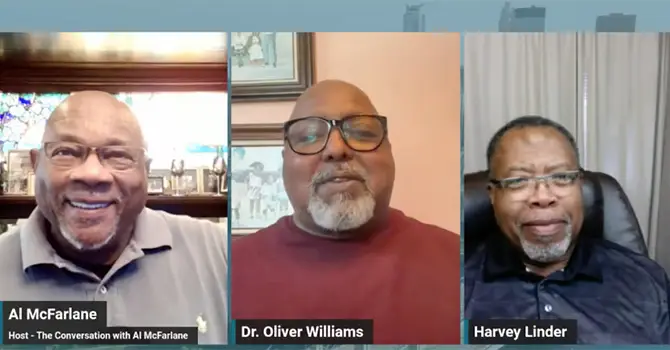
Shattering Silence: Effect of Depression on Black Men’s Health webinar was recently facilitated by Al McFarlane, the host of The Conversation with Al McFarlane. He was joined by Dr. Oliver Williams; Ricardo Soloman, MSW; and Dr. Harvey Linder, a psychologist. The conversation delved into the silent pain of depression among Black men and how this disorder affects Black individuals’ health and quality of life. The speakers shed light on the physical and mental effects of depression and highlighted its impact on personal relationships, family dynamics, productivity and community engagement.
“The challenge for most people when trying to understand depression is that depression is one of the most common ailments that people suffer from. But there are different kinds of depression,” Linder stated.
There are three main types of depression: mild, moderate and severe.
Mild depression tends to be the most complex form of depression to diagnose because it doesn’t necessarily stop you from getting by day to day. You may not want to hang out with friends or go to school or work because you don’t feel well, but you can manage to make it.
Moderate depression is more than just having difficulty getting through the day. You may struggle in relationships with friends and family; see your grades or work performance decline; have trouble getting out of bed in the morning; or stay up too late.
Depression becomes severe when you experience symptoms over some time, often months. A sign of severe depression is a constant feeling that the things you used to enjoy no longer feel good. Other symptoms include struggling with feelings of worthlessness and guilt; feeling easily tired or constantly low on energy; or having thoughts of self-injury or suicide.
“Depression is both an illness in itself, but it also a common symptom of other illnesses or, it’s also a common symptom of things that are not an illness, but are actually social conditions,” Linder said, “Depression is often either misdiagnosed, wrongly diagnosed, or under-diagnosed or over-diagnosed.”
Blacks are misdiagnosed and subsequently untreated for depression due to social, historical and structural factors. Those factors include structural racism in the medical system, underrepresentation of Black providers in mental health care, disparities in access to care, and stigmas.
The speakers discussed the nuances of depression that apply to Black men.
“The assault on our concept of self … when we have a concept of who we are and what we’re capable of, being impacted by what we are dealing with in racism in our society, that in itself can lead to ending up with a depressed mood because you have this negative self-concept that’s visited on you by society,” Linder explained, “As African Americans, we’re also depressed because of the sociological things that are going on.”
Depression is one of the most treatable mental ailments. There are a number of different medications that can treat depression.
“Medication can be helpful in assisting people to adjust to biochemical challenges caused by depression,” Williams said.
Despite the number of available treatments, treating depression in the African American community remains challenging.
“The challenge with treating depression with medication in the Black community is that, one, we have this negative concept about being mentally ill. And, so there’s a reluctance, one to admit that there’s something treatable wrong with you,” Linder expressed. “If you get to the point of getting people to accept the treatment, there are two other things that go on. One is that antidepressant medication doesn’t work like we are accustomed…with endogenous depression, you can take the medicine, and you may have to take the medicine for four, six, eight weeks before there’s noticeable sign that you’re getting better.”
Often, people stop taking the medication before it becomes optimally effective. On the other hand, for those who continue with the medication, once it starts helping with their depression, people feel they are cured and stop taking it before they are well.
Another challenge faced in the Black community is self-medication in treating depression. This includes over-consumption of alcohol and the use of cannabis or other serious drugs, which mask what’s truly happening.
“They are doing something to relieve the symptomatology. It makes them numb to their depression or whatever else they’re suffering, but it doesn’t actually help them get better,” Linder said.
Solomon currently works with young adults ages 18 to 24 years old who are connected with the criminal justice system on probation.
“We know that a lot of that just comes from the human condition, our own condition, especially with Black males in terms of how they’re seeing the level of community violence, the environmental factors that take place,” Solomon explained.
Solomon identified social media influences as a cause of depression and negative self-images or self-concepts that are developed early in life.
“The whole concept of not being able to have a sense of ownership for yourself and we’re all in this, like fishbowl. We’re all in this community together that’s been traumatized … the extent of post-traumatic stress spills over into our behaviors,” Solomon said.
Linder stated that up to 70% of those incarcerated suffer from a mental disorder, depression being one of those. Although some correctional institutions have begun to recognize the importance of treating mental disorders, getting treatment for mental disorders remains difficult while incarcerated.
“We have to unlearn a lot of ways of looking at the world that we hold dear and in order to relearn new ways of approaching things,” Linder said.
“As a community, we have to be able to embrace each other.” Solomon closed with.
[ad_2]
Source link